

Maddy summaryThis Pennsylvania House resolution designates May 4, 2026, as "Aerospace Day" to recognize the state's growing aerospace industry. The measure highlights Pennsylvania's skilled workforce, proximity to federal agencies, and educational institutions as key assets for the sector. It calls for public exhibitions and a legislative hearing in Harrisburg on that date to educate residents and lawmakers about the industry's economic potential. The bill does not create new laws or funding but serves as a symbolic gesture to promote awareness of aerospace opportunities within the Commonwealth.
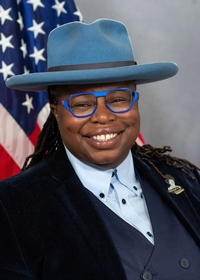
Rep. La'Tasha Mayes
Sponsored bills
Maddy summaryThis bill amends Pennsylvania's Liquor Code to allow specific licensees, such as hotels and restaurants, to sell alcohol earlier on weekends and to establish a new system for event permits. Under the new rules, eligible businesses can apply for a permit to sell alcohol starting at 6 a.m. on the day of an event, with specific time restrictions depending on whether the event occurs on a weekend or weekday. To obtain these permits, licensees must apply at least 60 days in advance, pay a $500 annual fee, and adhere to limits of ten permits per year with a six-day gap between events.
Maddy summaryThis Pennsylvania House Resolution designates May 2, 2026, as Negro Leagues Day to honor African-American baseball players who contributed to the sport. The bill recognizes the historical significance of Negro League teams in Pennsylvania, such as the Philadelphia Giants and Homestead Grays, and highlights the achievements of players like Josh Gibson and Roy Campanella. By officially naming this date, the resolution aims to preserve the legacy of these athletes and acknowledge their impact on the civil rights movement in sports.
Maddy summaryHB 2218 amends Pennsylvania's Public School Code to require all school entities (including districts, charter schools, cyber charters, and career schools) to develop and implement a written comprehensive school counseling plan. The bill mandates that each plan, created by certified school counselors, must include annual reviews, K-12 systemic alignment, grade-level and building-specific strategies, and integration with existing student services plans. Key provisions define "direct services" (like individual counseling and classroom instruction) and "indirect services" (such as parent consultations), requiring plans to guide students in academic, career, and social-emotional development. The law establishes specific components for the plan - foundation, management, delivery, and accountability - without specifying funding or new programs.
Maddy summaryHB 2210 updates Pennsylvania's vehicle registration rules to allow electronic registration cards displayed on personal devices like phones or tablets. It defines key terms like "electronic registration card" (a digital version viewable on devices) and "electronic product device" (phones/tablets used to display it). The bill requires vehicle owners to sign physical cards or display digital versions when asked by police, but prohibits police from demanding device surrender and protects against liability for accidental damage or viewing unrelated phone data. It also prevents unrelated digital information viewed during a traffic stop from being used as evidence in court. The law takes effect 60 days after passage.
Maddy summaryHB 2246 would require large data centers in Pennsylvania to report water usage and undergo environmental reviews before construction. It mandates pre-application notification to the Department of Environmental Protection (DEP), including detailed water use estimates, source assessments, and proof that withdrawals won’t harm other water users or water quality. The bill adds new permit conditions under the Clean Streams Law, requiring data centers to implement water conservation measures like closed-loop systems and water recycling. These provisions apply specifically to "covered data centers" (large facilities with significant water needs) and aim to protect local water resources while enabling data center development.
Maddy summaryHB 2176 would require Pennsylvania public and nonpublic schools to integrate social media literacy into their curriculum. The bill mandates that state academic standards include specific lessons on social media's mental, psychological, and physical impacts on students, its effects on learning, safe online behavior (including identifying cyberbullying and predatory activity), and personal device security. The Department of Education must develop educational materials and provide professional development for teachers on these topics. This bill directly affects all Pennsylvania schools, including public school districts, charter schools, and nonpublic schools, by adding concrete requirements to student learning standards.
Maddy summaryThis bill requires Pennsylvania public schools to adopt or update a bullying policy that includes clear disciplinary consequences for bullying incidents and designates a staff member to handle reports. Schools must notify parents within five days of a bullying or cyberbullying incident while following federal privacy laws. The policy may also include prevention and intervention programs, and the bill clarifies that bullying involves repeated, severe acts in a school setting that disrupt education or create a threatening environment. Cyberbullying is specifically defined as bullying occurring via electronic devices during school hours.
Maddy summaryHB 1104 sets specific fees that must be paid to healthcare providers before they produce medical records in response to a subpoena. The bill establishes a detailed fee structure: $20.62 for searching and retrieving records, plus page-based charges (e.g., $1.39 per page for the first 20 pages of paper copies, with lower rates for additional pages), and a $200 maximum for electronic copies. These fees are adjusted annually using the consumer price index. The law directly affects healthcare providers and parties requesting medical records, requiring payment before records are released.
Maddy summaryHB 2042 amends the existing Safety in Youth Sports Act to update definitions related to concussions and improve prevention measures for traumatic brain injuries in youth sports. It directly affects youth athletes, coaches, and sports organizations by requiring clearer guidelines for identifying and managing head injuries. Key provisions include revising terminology for consistency and strengthening protocols for concussion prevention and response. The bill focuses on concrete policy changes to enhance safety standards under the current law. It was recently referred to the Health committee for further review.