

Maddy summaryThis bill amends Pennsylvania's vehicle laws to exempt individuals aged 65 or older from identification card renewal fees if they have surrendered their driver's license due to a diagnosed physical or mental condition. The exemption applies specifically to those who surrender their licenses based on a health care provider's diagnosis, and the department may request proof of this medical documentation. The change aims to reduce financial burdens on seniors who can no longer drive for health reasons. The legislation would become effective 60 days after passage.
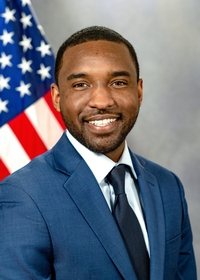
Rep. Anthony Bellmon
Sponsored bills
Maddy summaryHR 329 is a non-binding resolution designating October 2025 as "Arts and Culture Month" in Pennsylvania. It does not create new laws, allocate funding, or directly affect any individuals or organizations. The resolution serves solely to recognize and promote arts and cultural activities during that month through official state acknowledgment. As a procedural resolution, it has no legal effect beyond the symbolic gesture of recognition.
Maddy summaryThis Pennsylvania House Resolution designates May 4, 2026, as "Youth Advocacy Day" to recognize the role young people play in advocating for issues affecting their lives. The resolution acknowledges youth involvement in various social movements, including environmental, civil rights, and public safety initiatives, and affirms their right to participate in civic engagement. It does not create new laws or funding but serves as a symbolic designation to highlight youth advocacy efforts within the state.
Maddy summaryHB 554 would authorize Pennsylvania to join the Social Work Licensure Compact, a multi-state agreement that allows social workers licensed in one member state to practice in others without additional exams. The bill provides Pennsylvania with the legal framework to adopt the compact's standard terms, directly affecting licensed social workers seeking to practice across state lines. Key provisions include aligning Pennsylvania's licensing requirements with the compact's uniform standards, simplifying the process for social workers to obtain reciprocal licenses in participating states. This change would streamline professional mobility for social workers while maintaining consistent regulatory oversight.
Maddy summaryHB 1935 requires individuals convicted of terroristic threats to pay restitution for costs incurred during evacuations, including emergency response, transportation, and employee wages for first responders. It also mandates a sentencing enhancement for threats targeting schools or institutions of higher education, which the Pennsylvania Commission on Sentencing must consider. The bill defines "school entity" to include public, charter, private, and cyber charter schools, and "institution of higher education" to cover specific universities like Penn State, Pitt, Temple, and others. These changes directly affect offenders who make terroristic threats in educational settings, holding them financially accountable for the costs their actions trigger.
Maddy summaryHB 1936 amends Pennsylvania's juvenile justice laws to change procedures for handling cases involving minors. It specifies when courts must hold hearings before releasing or committing a juvenile, alters where juveniles can be placed for treatment or supervision, and adds requirements for reviewing dispositions (how cases are resolved) after commitment. The bill directly affects juveniles charged with offenses, their families, and juvenile court judges and probation officers who manage these cases. Key changes include setting clearer timelines for hearings, limiting where juveniles can be committed (e.g., away from home), and mandating periodic reviews of their case plans. These provisions aim to standardize court processes while prioritizing youth safety and appropriate supervision.
Maddy summaryHB 2216 creates new court procedures in Pennsylvania for juvenile courts to issue "predicate orders" required for immigrant youth to apply for federal Special Immigrant Juvenile Status. It directly affects immigrant youth under 21 who have experienced abuse, abandonment, or neglect and need these court orders to seek U.S. immigration protections. Key provisions include establishing a lower burden of proof (preponderance of evidence), presuming it is not in the juvenile’s best interest to return to their home country, and allowing courts to issue orders without parental notice if abandonment occurred for six months. The bill adds specific court procedures to Pennsylvania’s juvenile law to streamline this process, ensuring youth can access federal immigration pathways.
Maddy summaryThis resolution designates February 2026 as "Black History Month" in Pennsylvania, symbolically recognizing the century-long observance of African American contributions to the Commonwealth and nation. It directly affects all Pennsylvania residents by formally honoring the historical achievements, resilience, and sacrifices of African Americans, marking the 100th anniversary of the movement founded by Dr. Carter Godwin Woodson. The resolution includes historical context about the origins of Black History Month and Pennsylvania's connections to Black labor and civil rights history, but it has no binding policy effects.
Maddy summaryThis resolution designates January 1, 2026, as "Haitian Independence Day" in Pennsylvania. It formally recognizes Haiti's 1804 independence from colonial rule and honors the Haitian Revolution's historical significance, including its impact on Black resistance movements in Pennsylvania. The resolution directly acknowledges Pennsylvania's Haitian community, which numbers over 27,000 residents, and commemorates the legacy of Haiti as the world's first Black Republic. As a symbolic gesture, it does not create new laws or policies.
Maddy summaryThis bill amends Pennsylvania's Human Relations Act to allow individuals who have been subject to or witnessed civil rights violations by U.S. Immigration and Customs Enforcement (ICE) agents or cooperating federal/state/local law enforcement during immigration enforcement to file complaints with the Pennsylvania Human Relations Commission. The Commission can then refer these complaints to the state Attorney General or the relevant county district attorney. It directly affects Pennsylvanians experiencing or witnessing such violations within the state. The change expands the Commission's authority to address immigration-related enforcement issues under state law.