

Maddy summaryHB 1163 creates a legal presumption that certain frontline workers contracted infectious diseases (like COVID-19) on the job during a declared public health emergency. It directly affects employees in life-sustaining roles - such as healthcare workers, first responders, grocery staff, food service workers, and public utility employees - who are required to work during emergencies. The bill ensures these workers cannot be forced to use paid leave for illness, automatically qualifies them for unemployment compensation, and makes them eligible for workers' compensation covering all related medical costs. This applies during any Governor-declared emergency for infectious diseases posing significant public health risks.
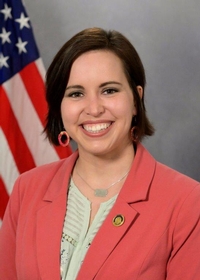
Rep. Emily Kinkead
Sponsored bills
Maddy summaryHB 109 creates a new permit review process for specific industrial facilities in Pennsylvania's designated "environmental justice areas" - communities with high pollution burdens and vulnerable populations (low-income, communities of color). It requires the Department of Environmental Protection to consider cumulative environmental and public health impacts when reviewing permits for facilities like large wastewater plants (50,000+ gal/day), major air polluters, waste sites (25+ tons/month), mining operations, and certain landfills. The bill mandates that permits in these areas must address disproportionate environmental impacts, as defined by demographic, economic, health, and environmental data. This directly affects developers and operators of industrial facilities seeking new or expanded permits in designated communities.
Maddy summaryHB 1146 allows second-class counties in Pennsylvania to generate local funding for public transportation and transportation infrastructure by imposing specific taxes, including on liquor sales, rental vehicles, real estate transfers, income, and vehicle registrations, each with maximum rates defined by existing state law. Revenue from these taxes must be deposited into a restricted county account dedicated exclusively to transportation projects. The bill also establishes administrative procedures for collecting and reporting these taxes, ensuring compliance with state tax codes and enabling counties to implement the funding mechanisms without creating new statewide programs.
Maddy summaryHB 1122 amends Pennsylvania's Unfair Insurance Practices Act to explicitly prohibit insurance companies from discriminating against applicants or policyholders based on protected characteristics. The bill adds specific language banning unfair discrimination in underwriting and eligibility decisions due to race, religion, nationality, ethnicity, age, sex, family size, occupation, residence, marital status, or criminal history. This directly affects insurers (who must comply with these rules) and applicants/policyholders (who gain protections against such discrimination). The key change clarifies that insurers cannot deny coverage, adjust rates, or impose terms based on these factors, except where rates are set through proper regulatory processes. The bill takes effect 60 days after enactment.
Maddy summaryHB 1114 prohibits possessing a firearm in any building, property, or parking area of a polling place during an election, with three specific offense types: simple possession, possession with intent to commit a crime, or causing a firearm to be used in a crime. Simple possession is a third-degree misdemeanor, while intent or causing use is a first-degree misdemeanor. Key exceptions include law enforcement officers performing duties, individuals with concealed carry permits (who own the firearm and have a valid license), and military personnel on duty. Polling places must post notices of the law, and failure to post prevents conviction for simple possession or intent offenses. The bill directly affects voters, poll workers, and anyone entering polling areas during elections.
Maddy summaryHB 1150 raises Pennsylvania's minimum wage to $15 per hour starting January 1, 2026, with annual increases thereafter. It also establishes a phased timeline for tipped employees: requiring higher base cash wages starting in 2025 (e.g., $5.00/hour after June 2025) and mandating that by July 1, 2029, employers must pay the full minimum wage without relying on tips. The bill ensures all tips received by employees remain their property and cannot be used by employers to meet minimum wage requirements. This directly affects most private-sector employers and tipped workers in Pennsylvania, particularly in hospitality and service industries.
Maddy summaryHB 1064 amends Pennsylvania's Health Care Facilities Act to require all health care facilities - including hospitals, clinics, mental health centers, urgent care centers, and dental offices - to establish and publicly share written policies regarding firearms on their premises. The bill mandates that facilities either permit firearms with safety procedures (e.g., storage guidelines) or outline specific steps for staff if someone enters with a firearm. These policies must address both permitted and prohibited firearm scenarios, applying to all locations providing medical services as defined by Pennsylvania law. The bill takes effect 60 days after enactment.
Maddy summaryThis bill establishes a grant program to provide free menstrual products (such as pads and tampons) in Pennsylvania public schools. Schools with 25% or more students eligible for free or reduced-price lunch programs can apply for grants to purchase these products and install dispensers or disposal units. Recipients must report annual spending on products and dispenser maintenance to the state. The program is funded by a state appropriation for the 2025-2026 fiscal year.
Maddy summaryHB 1068 creates a licensing program allowing family members (such as parents, grandparents, or adult siblings) to provide Medicaid-covered skilled care to children with medical needs. To qualify, applicants must complete training, pass background checks, and meet state nursing standards. The bill requires Medicaid agencies to cover the cost of training and licensure renewal, and it mandates that licensed family caregivers receive compensation for services like skilled monitoring. This directly affects Medicaid recipients (children under 21 with diagnosed conditions) and their eligible family caregivers, with oversight by the State Board of Nursing.
Maddy summaryHB 1065 creates a new felony offense for selling unmarked firearm components in Pennsylvania. It specifically targets the sale of firearm frames/receivers, silencer frames, split/modular frames, or partially complete frames without serial numbers registered to a federal firearms licensee. The bill defines "privately made firearm" as one assembled by non-licensed individuals without federal serial markings. This law directly affects sellers of homemade or unlicensed firearm parts, making such sales a third-degree felony. It does not change laws regarding firearm ownership or purchase, only penalizing the sale of unmarked components.