

Maddy summaryHB 1650 establishes Pennsylvania's Home Preservation Grant Program, administered by the Department of Community and Economic Development. It provides grants to local governments (counties, cities, townships) to fund repairs and improvements on existing owner-occupied homes, targeting households earning 80-120% of the area median income. Grants can cover up to $50,000 per unit for habitability fixes, energy/water efficiency upgrades, or accessibility modifications, with local governments allowed to use up to 10% of funds for administration. Applications must demonstrate experience in housing rehabilitation and include plans for using funds per the bill's requirements, with priority given to projects leveraging additional funding sources.
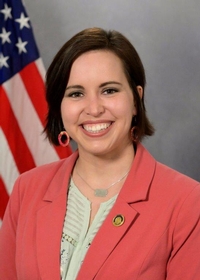
Rep. Emily Kinkead
Sponsored bills
Maddy summaryHB 355 amends Pennsylvania's criminal code to strengthen protections for minors by updating the offenses of "corruption of minors" and "unlawful contact with minor." The bill specifically targets adults who exploit or sexually exploit minors through interactions like grooming or inappropriate contact, making these acts clearer and more severe under state law. It directly affects minors (ages 12-17) and adults who engage in prohibited conduct with them, including online interactions. The law increases penalties for these offenses by clarifying prohibited behaviors and strengthening sentencing guidelines, now effective as Act No. 5 of 2025.
Maddy summaryHR 173 is a non-binding resolution urging Congress to establish a National Infrastructure Bank. It does not create new laws or funding but formally requests Congress take action to create this bank, which would provide financing for infrastructure projects. The resolution directly affects Congress itself, as it calls on the legislative body to initiate this specific action. This is a procedural measure with no immediate policy impact, as it only expresses a recommendation.
Maddy summaryHB 1610 amends Pennsylvania's corporate tax rules to change how businesses with multiple related entities (unitary businesses) calculate their state tax liability. Starting in 2026, these businesses will determine Pennsylvania tax based on their total sales within the state relative to their nationwide sales, using a new "water's-edge" apportionment method. The bill specifically revises definitions and tax calculation rules for corporations, including adjustments to how income from intercompany transactions is treated and how nonbusiness income is allocated. This primarily affects large corporations operating across state lines as unified business groups. The changes aim to align Pennsylvania's tax calculation with federal reporting requirements for such entities.
Maddy summaryThis bill modifies Pennsylvania's Human Services Code to change how medical providers are reimbursed for specific services provided to public assistance recipients. It updates reimbursement rules for certain medical items and services while replacing outdated regulations that conflicted with these changes. The primary effect is on healthcare providers who bill state assistance programs, streamlining the process for claiming payments. The bill does not create new benefits but adjusts existing reimbursement procedures under public assistance programs.
Maddy summaryHB 1670 requires health insurance plans in Pennsylvania, including Medicare and Medicaid coverage, to provide hearing aid benefits. Specifically, it mandates that insurers offer at least $2,500 in coverage every three years for hearing aids sold under state registration rules, with benefits applicable to either hearing aid sellers or contracted fitters. This applies to most health insurance policies but excludes dental, vision, Medicare supplements, and other specified plans. The law takes effect 90 days after enactment, impacting insurers and enrollees in covered health plans across the state.
Maddy summaryHB 1216 amends Pennsylvania's 1968 Unfair Trade Practices and Consumer Protection Law to update definitions of prohibited business practices and clarify which acts are considered unlawful. It specifically adds new provisions targeting deceptive marketing tactics and strengthens exclusions for certain professional services. The bill directly affects businesses operating in Pennsylvania (particularly those in retail, finance, and professional services) and consumers who may encounter unfair practices. The legislation passed its final vote on June 23, 2025, and is now pending review by the Consumer Protection & Professional Licensure committee.
Maddy summaryHB 350 updates Pennsylvania's laws on inheritance, parentage, and court procedures. It establishes the Uniform Parentage Act, creating new rules for establishing parent-child relationships through assisted reproduction, surrogacy agreements, and genetic testing, while repealing outdated paternity acknowledgment provisions. The bill modifies hearing requirements for adoption and parental rights termination, requiring specific notice to putative fathers and clarifying when parental rights may be terminated without their presence. It also adds protections for executors who fail to notify estates about assisted reproduction births that could affect inheritance. These changes directly affect families navigating adoption, surrogacy, inheritance disputes, and court cases involving parentage.
Maddy summaryHB 1095 modifies Pennsylvania court records to limit public access to eviction information in dockets and indices. It directly affects tenants, landlords, and court clerks by restricting how eviction history is shared while requiring the Administrative Office of Pennsylvania Courts to process these records under the new rules. The key provision creates a "limited access" system for eviction data, meaning the public cannot freely view these records as they currently can. This change applies specifically to eviction-related court documents within the state's judicial system. The bill passed the House on June 23, 2025, and was referred to the Judiciary Committee.
Maddy summaryHB 811 would create civil liability for political candidates who make false statements about themselves or others during campaigns. It allows affected individuals or entities to sue for damages if a candidate knowingly makes a fraudulent misrepresentation. The bill directly affects candidates running for office and voters who may be misled by false claims. Key provisions establish a legal pathway for civil lawsuits rather than criminal penalties, requiring proof of intentional falsehoods. This bill is currently in the Communications & Technology committee after passing final passage.