

Maddy summaryHB 1385 amends Pennsylvania's juvenile justice laws to clarify definitions and update how courts handle cases involving young people who commit offenses. It directly affects juvenile offenders, courts, and child welfare agencies by standardizing terms like "delinquent child" and specifying court procedures for dispositions. Key provisions include revising legal definitions to reduce ambiguity and establishing clearer guidelines for court decisions on supervision, treatment, or other outcomes for minors. The bill aims to create more consistent and transparent processes within the juvenile justice system. (Note: The bill is currently "laid on the table" and not actively moving forward in the legislative process.)
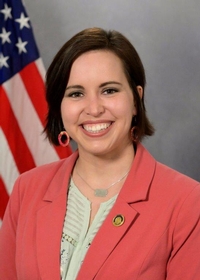
Rep. Emily Kinkead
Sponsored bills
Maddy summaryHB 2007 mandates a specific $62 million transfer from Pennsylvania's Budget Stabilization Reserve Fund by November 1, 2025, to address the loss of federal SNAP benefits. The funds are allocated as follows: $50 million to the Department of Agriculture for food bank grants under existing state food programs, $10 million to the Department of Human Services for senior meal assistance, and $2 million for administration and outreach. This bill directly affects food banks, senior assistance organizations, and state agencies managing these programs. It requires the transfer to occur regardless of the usual emergency funding process outlined in Section 1703-A(b), which typically requires a two-thirds legislative vote for reserve fund appropriations. The bill takes effect immediately upon enactment.
Maddy summaryHB 1828 requires health insurance plans in Pennsylvania to cover all recommended vaccines without requiring patients to pay out-of-pocket costs like copays or deductibles. It directly affects insurance companies by mandating this coverage and patients who rely on insurance for routine immunizations (e.g., childhood vaccines, flu shots). The bill adds penalties for insurers that fail to comply with the coverage requirement. This policy change ensures broader access to vaccines by removing financial barriers under insurance plans.
Maddy summaryHB 2001 amends Pennsylvania's education laws to establish educational opportunities for students incarcerated in state facilities. It directly affects incarcerated individuals in Pennsylvania prisons by requiring educational programming access. The bill removes an existing regulation (abrogating it) to enable this change, though specific program details aren't outlined in the title. This focuses on policy changes to integrate incarcerated students into the state's education framework.
Maddy summaryHB 1974 creates a new Contingency Management Support Grant Program within the Department of Drug and Alcohol Programs. The bill establishes a mechanism for distributing grants to support substance use disorder treatment programs that use evidence-based contingency management approaches (like providing rewards for treatment adherence). This program directly affects licensed treatment providers and individuals receiving substance use disorder services by providing funding for these specific support services. The bill amends the 1929 Administrative Code to authorize this grant program under the department's existing authority.
Maddy summaryHB 305 requires health insurance policies to cover insulin, directly affecting people with diabetes who rely on this medication. It amends the 1921 Insurance Company Law to mandate that casualty insurance plans include insulin coverage without excessive cost-sharing. The key provision eliminates gaps where insulin might previously have been excluded or subject to high out-of-pocket costs. This policy change applies to all insurers offering casualty coverage under the amended law. The bill is currently pending before the Insurance committee.
Maddy summaryHB 1985 amends the 1965 Banking Code to update the list of legal holidays when banks must close. It directly affects banks and financial institutions operating under Pennsylvania's banking regulations by adding specific holidays to the code's calendar. The bill also includes a repeal provision, though the specific repealed section is not detailed in the provided context. This is a procedural adjustment to banking code requirements, not a substantive policy change.
Maddy summaryHB 1983 would officially designate the second Monday in October each year as "Indigenous Peoples' Day" in the Commonwealth, replacing any existing holiday designation for that date. This change would require state government offices and agencies to recognize and observe the day as Indigenous Peoples' Day for official purposes. The bill does not create new programs, funding, or legal obligations but alters the official name of the holiday for state recognition. It directly affects state operations and public observance, shifting the focus from a previous designation (commonly Columbus Day in many states) to honor Indigenous cultures and histories.
Maddy summaryThis bill (HB 1984) proposes amendments to Pennsylvania's 1893 Legal Holiday Law regarding the designation of legal holidays, with a stated repeal provision. However, the provided context does not specify which holidays are affected, what new designations are proposed, or what specific provisions are being repealed. Without details on the exact changes to holiday designations or the repealed content, a substantive summary of the bill's policy impact cannot be provided. The bill is currently referred to the State Government committee as of October 23, 2025.
Maddy summaryHR 351 is a resolution directing the Joint State Government Commission to study current electric bicycle regulations and develop recommendations for updating the state's legal and regulatory framework. It does not change existing laws but requires a formal study to identify necessary updates for e-bike rules. The Commission's report would propose specific changes to statutes and regulations governing e-bike operation, safety, and use. This resolution directly affects future regulatory decisions by state agencies and local governments managing e-bike policies.