

Maddy summaryHB 721 amends Pennsylvania's Construction Workplace Misclassification Act to strengthen protections for construction workers who are incorrectly classified as independent contractors instead of employees. The bill allows affected workers to file lawsuits against companies for misclassification and imposes criminal penalties for repeated violations, while also adding safeguards against employer retaliation for reporting violations. It expands administrative penalties for misclassification and requires that penalty funds be used to support enforcement efforts. This directly affects construction companies that misclassify workers and construction workers who lose benefits like overtime pay, health insurance, or workers' compensation due to improper classification.
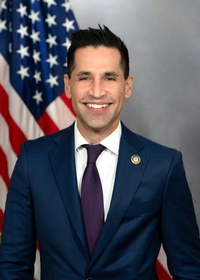
Rep. Tarik Khan
Sponsored bills
Maddy summaryHB 818 creates a program allowing first-time homebuyers in the Commonwealth to open state-backed savings accounts for down payments and closing costs. It establishes a dedicated First-time Homebuyer Savings Account Fund and requires the Treasury Department to manage the program and allocate funds. The bill directly affects eligible first-time homebuyers by providing a new savings mechanism for housing costs. Key provisions include the fund's creation, Treasury's administrative duties, and the structure for account access.
Maddy summaryHB 500 repeals existing tax credit provisions for local resource manufacturing (petrochemicals/fertilizers) and Pennsylvania milk processing, while creating new tax credits for clean energy and advanced manufacturing sectors. It establishes tax credits for reliable energy investments, regional clean hydrogen hubs, semiconductor manufacturing, biomedical research, geothermal energy, and sustainable aviation fuel. Eligible businesses must meet specific criteria for capital investment, job creation, and project location to apply for these credits through the Department of Revenue. The bill also updates definitions and application processes for these new credits, with annual funding limits and rules for credit usage.
Maddy summaryHB 433 requires health insurance plans to cover mammograms and breast imaging services without cost-sharing (like copays or deductibles) for policyholders. It directly affects women needing preventive breast cancer screenings and the insurance companies providing health coverage. The bill amends Pennsylvania’s 1921 Insurance Company Law to mandate this coverage for mammographic examinations and breast imaging under casualty insurance policies. This policy change ensures these essential preventive services are fully covered at no additional cost to patients.
Maddy summaryHB 193 requires Pennsylvania state buildings to install automated external defibrillators (AEDs) - devices that can restart heartbeats during cardiac arrest - in all regularly occupied facilities. It mandates at least one AED per building, plus one additional AED for every 70,000 square feet, with all devices clearly visible and accessible. The law applies to buildings owned by the Commonwealth and maintained by the Department of General Services, excluding unoccupied storage facilities, maintenance sheds, and temporary structures. The Department of General Services must implement and maintain these devices, with the law taking effect in 60 days.
Maddy summaryHB 820 creates Pennsylvania's "Working Pennsylvanians Tax Credit," which provides a state tax credit equal to 30% of a taxpayer's federal Earned Income Tax Credit (EITC) for the same year. This credit directly affects low-to-moderate income Pennsylvania residents who qualify for the federal EITC, applying it against their state tax bill. The credit is refundable, meaning taxpayers receive a cash refund if the credit exceeds their state tax liability. The bill takes effect for taxable years beginning after December 31, 2024.
Maddy summaryHB 630 amends Pennsylvania's Equal Pay Law to strengthen protections against wage discrimination based on sex, race, or ethnicity. It adds definitions for "comparable work" (requiring similar skill, effort, responsibility, and working conditions) and clarifies that "wages" include all compensation like fringe benefits. The bill explicitly bans employers from requiring employees to refrain from discussing wages, using salary history to set pay, or asking about prior wages during hiring. It also establishes an Equal Pay Enforcement Fund to support enforcement efforts and clarifies that job titles alone cannot determine if jobs are comparable.
Maddy summaryHB 1470 proposes to amend the Human Services Code to establish a subscription-like model for GLP-1 agonists used to treat obesity within public assistance programs. The bill directs the state department to seek a waiver from the Centers for Medicare and Medicaid Services (CMS) to allow the Commonwealth to enter into value-based arrangements with drug manufacturers. These arrangements are defined as "supplemental rebate agreements," where the Commonwealth pays an agreed amount per treatment up to a cap, after which additional treatments are provided at no cost. If federal approval is granted, the department would then develop regulations to implement this new payment system.
Maddy summaryHouse Bill 1469 amends the Health Care Facilities Act to establish requirements for hospital price transparency. It mandates that hospitals publish a comprehensive list of their standard charges for all items and services on their public websites in a readable digital format. This list must include gross charges, discounted cash prices, and various negotiated rates with third-party payors. The bill also provides for a prohibition on debt collection action against patients by hospitals that do not comply with these requirements, aiming to give patients clearer access to pricing information.
Maddy summaryThis bill is a symbolic resolution designating May 20, 2025, as "Jimmy Stewart Day" in Pennsylvania. It honors the late actor Jimmy Stewart, who was born in Indiana, Pennsylvania, and had a significant film career including roles in *It's a Wonderful Life* and *Mr. Smith Goes to Washington*. The resolution highlights his birthplace, career achievements, and honorary awards like the Presidential Medal of Freedom. As a commemorative resolution, it has no legal effect or policy impact - it simply recognizes Stewart's legacy through a designated day.