

Maddy summaryHB 129 updates specific definitions within Pennsylvania's Unfair Trade Practices and Consumer Protection Law (enacted in 1968). It clarifies terms used in the law to improve consistency in how consumer protection rules are applied. This change directly affects businesses operating under the law and consumers seeking to understand their rights under the statute. The bill focuses solely on refining terminology, not altering substantive consumer protections or enforcement mechanisms.
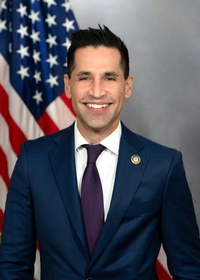
Rep. Tarik Khan
Sponsored bills
Maddy summaryHB 1719 creates the Individual Property Disaster Assistance Fund to help Pennsylvania residents and municipalities repair property damage from disasters not covered by federal aid. The fund provides grants for individuals (with restrictions for flood-prone properties without required insurance) and municipalities affected by declared local or state disasters. Applicants must submit detailed requests through the Pennsylvania Emergency Management Agency, including property damage dates and eligibility verification. Funds operate on a first-come, first-served basis with potential caps or usage restrictions set by the agency. This replaces the previous Public Disaster Assistance Grant Program and specifically targets unmet needs where federal disaster declarations are absent.
Maddy summaryHB 1711 creates a program that pays vendors who supply concrete with at least 20% lower carbon emissions than the regional average for state-funded construction projects. The concrete must be verified through an environmental product declaration, and vendors must deliver at least 50 cubic yards (or equivalent precast) for qualifying projects. The Pennsylvania Department of General Services will manage the payments, which are intended to incentivize lower-carbon concrete use. This bill directly affects state procurement agencies and concrete suppliers working on Commonwealth-funded projects.
Maddy summaryHB 1431 repeals Pennsylvania’s prohibition on hunting on Sundays without written permission, making Sunday hunting legal statewide for those with proper authorization. The bill directly affects hunters by removing a longstanding restriction on Sunday hunting activities. Key provisions include eliminating the requirement for written permission to hunt on Sundays and updating regulations related to unlawful hunting devices, trespass on private property during hunting, and wildlife protection. This amendment became law on July 9, 2025 (Act No. 36 of 2025), modifying existing hunting rules under Title 34 of Pennsylvania’s statutes.
Maddy summaryThis resolution designates July 17, 2025, as "100th Anniversary of American Legion Baseball Day" within Pennsylvania. It is a ceremonial resolution recognizing the centennial of American Legion Baseball in the state, with no binding legal effect or direct impact on individuals or policies. The resolution was adopted by the legislature on July 8, 2025, as a symbolic gesture honoring this youth sports program's history.
Maddy summaryHB 1705 amends Pennsylvania's 1951 Landlord and Tenant Act to require landlords to disclose flood risk information to tenants. It directly affects landlords and tenants by mandating that flood risk data be made available on a public website, rather than solely through lease documents. The key provision creates a new requirement for landlords to provide access to this flood risk information via an online platform, improving transparency about property flood hazards. This change updates how flood risk disclosures are delivered under the existing law.
Maddy summaryHB 1553 requires banks and credit unions in Pennsylvania to provide clear notices when charging overdraft or nonsufficient funds fees, including details like transaction date, type, and balance impact. It caps overdraft fees at $15 (or the transaction cost, whichever is lower) and limits customers to no more than three such fees per calendar day. The law also prohibits additional charges beyond standard fees and bans fees for declined transactions. These protections apply directly to bank customers and credit union members, with rules taking effect 180 days after enactment. The bill mandates fee transparency by requiring institutions with websites to publicly list all fees.
Maddy summaryHB 1707 establishes a 3-year pilot program providing $5,000 semester stipends to Pennsylvania residents enrolled in approved Master of Social Work (MSW) programs with a 3.0 GPA or higher who complete required internships at department-approved facilities. The Department of Human Services administers the program, awarding stipends subject to available funding and requiring interns to gain clinical training aligned with social work licensure standards. The program mandates a report within one year evaluating outcomes and expansion potential, with authority expiring three years after implementation. This directly supports social work students and aims to strengthen the behavioral health care workforce through structured education and training.
Maddy summaryHB 1572 modifies Pennsylvania's historic preservation tax credit program by setting new annual spending limits and allocation rules. It caps total annual tax credits at $20 million (excluding unused prior-year credits), limits credits to $1.5 million per project owner annually (up from $500,000), and requires equitable regional distribution of credits - reallocating unclaimed funds to other regions. The bill directly affects historic preservation project owners seeking tax credits for rehabilitation work. These changes apply to fiscal years starting July 1, 2025, and aim to manage program funding more systematically.
Maddy summaryHB 1234 amends Pennsylvania's Human Services Code to require public assistance programs to cover the cost of blood pressure monitors for eligible recipients. This change directly affects individuals enrolled in state public assistance programs who need blood pressure monitoring for health management. The bill adds blood pressure monitors to the list of covered medical equipment under the public assistance program, ensuring these devices are provided without cost to recipients. It does not change eligibility requirements but expands existing coverage to include this specific monitoring tool. The bill passed final passage on July 1, 2025, and was referred to the Health & Human Services committee.