

Maddy summaryHB 1299 amends Pennsylvania's Unfair Trade Practices and Consumer Protection Law to regulate automatic renewal and continuous service offers. It requires businesses to clearly disclose renewal terms, pricing after trials, and cancellation options in a way consumers can retain, and to allow online cancellation. The law applies to most subscription-based goods/services but excludes health clubs, federally regulated utilities, natural gas/electricity contracts, and insurance entities. Violations would be treated as unfair trade practices under existing enforcement mechanisms.
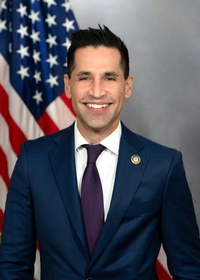
Rep. Tarik Khan
Sponsored bills
Maddy summaryHB 564 updates Pennsylvania law to establish a new mental health crisis response system. It requires the Department of Human Services to create and operate this system, including training crisis responders and coordinating care. The bill directly affects individuals experiencing mental health crises and the state agencies responsible for emergency mental health services. Key provisions mandate specific duties for DHS to ensure timely, accessible crisis support statewide. The bill passed final passage on July 14, 2025, and is now under review by the Health & Human Services committee.
Maddy summaryHB 1424 amends Pennsylvania's Local Tax Enabling Act to prohibit local governments from taxing admission fees at recreational campgrounds. It adds a new restriction (section 18) preventing municipalities from levying amusement taxes on guest charges for campground access. The bill also clarifies that camping property rentals aren't considered "places of amusement" for tax purposes. This change affects all local authorities covered by the original tax law, including cities, towns, and school districts.
Maddy summaryHB 1466 requires mortgage lenders in Pennsylvania to provide mandatory housing counseling to applicants before processing reverse mortgage loans. Specifically, licensees must arrange in-person, phone, or video counseling from a HUD-approved agency, covering reverse mortgage details and alternatives, and issue a certificate documenting the session. This applies to all applicants for reverse mortgages - loans secured by home equity that don’t require repayment until later - and mandates lenders to keep counseling records for the loan’s duration. The bill directly affects mortgage lenders and reverse mortgage applicants, aiming to improve consumer understanding of this complex financial product.
Maddy summaryHB 1747 amends Pennsylvania's firearm laws by updating definitions and regulations around the sale or transfer of firearms under Title 18. It directly affects firearm sellers, buyers, and law enforcement by potentially clarifying legal standards for transactions. The bill's title indicates it focuses on refining existing provisions without specifying new restrictions or requirements in the provided context. As it was recently referred to the Judiciary Committee (July 21, 2025), no specific policy changes or voting details are available in the given information. This summary is based solely on the bill's title and referral status.
Maddy summaryHB 1058 amends Pennsylvania's State Lottery Law to adjust the minimum percentage of lottery revenues dedicated to senior programs. It reduces the required allocation from 20% (for fiscal years 2019-2025) to 10% for fiscal years beginning after June 30, 2025. This directly affects seniors aged 65+ who receive property tax relief and reduced-fare transit services funded by lottery revenues. The change modifies Section 303(a)(11)(iv) of the law, specifying the new funding percentage starting in 2026. The bill became law on July 21, 2025, as Act No. 37 of 2025.
Maddy summaryHB 1527 updates the existing Rare Disease Advisory Council established in 2017, clarifying its structure and responsibilities. The bill directly affects patients with rare diseases and requires coordination among the Department of Health, Insurance Department, Department of Human Services, and Department of Education. Key provisions mandate the council to advise state agencies on rare disease research, treatment access, insurance coverage, and resource allocation. It also specifies how departments must collaborate on policies impacting rare disease patients, ensuring a unified state approach.
Maddy summaryThis bill converts an existing cosmetology training pilot program at career and technical centers (CTCs) into a permanent program under Pennsylvania's Public School Code. It requires participating CTCs and secondary schools to submit annual reports to the State Board of Cosmetology on training metrics. The legislation formalizes ongoing operations from the pilot phase, ensuring existing contracts, rules, and agreements remain valid without change. It directly affects career centers and schools offering cosmetology training within the state's public education system.
Maddy summaryHB 1429 requires the state agency administering public assistance programs (like food stamps or cash aid) to submit a report detailing a transition plan to replace current access cards with secure chip-enabled electronic cards. The bill directly affects recipients of public assistance and the agencies managing these programs by mandating a formal report on how the switch to chip cards will be implemented. Key provisions include specifying the report must cover timelines, costs, and how the transition will ensure continued access for beneficiaries. This is a procedural bill focused on reporting requirements, not altering benefit eligibility or funding.
Maddy summaryHB 1626 establishes a pilot program allowing career and technical centers (CTCs) and secondary schools in Pennsylvania to offer barber training under the State Board of Barber Examiners. The bill requires participating schools to report student and program data annually by June 30 through 2025. It specifies the pilot program expires three years after enactment (2025) but allows conversion to a permanent program without disrupting existing contracts or rules established during the pilot. This directly affects CTCs and schools participating in barber training, creating a structured pathway for students seeking barbering credentials.