

Maddy summaryHB 1652 adds Gaucher disease to Pennsylvania's mandatory newborn screening program under the Newborn Child Testing Act. The bill expands the existing program to require screening for this genetic disorder in newborns, directly affecting all infants born in Pennsylvania. Key provisions include updating the list of covered conditions under Section 3(a)(1) of the 1965 Act, ensuring healthcare providers screen for Gaucher disease to identify it early. This change aims to enable timely treatment to prevent intellectual or physical disabilities, aligning with the program's existing purpose. The bill does not alter funding or implementation processes, only adding one specific condition to the screening list.
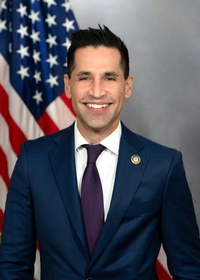
Rep. Tarik Khan
Sponsored bills
Maddy summaryHB 1043 amends Pennsylvania's Public School Code to expand access to emergency allergy and asthma treatments in schools. The bill specifically allows school staff, including bus drivers and crossing guards, to possess, use, and administer epinephrine auto-injectors (like EpiPens) and asthma inhalers for students in medical emergencies. It updates definitions and procedures to ensure authorized personnel can act quickly during allergic reactions or asthma attacks without requiring individual physician orders each time. This directly affects students with life-threatening allergies or asthma and school staff who may need to provide immediate care.
Maddy summaryHB 804 expands Pennsylvania's existing Automobile Lemon Law (originally enacted in 1984) to cover recreational vehicles (RVs), including campers and motorhomes. It requires dealers to repair persistent defects in new RVs after a specified number of attempts, aligning RV repair obligations with those for automobiles. The bill updates definitions and repair procedures within the law to apply directly to RV buyers and dealerships selling new recreational vehicles. This change ensures RV purchasers have similar protections as car buyers when facing repeated, unresolved defects.
Maddy summaryHB 2030 would allow Pennsylvania to join the Advanced Practice Registered Nurse (APRN) Interstate Compact, enabling APRNs (like nurse practitioners and anesthetists) to practice across state lines without obtaining separate licenses in each state. This directly affects APRNs working in Pennsylvania and those seeking to practice in other compact states. The bill requires the Governor and Secretary of the Commonwealth to adopt the compact's terms and implement its provisions. If enacted, it would streamline licensing for APRNs providing care in multiple states, reducing administrative barriers for healthcare providers and patients.
Maddy summaryHR 153 designates the week of November 16-22, 2025, as "County Row Office Employee Appreciation Week" in Pennsylvania. This resolution honors county office employees for their service but does not create new laws or provide funding. It is a symbolic gesture with no direct policy changes or financial impact on affected individuals or entities.
Maddy summaryHB 1540 creates a "Buy America, Buy Union" grant program and fund under Pennsylvania's Department of Community and Economic Development. It requires state-funded projects to prioritize American-made materials and union labor by offering grants to qualifying contractors. The bill establishes a dedicated fund to finance these grants, directly affecting state agencies and contractors working on public projects. Key provisions mandate that projects receiving grants must meet specific union labor and domestic sourcing standards, altering how state procurement contracts are awarded. This policy change shifts procurement incentives toward union workers and U.S. manufactured goods for eligible state projects.
Maddy summaryThis bill designates November 5, 2025, as "Guru Nanak Day" in Pennsylvania through a symbolic resolution. It officially recognizes the birth anniversary of Guru Nanak, the founder of Sikhism, for public observance within the state. The resolution does not create new laws or alter existing policies; it serves solely as a formal acknowledgment by the state government. This designation primarily affects Pennsylvania's official calendar and public events, honoring the Sikh community's cultural and religious significance.
Maddy summaryHB 384 adds a new requirement for Pennsylvania courts: when someone is convicted of criminal trespass at a licensed gambling facility (like a casino) or video gaming area while on a self-exclusion list, the court may order an evaluation to assess if they have a gambling disorder and need treatment. This applies specifically to individuals who violated self-exclusion rules at gambling venues, as defined by Pennsylvania law. The evaluation, conducted by a court-appointed clinician, must determine the need for counseling or treatment as part of sentencing or pretrial diversion. The bill does not change the trespass offense itself but adds this assessment step for a specific subset of cases involving gambling venues.
Maddy summaryHB 2041 amends Pennsylvania's Childhood Blood Lead Test Act to require health care practitioners to ensure children receive at least one blood lead test by 12 months of age and a second test by 24 months of age, with additional testing mandated between 24 and 72 months if not tested by age 2. The bill also requires blood lead testing for pregnant women who have at least one identified lead exposure risk factor. It clarifies that health insurance must cover these tests without cost-sharing, as defined in the bill. This law directly affects children under 72 months, pregnant women, and health care providers in Pennsylvania.
Maddy summaryHB 2021 updates Pennsylvania's Vehicle Code to allow automated red light enforcement cameras in first-class cities (like Philadelphia) and specific other municipalities. It authorizes these systems to capture vehicles running red lights at intersections, directly affecting drivers who violate traffic signals in those areas. The bill modifies existing law to permit this enforcement method, requiring municipalities to adopt specific procedures for camera placement and violation processing. This change expands current red light camera programs by clarifying legal authority for participating jurisdictions.