

Maddy summaryHB 1446 allows local governments to grant tax exemptions for improvements and redevelopment of vacant or underused properties, directly affecting property owners and developers who redevelop sites like abandoned lots or outdated buildings. It establishes a state-level Economic Development and Mixed-Use Redevelopment Advisory Committee within the State Planning Board to advise on eligible projects and guide implementation. The Department of Community and Economic Development is given authority to manage the program, including setting eligibility rules and overseeing tax exemption approvals. The bill aims to incentivize revitalization of neglected properties by reducing financial barriers for redevelopment. This policy change focuses on concrete tax incentives and administrative structure, not speculative economic outcomes.
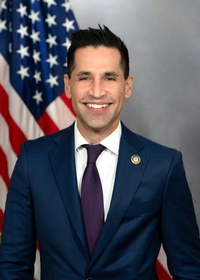
Rep. Tarik Khan
Sponsored bills
Maddy summaryHB 2099 establishes a new Delayed Payment Plan Program to help eligible Pennsylvania residents attend specific colleges by covering tuition costs in exchange for paying a portion of their future income. The program, administered by the Pennsylvania Higher Education Assistance Agency (PHEAA), requires students to agree to remain in Pennsylvania for 10 years after graduation (or until tuition is repaid) and study in high-need fields. It uses a dedicated fund financed by state appropriations, private donations, and income payments from participants, with administrative costs capped at $400,000 in the first year. Initially targeting 15 community colleges and Thaddeus Stevens College of Technology for the 2025-2026 academic year, it may expand to other state institutions starting in 2026-2027.
Maddy summaryHB 2079 establishes a program to reimburse eligible entities - such as school districts, counties, human services providers, Pre-K programs, and Head Start providers - for documented financing costs or lost interest income caused by delays in passing the state budget (defined as the period from July 1, 2025, until the 2025-2026 budget takes effect). The program is funded primarily by "impasse-generated interest" (interest earned from delayed state spending during the budget impasse), with the legislature providing additional funds if needed. The Office of the Budget will administer the program, including processing applications and reporting annually on reimbursements, funding sources, and recipient details.
Maddy summaryHB 2061 amends Pennsylvania's tax code to add new requirements for data center owners seeking tax incentives under the computer data center equipment program. It requires applicants to submit an affirmation that all contractors and subcontractors for construction, renovation, demolition, or similar work (starting July 1, 2025) will pay workers at least the Pennsylvania prevailing wage rate, as defined by the state's prevailing wage law. This applies regardless of whether the project would otherwise qualify for prevailing wage coverage under existing law. The bill directly affects data center developers planning major construction or renovation projects after July 2025 to qualify for tax incentives.
Maddy summaryThis resolution condemns any threats of political violence against elected officials, specifically referencing recent public statements interpreted as threatening lawmakers who uphold constitutional duties. It reaffirms that military personnel must refuse unlawful orders under the Uniform Code of Military Justice (UCMJ), citing Articles 90-92 and the Nuremberg Principles. The resolution has no legal effect but symbolically urges compliance with the UCMJ and rejects intimidation tactics targeting representatives. It directs copies to the President, Defense Secretary, and Pennsylvania's congressional delegation. As a symbolic statement, it does not alter laws or directly affect any group beyond expressing legislative concern.
Maddy summaryHB 439 amends Pennsylvania's Human Relations Act to explicitly define "race" as including hair texture and protective hairstyles (such as locs, braids, or afros), and "religious creed" as including head coverings or hairstyles tied to religious practice. Employers cannot prohibit these features unless they prove the rule is necessary for health/safety, non-discriminatory, job-specific, and applied equally. The law does not prevent employers from enforcing general safety rules or anti-harassment policies that apply fairly across all employees. This directly affects employers and employees in Pennsylvania workplaces by clarifying protections against discrimination related to appearance.
Maddy summaryHB 1811 sets a $400 per acre maximum limit for the Pennsylvania Game Commission when purchasing land for game conservation in counties classified as sixth, seventh, or eighth class. This directly affects the Game Commission’s land acquisition costs for wildlife management in smaller counties. The bill clarifies that this price limit applies exclusively to these specific county classifications, ensuring purchases align with local market values while controlling expenses.
Maddy summaryHB 1233 requires battery manufacturers and retailers in Pennsylvania to create and implement plans for managing used portable batteries (like those in electronics and tools). It directs the Department of Environmental Protection to review these plans and enforce compliance, imposing fines for violations. The bill directly affects businesses that sell or produce portable batteries by mandating their responsible collection and recycling. If passed, it would establish new statewide requirements for handling battery waste, aiming to reduce environmental harm from improper disposal. The bill is currently pending in the Environmental Resources & Energy committee.
Maddy summaryHB 1894 amends Pennsylvania's Human Services Code to update the LIFE Program, which supports aging residents. The bill specifically addresses provisions related to the "aged" (seniors) and includes a repeal provision, though the exact nature of the repeal is not detailed in the provided context. It directly affects seniors enrolled in or eligible for the LIFE Program under Pennsylvania's human services system. The bill passed final passage on November 17, 2025, and was referred to the Aging & Youth committee for further consideration. (Note: Specific mechanisms or policy changes beyond the title's reference to "further providing for LIFE Program" are not described in the provided context.)
Maddy summaryHB 1359 amends Pennsylvania's entertainment tax incentive program by updating its definitions, procedures, and limitations, directly affecting entertainment businesses seeking tax benefits. It also adds new regulatory requirements for self-service storage facilities, including operational standards. The bill clarifies how the entertainment program operates while creating a new framework for overseeing storage facility safety and business practices. These changes became law on November 24, 2025, after approval by the governor. The legislation focuses on administrative updates and new oversight without altering tax rates or funding levels.