

Maddy summaryHB 1485 amends Pennsylvania's Emergency and Law Enforcement Personnel Death Benefits Act to include "public works employees" as eligible recipients for death benefits. The bill adds a definition clarifying that public works employees - municipal workers maintaining infrastructure like roads, water systems, or parks who respond to emergencies as first responders - are covered if they die while performing duties. It expands the existing $100,000 death benefit (adjusted for inflation) to apply to these employees, alongside firefighters, law enforcement, and others already covered. The change affects surviving spouses, children, or parents of qualifying public works employees who die on duty, without altering the benefit amount or eligibility criteria for other covered personnel.
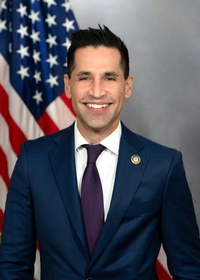
Rep. Tarik Khan
Sponsored bills
Maddy summaryThis bill designates May 2026 as "Guillain-Barré Syndrome Awareness Month" in Pennsylvania to highlight a rare autoimmune condition that damages peripheral nerves. The resolution aims to increase public understanding of the disease, which can cause muscle weakness and paralysis, and to encourage support for ongoing medical research. Directly affecting residents of Pennsylvania, the measure serves as a symbolic gesture rather than implementing new laws or funding programs.
Maddy summaryThis bill updates Pennsylvania laws to restrict how juvenile suspects are held in police lockups and defines where they can be detained before a court hearing. It generally prohibits keeping children in adult police facilities, allowing it only for short periods under six hours for tasks like identification or processing, provided the child is separated from adults and under constant supervision. For longer-term detention, the law requires judges to confirm that no less restrictive option exists and mandates that children be placed in approved juvenile facilities rather than adult prisons. Additionally, the bill clarifies that children facing serious charges are entitled to an immediate bail hearing if they are held before trial.
Maddy summaryHB 2506 prevents Pennsylvania counties, municipalities, and townships from passing local laws that restrict the ownership, possession, transfer, or transportation of firearms and ammunition, as long as those items are not already banned by state or federal law. The bill also stops local governments from suing gun manufacturers or dealers for damages related to how firearms are designed, manufactured, or sold to the public. Additionally, it removes the specific authority for municipalities to regulate firearms entirely, ensuring that gun policy remains a state-level responsibility rather than a local one.
Maddy summaryThis bill amends Pennsylvania's Second Class County Code to prohibit these counties from passing laws or taking actions that regulate firearms. Specifically, it removes the existing provision that allowed second-class counties to create ordinances regarding the transfer, ownership, transportation, or possession of guns. The change directly affects local governments in second-class counties by restricting their ability to implement their own gun control measures. The legislation becomes effective 60 days after it is passed.
Maddy summaryThis bill establishes a legal framework in Pennsylvania for event outcome prediction wagering, allowing individuals to place bets on the results of various future events such as elections, sports competitions, and weather patterns through licensed digital platforms. To operate, companies must obtain a state license from the Gaming Control Board and adhere to specific rules regarding how they set odds and manage payouts, while the existing lottery, horse racing, and fantasy sports remain excluded from these new regulations. The legislation also creates a new tax on the revenue generated from these wagers, directing a portion of the funds into state accounts for gaming oversight and financing, and imposes penalties for violations of the new rules.
Maddy summaryThis bill repeals the Pennsylvania Medical Education Loan Assistance Program, which previously provided financial incentives to students pursuing medical, nursing, biomedical, and life sciences education. The program allowed eligible students to access loans with favorable terms, including low interest rates and fees, to encourage them to practice medicine or nursing in Pennsylvania, particularly in underserved areas. By removing this legislation, the state will no longer administer this specific loan assistance program for medical education.
Maddy summaryThis bill amends Pennsylvania's Human Relations Act to clarify that religious or fraternal organizations cannot restrict membership based on race, color, national origin, or ancestry to deny equal access to housing, employment, or public accommodations. It specifically updates Section 5(h)(10) to explicitly prohibit such discrimination under the guise of religious or fraternal affiliation. The change directly affects religious institutions, fraternal organizations, and housing providers operating under existing exemptions. The amendment takes effect 60 days after passage.
Maddy summaryHB 1077 establishes the Commission on Children's Vision within Pennsylvania's Department of Education and Department of Health to address children's vision care needs. The commission will develop statewide plans and low-cost programs for vision screenings, follow-up exams, and glasses for students who need them, while coordinating with local vision care providers. It must issue annual reports by December 31 detailing program achievements, trends in unmet vision care needs, and recommendations for improving access. The commission, composed of state education/health officials and 12 vision care professionals, will not receive compensation but will receive administrative support from the departments. This bill directly affects Pennsylvania schoolchildren requiring vision care and the state departments responsible for health and education services.
Maddy summaryHB 1098 establishes a new program under Pennsylvania's Commission on Crime and Delinquency to combat internet crimes against children. It directs the Commission to provide grants to law enforcement task forces for investigating and prosecuting internet-related crimes against minors under 18, specifically violations of Pennsylvania laws covering sexual offenses, human trafficking, and child exploitation (18 Pa.C.S. §§ 30, 31, 6312, 6318, 6320). The grants will support local police teams, supplement federal child exploitation grants, and fund specialized training for investigators. This program operates alongside existing federal and state funding without replacing it, directly affecting law enforcement agencies working on these cases.