

Maddy summaryThis bill modifies the Pennsylvania Food Bucks Program to require grantees to verify the residency of every SNAP recipient receiving benefits. It specifically prohibits providing benefit incentives to individuals who are not residents of Pennsylvania or who are not lawful residents of the United States. Additionally, the legislation mandates that program evaluators conduct biennial reviews and publish detailed reports on funding usage, geographic distribution, and participating retailers. The bill also grants the department authority to refer suspected immigration law violations to enforcement agencies. These changes directly affect the administration of the food incentive program and the eligibility criteria for participating SNAP recipients.
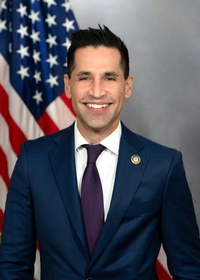
Rep. Tarik Khan
Sponsored bills
Maddy summaryThis bill requires ride-share drivers in Pennsylvania to display specific identification markers on their vehicles while they are active on the platform or providing a ride. Drivers must show a company placard on the windshield and rear windows, along with a unique barcode and a credential card featuring their photo and license plate number on the rear side windows. These markers must be clearly visible during the day and illuminated at night, and drivers are responsible for returning them within 30 days of quitting. The Department of Transportation is tasked with creating a uniform template for these identification items, which companies must then issue to their drivers. Failure to comply with these new display and record-keeping rules could result in fines imposed by the state commission.
Maddy summaryThis bill designates April 2024 as "National Volunteer Month" within Pennsylvania to honor the contributions of volunteers. It highlights the benefits of volunteering, such as job assistance, skill development, and improved community resilience, without creating new laws or funding. The resolution serves as a formal recognition and encourages residents to participate in community service efforts during the specified month.
Maddy summaryThis Pennsylvania House Resolution designates the week of June 17 through 21, 2024, as "Apprenticeship Week" to highlight the importance of registered apprenticeship programs. The measure serves as a commemorative gesture recognizing the history and benefits of these training initiatives, which provide workers with on-the-job learning and mentorship while helping employers build a skilled workforce. By officially setting aside this specific time frame, the resolution aims to raise public awareness about apprenticeships as a pathway to high-paying jobs and career development.
Maddy summaryThis bill allows practical nurses working in licensed hospices to officially pronounce death under specific conditions, such as when a patient has a valid Do Not Resuscitate order. To qualify, the nurse must complete required training on assessing vital signs and postmortem care, and the pronouncement is limited to confirming the cessation of breathing and heart function without determining the cause of death. The law also grants nurses the authority to release a deceased patient's body to a funeral home or family member immediately after notifying the attending physician or nurse practitioner, unless a coroner's investigation is needed. Additionally, the legislation provides legal immunity for nurses and hospices acting in good faith while complying with these new procedures.
Maddy summaryThis bill directs the Pennsylvania Human Services department to update its licensing rules within 60 days to include assisted living and supplemental health care services under the state's Community HealthChoices program. Specifically, it requires the department to submit necessary paperwork to the federal Centers for Medicare and Medicaid Services so that licensed assisted living facilities can be certified as medical assistance providers for these services. The legislation affects assisted living residences and the state health department by formally integrating these facilities into the existing healthcare coverage system.
Maddy summaryThis bill amends Pennsylvania vehicle laws to exempt specific agricultural equipment from registration and licensing requirements. It allows individuals to drive farm implements, trailers, or semitrailers up to 25 miles to a school-hosted agricultural event without needing a driver's license, provided the vehicle is no wider than 11 feet and the trip occurs between sunrise and sunset. The measure directly affects farmers and students participating in annual agriculture-related educational events, simplifying the process for transporting equipment to these gatherings.
Maddy summaryThis bill amends Pennsylvania laws to improve substance use overdose awareness by requiring the Department of Drug and Alcohol Programs to distribute educational posters in multiple languages. The department is authorized to cover the costs of printing and distributing these materials, which must be placed in conspicuous locations where permitted. Additionally, the legislation establishes a new grant program designed to support long-term recovery from substance use. These changes directly affect state agencies responsible for drug and alcohol prevention and the communities they serve.
Maddy summaryThis bill amends Pennsylvania's tax code to create a new tax credit program designed to help beginning farmers acquire land from existing owners. Under the proposed changes, both the seller of agricultural assets and the new beginning farmer would receive a tax credit equal to five percent of the sale price or fair market value, capped at $50,000 per farm. To qualify, individuals must apply to the Department of Agriculture for certification as a beginning farmer, which requires submitting financial projections and proof of agricultural experience. The legislation also updates definitions to clarify which government department oversees the program and specifies the documentation needed to verify eligibility for the credit.
Maddy summaryThis bill prohibits insurance companies from discriminating against individuals based on their use of specific drugs when underwriting, issuing, or renewing certain life insurance policies. The key provision expands the scope of protection to include the refusal to renew a policy, ensuring that coverage cannot be denied solely due to drug use. It directly affects insurance carriers and policyholders by mandating that decisions be based on factors other than the presence of certain substances. The legislation aims to create a more uniform standard for drug-related assessments in life insurance without advocating for a specific outcome.