

Maddy summaryThis bill requires manufacturers of firefighting protective gear containing PFAS chemicals to attach warning labels and provide written notices to buyers in Pennsylvania. It specifically targets equipment used by municipal fire departments and volunteer fire companies, covering items like jackets, pants, gloves, and helmets. The legislation mandates that these documents be kept on file for at least three years and assigns the Office of the State Fire Commissioner with the authority to enforce the rules. Penalties for non-compliance include fines of up to $5,000 for a first offense and $10,000 for subsequent violations, with the collected funds directed to state fire and emergency medical services grant programs.
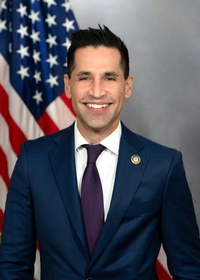
Rep. Tarik Khan
Sponsored bills
Maddy summaryThis bill amends the Underground Utility Line Protection Law by adding specific definitions and clarifying the responsibilities of facility owners, designers, excavators, and project owners. It also establishes duties for damage prevention committees, outlines procedures for issuing compliance orders, and sets administrative penalties for violations. Additionally, the legislation provides a legal mechanism for recovering penalties or forfeitures and includes provisions for the act's expiration.
Maddy summaryThis Pennsylvania House Resolution officially designates September 15 through October 15, 2024, as Hispanic Heritage Month within the state. The measure directly affects all Pennsylvanians by formally acknowledging the cultures, history, and contributions of the state's Hispanic and Latino communities. It calls on residents to honor these groups through learning, service, and celebration, recognizing their significant role in the Commonwealth's economy and society. The resolution does not alter laws or policies but serves as a symbolic gesture to highlight the importance of Hispanic heritage.
Maddy summaryThis resolution formally designates October 2024 as Polish American Heritage Month within the Commonwealth of Pennsylvania. It directly affects state government officials and institutions by encouraging them to acknowledge and celebrate the history and contributions of people of Polish descent. The measure highlights specific historical milestones, such as early Polish settlements in Jamestown, and honors notable figures like Casimir Pulaski and Marie Curie. By passing this resolution, the Pennsylvania House of Representatives aims to foster appreciation for Polish heritage without altering any laws or policies.
Maddy summaryThis Pennsylvania House Resolution designates the week of November 11 through 15, 2024, as Certified Public Accountant Week to recognize the profession's contributions to the state. The measure directly honors the more than 18,000 certified public accountants in Pennsylvania who work in public practice, industry, government, and education. By officially naming this specific week, the resolution aims to express appreciation for the financial and ethical services these professionals provide to taxpayers and businesses. This is a commemorative action rather than a law that changes operational rules or imposes new requirements.
Maddy summaryThis bill amends Pennsylvania's Adult Protective Services Act to update definitions and administrative duties while establishing a registration system for perpetrators of abuse and neglect. It clarifies terms such as "abuse," "exploitation," and "caregiver" to include specific acts like institutional sexual assault and unauthorized taking of an adult's resources. The legislation also outlines the responsibilities of the Department of Human Services and other agencies in protecting adults aged 18 to 59 with significant physical or mental impairments. Additionally, it mandates the registration of individuals convicted of abusing or neglecting vulnerable adults to enhance accountability and public safety.
Maddy summaryThis bill amends Pennsylvania's Older Adults Protective Services Act to update definitions of abuse, neglect, and exploitation while establishing a new abuse and neglect registry. It clarifies what constitutes harm to older adults, including specific provisions regarding sexual assault in care settings, and expands the list of facilities covered under the law. The legislation also strengthens privacy protections by restricting access to protective services records, allowing only specific staff and employers to view them for registry purposes. These changes directly affect caregivers, facilities, and state agencies responsible for investigating and reporting incidents involving vulnerable seniors.
Maddy summaryThis bill amends the text of House Bill 1371 to correct specific errors in the language regarding how certifying officials and agencies process petitions. The changes include updating references to federal definitions, adjusting section numbers, and clarifying that agencies must provide specific details when denying a petition due to a petitioner's failure to provide requested information. These amendments refine the procedural rules for handling certification forms without altering the core purpose of the original legislation.
Maddy summaryThis bill allows police officers and state employees to issue written violation notices to drivers or owners when they have probable cause to believe a vehicle is unsafe, improperly equipped, or non-compliant with regulations. The notice must list specific violations and set a deadline for corrections, typically 15 days for most issues or 30 days for emission problems, during which the vehicle owner must provide proof of repairs or pass an inspection. Once the deadline passes without evidence of compliance, the vehicle is prohibited from being driven on Pennsylvania highways until the required corrections are verified and submitted to authorities.
Maddy summaryThis bill prohibits the sale, manufacture, or distribution of firefighting protective gear containing intentionally added PFAS chemicals starting January 1, 2028. The law allows for exceptions if the State Fire Commissioner determines that using these chemicals is unavoidable and issues specific guidance. Violations of the ban can result in civil penalties of up to $5,000 for a first offense and up to $10,000 for subsequent offenses. Any fines collected from these penalties will be split equally between the Fire Company Grant Program and the Emergency Medical Services Grant Program.