

Maddy summaryHB 112 amends Pennsylvania's Automobile Lemon Law to clarify which vehicles are covered under the law. It adds a new definition for "farm equipment" as new, unused vehicles exclusively designed for agricultural use (like planting or harvesting) that are registered in Pennsylvania. This change explicitly includes farm equipment under the definition of "new motor vehicle" in the law, ensuring these vehicles qualify for lemon law protections. The bill directly affects farmers and agricultural businesses purchasing or leasing such vehicles in Pennsylvania. The amendment takes effect 60 days after enactment.
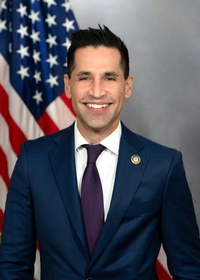
Rep. Tarik Khan
Sponsored bills
Maddy summaryHB 53 waives fees for certain state documents for individuals affected by domestic abuse. It applies to people who received protection orders within 90 days or verified recent abuse (within 120 days) through a victim service provider, medical professional, or standardized form. The bill covers duplicate/corrected documents like driver's licenses, vehicle titles, and birth certificates from the Departments of Transportation and Health. Eligible individuals with dependents also receive fee waivers for their dependents' documents. The Departments of Transportation and Health must create public policies for this waiver within 90 days of the law's effective date.
Maddy summaryHB 66 creates a Pennsylvania program providing $5,000 semester stipends to residents enrolled in accredited Master of Social Work (MSW) programs with a 3.0+ GPA. It directly affects students pursuing social work careers by funding their education through paid internships. The program requires internships at state-approved facilities to meet clinical training and licensing requirements, with stipends adjusted annually for inflation. Funding is contingent on available state budget resources, administered by the Department of Human Services.
Maddy summaryHB 45 requires businesses (vendors) selling services through contracts with automatic renewal clauses to clearly disclose renewal terms to consumers. Specifically, vendors must display renewal details in bold, 10-point font or larger, and provide written/electronic notice 30-60 days before renewal - detailing cancellation deadlines and how to opt out. If a business changes ownership, the new owner must notify consumers within 60 days and offer cancellation options. The law applies to contracts where renewal extends beyond six months, mandating vendors to retain proof of notification for six years. This affects consumers who sign service contracts and vendors operating in Pennsylvania.
Maddy summaryHB 48 creates a special "arts" vehicle registration plate in Pennsylvania for $41 extra per year (on top of standard fees), available for passenger cars, motor homes, trailers, and trucks under 14,000 pounds. The $15 portion of this fee is dedicated to the newly established Arts Promotion Fund. This fund, managed by the Council on the Arts, provides grants for arts programs, with spending estimates requiring Governor approval. The bill directly affects vehicle owners who choose the arts plate and supports arts funding through a dedicated revenue stream.
Maddy summaryHB 43 amends Pennsylvania's oil and gas law to change how well permit applicants must notify property owners and the public. It requires applicants to submit proof that they notified surface owners (using tax notice mailing lists from county assessment books) and water purveyors (via specific forms explaining their rights under existing law). The bill also mandates public notice through weekly newspaper publications in the local area for four consecutive weeks. These changes directly affect oil and gas companies applying for new well permits and impact surface landowners, water purveyors, and local communities through the new notification process. The bill takes effect 60 days after enactment.
Maddy summaryHB 42, the Well Operation Response Team Act, requires oil and gas operators in Pennsylvania to establish certified response teams for wells during exploration, drilling, and production phases. These teams must include trained members familiar with well operations, available within one hour of an emergency, and undergo annual first aid/CPR training and site-specific drills. Operators must report team details annually to the Department of Labor and Industry, provide emergency communication technology, and train local first responders on well hazards. The bill directly affects operators of active onshore oil/gas wells (excluding plugged/abandoned wells) and mandates specific response protocols to enhance emergency preparedness.
Maddy summaryHB 29 establishes Pennsylvania's HUB Zone Business Procurement Program to increase state contract opportunities for businesses owned by women, minorities, veterans, or located in historically underutilized business zones (HUB zones). It requires state agencies to set specific participation goals: 20% for contracts between $100,000-$750,000 and 25% for larger contracts, with exceptions if qualified businesses aren't available. The bill defines "diverse and disadvantaged businesses" to include HUB zone businesses and mandates agencies to compile verified business lists, monitor compliance, and provide training to support these businesses. This directly affects state purchasing agencies and qualifying businesses seeking state contracts.
Maddy summaryHB 47 amends Pennsylvania's Tax Reform Code to exclude at-home medical tests from sales tax. The bill specifically adds a new tax exclusion (Section 204(77)) covering tests done at home for diagnosing, treating, or monitoring diseases - such as pregnancy tests or test kits. This directly affects consumers purchasing these medical products, making them tax-free. The provision takes effect 60 days after enactment, removing sales tax liability for qualifying at-home medical tests.
Maddy summaryHB 39 amends Pennsylvania law to formally establish county humane officers' powers and duties under Title 16. It allows county commissioners to hire humane officers who enforce existing dog control laws (from the 1982 Dog Law) and animal cruelty laws (18 Pa.C.S. Ch. 55 Subch. B). To qualify, officers must complete specific training programs (22 Pa.C.S. §§ 3712-3713) covering animal welfare enforcement. The bill directly affects county commissioners (who may hire officers) and the officers themselves, clarifying their legal authority without creating new animal welfare standards.