

Maddy summaryHB 508 establishes the Wildlife Rehabilitation Grant Program, providing financial support to nonprofit wildlife rehabilitators in Pennsylvania based on their previous year's animal intake. The Pennsylvania Game Commission administers the program, awarding grants ranging from $2,500 (for 1-100 animals) up to $75,000 (for over 2,500 animals) to cover rehabilitation services, facility improvements, or related activities. Grants are distributed on a first-come basis until the Wildlife Rehabilitation Grant Fund is exhausted, with each rehabilitator limited to one grant per office location annually. This program directly supports organizations that care for and release injured, sick, orphaned, or displaced wildlife back into natural habitats.
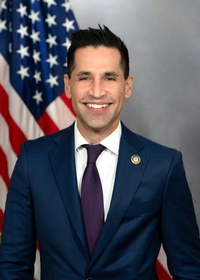
Rep. Tarik Khan
Sponsored bills
Maddy summaryHB 510 amends Pennsylvania's Municipalities Financial Recovery Act to require receivers managing financially distressed municipalities to consult the Pennsylvania Public Utility Commission (PUC) before selling, leasing, or disposing of water or wastewater systems. The PUC must analyze within 90 days whether the transaction would raise residential utility rates by 25% or more, and if so, the receiver cannot proceed. This rule directly affects receivers and financially distressed municipalities when handling public utility assets. The bill establishes a clear procedural safeguard to prevent significant rate increases for residents during asset transactions.
Maddy summaryHB 498 updates Pennsylvania's emergency protection order process for domestic abuse cases. It clarifies that temporary orders expire after one business day unless local court rules specify a 10-day limit or until a court hearing occurs. Hearing officers must now provide victims with information about local domestic violence resources, free legal aid, and how to report order violations. The bill also requires these orders to be entered into the statewide registry for tracking and mandates courts to schedule hearings to review orders until a final decision is made.
Maddy summaryHR 12 is a ceremonial resolution recognizing February 2025 as "Black History Month" in Pennsylvania. It does not create new laws or policies but formally acknowledges the month through the House of Representatives. The resolution highlights the historical origins of Black History Month, including Dr. Carter Godwin Woodson's founding of the Association for the Study of African American Life and History, and notes the 2025 theme focused on African Americans and labor. This resolution directly affects Pennsylvania residents by designating the month for commemoration, without altering any legal rights or obligations.
Maddy summaryHB 489 establishes Pennsylvania's Public Arts Grant Program and Public Arts Fund, administered by the Department of Community and Economic Development. The bill provides grants to community organizations and artists (based in Pennsylvania) to create free, publicly accessible public art - such as murals or sculptures - that depicts or benefits historically marginalized communities. Grants are capped at $100,000 per recipient, require a three-year completion timeline, and mandate that applications include details on accessibility, community impact, and required permits. The bill also transfers $10 million from the General Fund to the Public Arts Fund upon enactment.
Maddy summaryHB 509 amends Pennsylvania's Municipalities Financial Recovery Act to require that financially distressed municipalities under receivership must obtain approval from 75% of other municipalities with service agreements or whose residents previously used their water or sewer services before selling, leasing, or disposing of assets. This approval must be a public resolution passed by a majority vote of the other municipality's governing body and communicated to the distressed municipality and receiver within 48 hours. The bill directly affects the asset disposal process for financially distressed municipalities and the municipalities that rely on their water or sewer services.
Maddy summaryThis bill designates March 9, 2025, as "Charter Day" and Pennsylvania's 344th birthday, commemorating the 1681 charter granted to William Penn by King Charles II. It urges residents, schools, and historical organizations to participate in existing events hosted by the Pennsylvania Historical and Museum Commission and other state heritage institutions. The resolution has no binding legal effect and does not create new policies or obligations; it solely recognizes a historically observed date through ceremonial designation.
Maddy summaryThis Pennsylvania House Resolution (HR 39) is a symbolic tribute honoring former President Jimmy Carter following his death on December 29, 2024, at age 100. It commemorates his life, presidency, and humanitarian work - including the Camp David Accords, founding The Carter Center, and efforts to eradicate Guinea worm disease - through a series of historical "whereas" statements. As a commemorative resolution, it does not create new laws, allocate funds, or directly affect any individuals or policies. The resolution serves only to formally extend the Pennsylvania General Assembly's condolences and recognize Carter's legacy. It is purely ceremonial, with no legislative or policy impact.
Maddy summaryThis bill authorizes Pennsylvania's Department of Environmental Protection to lease submerged lands in Lake Erie (Erie County) for utility-scale offshore wind, solar, or kinetic energy projects, with requirements to avoid nearshore areas, shipping lanes, and migratory pathways. It establishes the Lake Erie Large-Scale Energy System Development Fund to collect lease and royalty payments from these projects, with funds distributed for energy development and related purposes. The bill sets a lease size limit of 25 to 10,000 contiguous acres and mandates that designated areas be developed in consultation with conservation agencies.
Maddy summaryHB 499 amends Pennsylvania's Election Code to streamline absentee and mail-in voting processes. It creates an "annual disabled absentee ballot list" for voters with permanent disabilities, eliminating the need for yearly physician certifications. The bill also establishes an electronic system for applying for absentee ballots (with digital signatures) and adjusts application deadlines (e.g., applications accepted up to 50 days before elections). These changes directly affect all absentee and mail-in voters, particularly those with disabilities, by simplifying registration and expanding access to electronic submission.