

Maddy summaryHB 455 establishes Pennsylvania's "Building a Better Future Grant Program" to fund organizations providing education and workforce training to young adults aged 16-24 who are disconnected from education. The program targets organizations serving youth from low-income backgrounds with specific vulnerabilities (e.g., foster care, disability, homelessness, or school dropout) and requires grantees to offer at least two services like job training, career counseling, or high school equivalency support. The Department of Labor and Industry will administer $5 million in state funding (from the General Fund) to award grants of up to $1 million per organization, with 5% reserved for statewide technical assistance. This directly affects eligible young adults and qualifying local organizations focused on construction, healthcare, and other in-demand vocational fields.
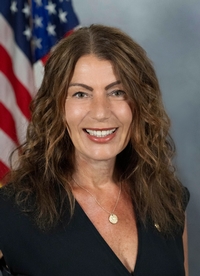
Rep. Tarah Probst
Sponsored bills
Maddy summaryHB 429 amends Pennsylvania's Fiscal Code to direct specific transfers from the Budget Stabilization Reserve Fund to address pension obligations. It requires $670 million to be transferred to the Public School Employees' Retirement Fund and $330 million to the State Employees' Retirement Fund by January 1, 2026, as one-time payments to reduce their unfunded pension liabilities. These transfers are separate from the fund's usual purpose of covering emergencies or economic downturns. The bill directly affects Pennsylvania's public employee pension systems, not general state programs or new legislation.
Maddy summaryHB 432 establishes Pennsylvania's Maternal Care Access Program under the Department of Health to address gaps in maternal healthcare. The bill identifies counties as "maternal care access zones" using the Maternal Vulnerability Index (based on social factors like poverty, education, and healthcare access) and the Social Vulnerability Index. It requires the Department to develop regulations for improving access to obstetric care, birth centers, and providers in areas classified as "maternity care deserts" (regions lacking hospitals, birth centers, or specialized providers within 25 miles). The program directly affects underserved communities and the Department of Health, focusing on concrete policy changes to expand maternal health resources.
Maddy summaryHB 428 establishes the Pennsylvania Artist Fellowship Grant Program, providing $100,000 annual grants to up to 25 eligible artists in the state. The program directly affects Pennsylvania residents aged 18+ who are visual, media, film, or performing artists with regular creative practice, not enrolled in school, and who produce community-accessible work. Key provisions include the Pennsylvania Council on the Arts administering applications, disbursement, and record-keeping, with grants permitted for project costs (materials, travel, housing) but prohibited for political activities or lobbying. The bill appropriates $2.5 million for grants and $250,000 for administration from the General Fund, effective 60 days after enactment.
Maddy summaryThis resolution designates January 23, 2025, as "Maternal Health Awareness Day" in Pennsylvania. It aims to recognize women who die from pregnancy or childbirth complications, highlighting Pennsylvania's maternal mortality rate of 82 deaths per 100,000 live births and the significantly higher rate (163 per 100,000) for Black women. The resolution does not create new laws or funding but seeks to increase public and healthcare awareness about maternal health risks. It references existing efforts like the Maternal Mortality Review Committee established under Act 24 of 2018.
Maddy summaryHB 371 amends Pennsylvania's Keystone Opportunity Zone Act to add new requirements for businesses seeking tax exemptions, deductions, or credits. It directly affects businesses operating within designated Keystone zones that make capital investments exceeding $25,000 for construction, reconstruction, or facility repairs. The key provision mandates that 70% of workers on such projects must be "skilled craft laborers" (defined as those with relevant training or apprenticeship completion), and all workers must receive the state-mandated prevailing wage rate. Businesses must verify these requirements annually through the Department of Labor and Industry, enforcing existing Pennsylvania Prevailing Wage Act standards for qualifying projects.
Maddy summaryHB 389 establishes the New Nursing Faculty Grant Program to support nursing education in Pennsylvania. It provides $10,000 grants to eligible nursing faculty members at accredited medical colleges who are PA residents, employed full-time (or have a pending offer), and have no more than three years of experience. The Pennsylvania Higher Education Assistance Agency (PHEAA) will administer the program, prioritizing positions historically difficult to fill, with applications submitted by nursing program deans. Grants cover professional expenses and aim to increase enrollment capacity at nursing programs.
Maddy summaryHB 391 requires all school buses in Pennsylvania to install video monitoring systems by July 1, 2026. The system must include internal cameras covering every seat and either an external camera or a forward-facing camera to monitor the road ahead. School bus operators, including school districts and transportation contractors, will be directly affected by this requirement. The state Department of Transportation will create specific regulations to implement the law. This bill focuses on enhancing safety monitoring during school bus operations.
Maddy summaryHB 374 amends Pennsylvania's Election Code to strengthen reporting requirements for campaign finance. It requires any individual or organization (including 501(c) groups) making independent expenditures over $100 in a year to report the candidate or ballot question they support, using the same forms as political committees. Additionally, it mandates that candidates, political committees, or organizations making contributions or independent expenditures over $500 after the final pre-election report must file a report within 24 hours via fax, mail, or in-person appearance. This bill directly affects candidates, political committees, and entities making significant campaign expenditures. The changes aim to increase transparency around late contributions and independent spending.
Maddy summaryHR 41 is a resolution directing Pennsylvania's Joint State Government Commission to study emergency child care needs and develop recommendations. The study will examine current availability (including Pennsylvania's 12 crisis nurseries), staffing challenges (like low wages averaging $12.43/hour), funding sources (including federal programs), and how other states license facilities. It requires the Commission to form an advisory committee with child care providers, parents, health/human services officials, and county representatives. The Commission must submit its report to the House within 18 months. This resolution does not create new laws but aims to inform future policy decisions.