

Maddy summaryHB 2161 requires public utilities in Pennsylvania to offer municipalities a written agreement before removing trees owned by cities or townships for service needs. If accepted, the utility must plant replacement trees within two years, using a specific method: measuring the removed tree’s size at breast height, halving that value, and planting that many two-inch replacement trees. Municipalities can also choose to accept a fee equal to the tree’s assessed value from a certified arborist instead of requiring new planting. This bill directly affects public utilities (like power or gas companies) and local governments that own trees along utility infrastructure.
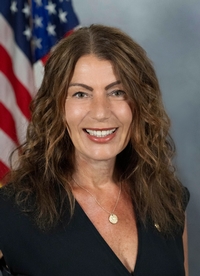
Rep. Tarah Probst
Sponsored bills
Maddy summaryHouse Resolution 395 designates March 17, 2026, as "St. Patrick's Day" in Pennsylvania. It formally celebrates the historical contributions of Irish Americans to the founding of the United States, including their roles in the Revolutionary War and the signing of the Declaration of Independence. The resolution is a symbolic gesture by the Pennsylvania House of Representatives to honor Irish American heritage and history.
Maddy summaryHB 501 amends Pennsylvania's Alternative Energy Portfolio Standards Act to update definitions and clarify requirements for renewable energy compliance. It specifically adds "advanced reactor" (including small modular reactors) to eligible energy sources, refines criteria for low-impact hydropower, and updates definitions for biomass, biogas, and alternative energy credits. The bill affects electric utilities required to meet portfolio standards by specifying which energy sources count toward compliance and how credits are calculated. These changes aim to modernize the framework for renewable energy reporting and incentives without altering current percentage targets. The bill is currently in committee review (Environmental & Natural Resource Protection).
Maddy summaryHB 2175 requires businesses using AI chatbots to clearly disclose when consumers are interacting with artificial intelligence, especially for mental health support (e.g., chatbots claiming to treat anxiety or depression). It prohibits deceptive advertising, mandates protection of personal data shared with these tools, and gives Pennsylvania’s Attorney General’s Bureau of Consumer Protection authority to enforce these rules and impose penalties. The law directly affects companies offering AI chatbots that provide health-related advice to Pennsylvania residents. It does not cover scripted tools (like guided meditation) or AI that simply connects users with human professionals.
Maddy summaryHR 329 is a non-binding resolution designating October 2025 as "Arts and Culture Month" in Pennsylvania. It does not create new laws, allocate funding, or directly affect any individuals or organizations. The resolution serves solely to recognize and promote arts and cultural activities during that month through official state acknowledgment. As a procedural resolution, it has no legal effect beyond the symbolic gesture of recognition.
Maddy summaryHR 348 is a resolution designating November 2025 as "Native American Heritage Month" in Pennsylvania. It formally recognizes and honors the history, culture, and contributions of Native American communities within the state. The resolution does not create new laws or funding but serves as a symbolic acknowledgment by the Pennsylvania legislature. It directly affects Pennsylvania residents through this official state-level observance.
Maddy summaryThis bill updates Pennsylvania's Dam Safety and Encroachments Act by adding a formal definition for "wetland" and establishing specific rules for where wetland replacement projects must be located. The legislation directly affects developers, environmental regulators, and landowners involved in projects that impact wetlands, requiring them to follow a prioritized siting hierarchy. Under the new provisions, replacement wetlands must be placed immediately adjacent to the affected area whenever possible, with subsequent options including locations along the same watercourse, within the same watershed, or near higher-order streams if closer sites are unavailable. The bill also mandates that regulatory agencies reject replacement proposals in different watersheds unless all suitable local options have been exhausted, and requires documentation explaining why alternative sites were not feasible.
Maddy summaryThis bill amends Pennsylvania's Pharmacy Audit Integrity and Transparency Act to update definitions for "specialty drug" and "spread pricing" while establishing a new role for a State pharmacy benefits manager. The updated definitions clarify which prescription medications qualify as specialty drugs based on cost, handling requirements, and patient needs, while defining spread pricing as when a pharmacy benefits manager charges more than it pays pharmacists. The bill requires the Department of Human Services to select a single third-party administrator to manage all pharmacy benefits for Medicaid recipients by July 2026, ensuring all managed care organizations contract with this designated manager. The procurement process mandates competitive selection with strict conflict-of-interest disclosures to prevent conflicts between the manager and other healthcare entities like pharmacies, drug distributors, or managed care organizations.
Maddy summaryThis bill amends Pennsylvania's obstruction of governmental operations laws to create a specific exception for healthcare facilities. It allows nonviolent obstruction of law enforcement entry at hospitals and emergency departments unless officers have probable cause and a judicial warrant for a specific individual. The law defines key terms like "health care facility," "emergency department," and "judicial warrant" to clarify when this protection applies. The changes would take effect 60 days after enactment and apply to all law enforcement officers within the state.
Maddy summaryHB 80 would authorize Pennsylvania to join the Audiology and Speech-Language Pathology Interstate Compact. This compact allows licensed audiologists and speech-language pathologists to practice in other participating states without obtaining separate licenses for each state. The bill directly affects these healthcare professionals and their patients, streamlining cross-state practice for providers. It creates a standardized process for reciprocity among member states, eliminating redundant licensing requirements.