

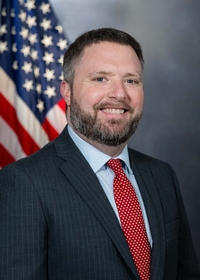
Maddy summaryHB 1070 requires all health insurance policies covering maternity benefits in Pennsylvania to provide 24 additional hours of elective postpartum observation and care beyond the existing 48-96 hours of inpatient coverage, starting January 1, 2026. It also prohibits hospitals from involuntarily discharging postpartum patients or newborns between 10 p.m. and 8 a.m., with billing under "observation status" if discharge is refused. The bill directly affects mothers, newborns, hospitals, and health insurers by extending coverage duration and restricting nighttime discharges. The Department of Human Services must seek a federal waiver to extend government program coverage for this additional 24-hour period.
Rep. Ben Waxman
Sponsored bills
Maddy summaryHR 150 is a Pennsylvania House resolution designating April 11-17, 2025, as "Black Maternal Health Week" to highlight the disproportionate maternal health disparities affecting Black women and birthing persons in the state. It references Pennsylvania data showing Black women face maternal mortality rates twice as high as White women (148 vs. 74 deaths per 100,000 live births in 2020) and higher morbidity rates. The resolution does not create new laws or funding but aims to raise public awareness about preventable maternal health outcomes. It specifically targets state-level attention to this crisis, citing local statistics from Philadelphia and Allegheny Counties. As a symbolic resolution, it has no binding effect but seeks to spur broader discussion and action.
Maddy summaryHB 1094 creates a new tax credit for homeowners who rehabilitate historic properties in economically distressed areas of Pennsylvania. It directly affects homeowners who own and occupy as their primary residence certified historic properties located in designated "qualified census tracts" (areas at or below state median income or qualified opportunity zones). The credit covers qualified rehabilitation costs like structural repairs and exterior work, excluding property acquisition, interior improvements, or building expansions. The Pennsylvania Historical and Museum Commission and Department of Community and Economic Development will administer the program and manage a dedicated fund to support the credit.
Maddy summaryThis bill establishes a grant program to provide free menstrual products (such as pads and tampons) in Pennsylvania public schools. Schools with 25% or more students eligible for free or reduced-price lunch programs can apply for grants to purchase these products and install dispensers or disposal units. Recipients must report annual spending on products and dispenser maintenance to the state. The program is funded by a state appropriation for the 2025-2026 fiscal year.
Maddy summaryHB 1065 creates a new felony offense for selling unmarked firearm components in Pennsylvania. It specifically targets the sale of firearm frames/receivers, silencer frames, split/modular frames, or partially complete frames without serial numbers registered to a federal firearms licensee. The bill defines "privately made firearm" as one assembled by non-licensed individuals without federal serial markings. This law directly affects sellers of homemade or unlicensed firearm parts, making such sales a third-degree felony. It does not change laws regarding firearm ownership or purchase, only penalizing the sale of unmarked components.
Maddy summaryThis House Resolution designates March 2025 as "Problem Gambling Awareness Month" in Pennsylvania and recognizes it as "National Problem Gambling Awareness Month." It symbolically urges state agencies (including the Gaming Control Board, Drug and Alcohol Programs, and Lottery) to collaborate on public awareness campaigns and treatment promotion. The resolution highlights that 6.5-10 million Americans experience problem gambling annually and emphasizes the need for accessible treatment resources. It has no binding effect but aims to increase public understanding of gambling-related issues.
Maddy summaryThis resolution designates February 14, 2025, as "Parkland School Shooting Victims Remembrance Day" in Pennsylvania to honor the 17 victims of the 2018 Marjory Stoneman Douglas High School shooting. It does not create new laws or allocate funds but serves as a formal observance for Pennsylvanians to reflect on the tragedy. The resolution expresses condolences to victims' families and references Pennsylvania's existing school safety programs, such as Safe2Say Something and the Office for Safe Schools.
Maddy summaryThis bill requires all Pennsylvania public and private (nonpublic) schools to integrate Holocaust, genocide, and human rights violations instruction into social studies and language arts courses starting with the 2027-2028 school year. The state education department must create curriculum guidelines within 12 months of the bill's effective date, covering specific topics like the Holocaust's history, global genocides (including Rwanda), and human rights violations such as systemic discrimination and torture. Schools must provide teacher training on these topics, and the state board will track compliance through a study, potentially requiring mandatory instruction if less than 90% of schools currently offer it. This applies to all public school districts, charter schools, cyber charters, intermediate units, and nonpublic schools upon request.
Maddy summaryHB 988 creates the Jayanna Powell Hit-and-Run Direct Notification System to help identify drivers who flee the scene of accidents causing serious injury or death. The bill requires all motor vehicle repair facilities (like garages and shops) to register with the state and report any vehicle matching details provided through the system after a qualifying accident. Law enforcement must directly notify repair facilities via the system with vehicle details including make, model, color, license plate, and damage. Failure to report a matching vehicle is punishable as a misdemeanor. This bill directly affects repair businesses across Pennsylvania, mandating new reporting duties to aid investigations.
Maddy summaryThis bill establishes a three-year pilot program (starting 2026-2027) within Pennsylvania public schools to teach students about the political, economic, and social contributions of LGBTQ+ individuals. School districts, charter schools, and nonpublic schools may apply to participate by submitting proposals to the Department of Education by May 15, 2026. The Department must develop guidelines by March 15, 2026 in consultation with LGBTQ+ organizations and prioritize curricula from groups with at least 50% LGBTQ+ leadership. Participating schools must submit annual reports on implementation, and the Department will contract an independent evaluation to assess the program's effectiveness, with results published online.