

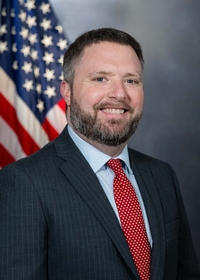
Photo of Ben Waxman
D Pennsylvania House · District 182 On the 2026 ballot

Rep. Ben Waxman

Compare
Total votes
4,516
all sessions
Attendance
100%
of floor votes
Near the chamber average
With party
99%
of cast votes
Near the chamber average
Bipartisan score
0%
crosses aisle rarely
Near the chamber average
Sponsored
1,168
bills & resolutions
Higher than 94% of chamber peers
Committees
6
assignments
1,168 bills and resolutions

Sponsored bills

Total
1,168
Primary
56
Co-sponsor
1,112
This page
1,168
matching current filters
Co-sponsor HR 167
Passed · Pennsylvania House · Co-sponsor
A Resolution recognizing May 9 through 18, 2025, as "Go Public Gardens Days" in Pennsylvania.

Maddy summaryHouse Resolution 167 recognizes May 9-18, 2025, as "Go Public Gardens Days" in Pennsylvania. The resolution highlights the economic and community benefits of public gardens, including supporting over 2,000 jobs, contributing more than $500 million to the state economy, and welcoming 4.2 million annual visitors. It emphasizes public gardens' roles in conservation, education, and promoting health through outdoor engagement. This symbolic resolution does not create new laws or obligations but aims to raise awareness of these institutions' value.

Passed May 7, 2025 1 co-sponsor
Co-sponsor HR 53
In committee · Pennsylvania House · Co-sponsor
A Resolution directing the Joint State Government Commission to conduct a study regarding the feasibility and potential benefits of the development of offshore hydropower, solar and wind renewable energy generation systems on Lake Erie.

Maddy summaryThis resolution directs Pennsylvania's Joint State Government Commission to study the feasibility of developing offshore wind, solar, and hydropower projects on Pennsylvania's portion of Lake Erie. The study will examine potential job creation (including construction, maintenance, and manufacturing roles), economic impacts, environmental benefits like reduced emissions, and the projected electricity generation capacity. It requires the Commission to consult with energy experts, environmental groups, labor leaders, and surrounding states before submitting a report to relevant legislative committees within 12 months. The resolution does not authorize actual projects but aims to inform future policy decisions about renewable energy development in the region.

In committee May 7, 2025 1 co-sponsor
Co-sponsor HR 97
Passed · Pennsylvania House · Co-sponsor
A Resolution recognizing the week of May 4 through 10, 2025, as "Career and Technology Week" and recognizing May 7, 2025, as "National Skilled Trades Day" in Pennsylvania.

Maddy summaryHR 97 is a resolution designating the week of May 4-10, 2025, as "Career and Technology Week" and May 7, 2025, as "National Skilled Trades Day" in Pennsylvania. It symbolically recognizes the role of career and technical education programs and skilled trades professions in supporting Pennsylvania's economy and workforce development. The resolution highlights how these fields prepare students for high-demand careers in healthcare, manufacturing, construction, and technology while addressing workforce shortages. This non-binding resolution does not create new laws or allocate funds but aims to raise awareness and honor contributions to Pennsylvania's economic growth.

Passed May 7, 2025 1 co-sponsor
Co-sponsor HB 1289
In committee · Pennsylvania House · Co-sponsor
An Act amending the act of December 14, 1988 (P.L.1192, No.147), known as the Special Ad Hoc Municipal Police and Firefighter Postretirement Adjustment Act, providing for 2026 special ad hoc municipal police and firefighter postretirement adjustment; in financing of special ad hoc adjustment, providing for reimbursement by Commonwealth for 2026 special ad hoc adjustment; in administrative provisions, further providing for municipal retirement system certification of adjustments paid and of reimbursable amounts and for municipal receipt of reimbursement payment; and making an editorial change.

Maddy summaryHB 1289 establishes a 2026 adjustment for retired municipal police officers and firefighters who retired before January 1, 2016, and have been retired for at least 10, 15, or 20 years as of January 1, 2026. Eligible retirees will receive monthly payments of $250, $375, or $500 based on their retirement duration, with reductions for prior benefits received and caps if multiple retirement systems apply. Municipalities must certify these payments and will receive full reimbursement from the Commonwealth for the 2026 costs. This extends a similar state reimbursement program previously used for 2002 adjustments.

In committee May 7, 2025 1 co-sponsor
Co-sponsor HB 1413
In committee · Pennsylvania House · Co-sponsor
An Act amending the act of April 12, 1951 (P.L.90, No.21), known as the Liquor Code, in preliminary provisions, further providing for definitions; in Pennsylvania Liquor Control Board, further providing for Office of Administrative Law Judge; in licenses and regulations and liquor, alcohol and malt and brewed beverages, further providing for hearings upon refusal of licenses, renewals or transfers and appeals and for renewal of licenses and temporary provisions for licensees in armed service, providing for failure to maintain minimum requirements for licensure and further providing for revocation and suspension of licenses and fines, for applicants to provide State tax identification numbers and statement of State tax status, waiver of confidentiality of information in the possession of the Department of Revenue and other departments and review of State tax status and for rights of municipalities preserved; in distilleries, wineries, bonded warehouses, bailees for hire and transporters for hire, further providing for appeals; and imposing penalties.

Maddy summaryHB 1413 amends Pennsylvania's Liquor Code to update definitions for restaurants, hotels, and eating places serving alcohol. It requires these establishments to provide "substantial food offerings sufficient to constitute a meal," defined as having at least two entrée and two side menu options available for at least 30 people simultaneously when alcohol is served, and prohibits relying solely on sealed prepackaged food. This rule applies directly to all licensees under the Liquor Code, including restaurants and hotels that serve alcohol alongside food. The bill also includes other licensing changes, such as requiring applicants to provide tax identification numbers and waiving confidentiality for tax status reviews, but the food requirement is the central new policy.

In committee May 6, 2025 1 co-sponsor
Co-sponsor HB 1400
In committee · Pennsylvania House · Co-sponsor
An Act amending the act of March 4, 1971 (P.L.6, No.2), known as the Tax Reform Code of 1971, in entertainment production tax credit, further providing for credit for qualified film production expenses and for penalty.

Maddy summaryHB 1400 modifies Pennsylvania's film production tax credit by requiring productions employing children to have adults in direct contact with children submit documentation proving compliance with child safety rules. The Department of Revenue will review credit applications, considering the anticipated number of employees under 18, and set application periods of up to 90 days. Taxpayers claiming the credit who fail to meet the expense requirements or this new child contact rule must repay the credit. This bill directly affects film producers in Pennsylvania seeking the tax credit for productions involving children.

In committee May 6, 2025 1 co-sponsor
Co-sponsor HB 1399
In committee · Pennsylvania House · Co-sponsor
An Act amending Title 23 (Domestic Relations) of the Pennsylvania Consolidated Statutes, in child protective services, further providing for persons required to report suspected child abuse and for employees having contact with children, adoptive and foster parents.

Maddy summaryHB 1399 expands Pennsylvania's mandatory child abuse reporting requirements to include film industry workers. It adds to the list of mandated reporters any adult (paid or unpaid) reasonably expected to have direct contact with children during film production, as defined under the Tax Reform Code of 1971. The bill also requires these individuals to submit specific documentation to employers or supervisors before working with children on film sets, aligning them with existing requirements for other child-contact roles. This amendment applies to all film productions in Pennsylvania and takes effect 180 days after enactment.

In committee May 6, 2025 1 co-sponsor
Co-sponsor HB 921
In committee · Pennsylvania House · Co-sponsor
An Act amending the act of June 13, 1967 (P.L.31, No.21), known as the Human Services Code, in general powers and duties of the Department of Public Welfare, providing for Low-Income Household Water Assistance Program; and making an editorial change.

Maddy summaryHB 921 establishes Pennsylvania's Low-Income Household Water Assistance Program to help residents with overdue water or wastewater bills after the federal program ends. It requires the Department of Human Services to create the program by July 1, 2026, with eligibility based on income, owning/renting a home in PA, and having overdue bills (including termination notices). Water or wastewater utility companies can apply for grants on behalf of eligible customers to prevent service termination, pay past-due bills, or restore services. The program mandates annual reports to the Governor and legislative committees detailing grant recipients, amounts, and expenditures. This policy directly affects low-income households facing water service disruptions and utility providers serving them.

In committee May 6, 2025 1 co-sponsor
Co-sponsor HB 1397
In committee · Pennsylvania House · Co-sponsor
An Act amending Title 42 (Judiciary and Judicial Procedure) of the Pennsylvania Consolidated Statutes, in preliminary provisions relating to actions, proceedings and other matters generally, providing for use of media devices.

Maddy summaryHouse Bill 1397 amends Pennsylvania law to allow individuals to use media devices to record, transmit, or broadcast images, video, or audio of judicial proceedings without needing court approval. This change directly affects attendees of court proceedings and the judiciary by altering rules for public access and recording. However, the bill specifies several exceptions where this permission does not apply, including proceedings related to sexual abuse, domestic violence, protection from abuse, sexual violence or intimidation, and testimony from child witnesses or confidential informants.

In committee May 5, 2025 1 co-sponsor
Co-sponsor HB 1372
In committee · Pennsylvania House · Co-sponsor
An Act amending the act of March 10, 1949 (P.L.30, No.14), known as the Public School Code of 1949, in preliminary provisions, further providing for advertising and sponsorships; and, in charter schools, further providing for definitions, for charter school requirements, for powers of board of trustees, for facilities, for enrollment, for funding for charter schools, for funding for cyber charter schools, for powers and duties of department, for assessment and evaluation and for cyber charter school requirements and prohibitions, providing for fund balance limits and for educational management service providers, further providing for school district and intermediate unit responsibilities and for establishment of cyber charter school, providing for renewal of charters, for charter amendments and for causes for nonrenewal, revocation or termination and further providing for State Charter School Appeal Board review, for cyber charter school application, for enrollment and notification and for applicability of other provisions of this act and of other acts and regulations.

Maddy summaryHB 1372 amends Pennsylvania's Public School Code to update rules for charter and cyber charter schools. It prohibits public school entities from paying for or accepting sponsorship for public events (Section 134(a.1)), and adds definitions for terms like "family member," "school district of residence," and "emergency" to clarify enrollment and operational requirements. The bill revises charter school accountability standards, requiring them to participate in state assessments, maintain nonsectarian operations, and follow specific enrollment rules (Section 1715-A). These changes directly affect charter school operators, school districts, and students by setting clearer financial limits, enrollment criteria, and operational expectations.

In committee May 2, 2025 1 co-sponsor
Showing 581 to 590 of 1,168 bills
Previous 1 … 58 59 60 … 117 Next