

Maddy summaryHB 926 requires healthcare facilities to establish violence prevention committees to address workplace violence. These committees must develop safety plans, and facilities must report violent incidents to the Department of Labor and Industry. The Department gains authority to enforce compliance, impose fines, and issue administrative penalties for violations. This bill directly affects hospitals, clinics, and all healthcare workplaces covered under state labor regulations.
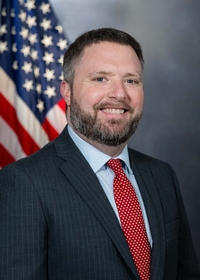
Rep. Ben Waxman
Sponsored bills
Maddy summaryHB 1062 creates a statewide system for tracking neighborhood blight by requiring municipalities to collect data on property maintenance violations. It establishes a Property Maintenance Code Serious Violations Registry to list properties with repeated severe maintenance issues and a dedicated funding account to support blight remediation efforts. The bill directly affects Pennsylvania municipalities, property owners, and landlords in areas designated as blighted, providing local governments with standardized data to target enforcement. Key provisions include mandatory data collection by cities/towns, a centralized registry for serious violations, and dedicated funding through the new account to aid property rehabilitation. If enacted, this would standardize blight reporting and funding across Pennsylvania communities.
Maddy summaryHB 1263 establishes Pennsylvania's Keystone Saves Program, creating a state-run savings initiative for low-to-moderate income residents. The bill sets up a dedicated program fund and administrative fund managed by the Treasury Department, which will handle investments while adhering to fiduciary responsibilities. An advisory board will oversee program implementation and ensure it meets the needs of participants. This program directly affects eligible Pennsylvanians by providing a structured savings option, with the Treasury Department responsible for managing funds and investments.
Maddy summaryHB 140 amends Pennsylvania's Unfair Trade Practices and Consumer Protection Law to add specific definitions related to algorithmic rent-setting software. The bill defines "unfair methods of competition" to include using software that analyzes rental data (like historical prices or occupancy rates) to recommend rent amounts, lease terms, or occupancy levels for residential or commercial properties. Landlords using such software would be directly affected, as its use could now be considered an unfair practice under the law. The definition explicitly excludes aggregated rental reports published monthly and tools used for affordable housing program compliance.
Maddy summaryHB 504, the Community Energy Act, establishes a framework for third-party-owned community energy projects (like solar gardens) in Pennsylvania. It requires electric distribution companies to connect these facilities, provides bill credits to subscribers (homeowners, renters, and businesses) for energy generated, and ensures guaranteed savings by linking subscription payments to bill reductions. Key provisions include setting size limits (max 5,000 kW for most facilities), mandating that at least 50% of subscriptions come from small users or farms, and requiring fair wages for construction workers. The bill directly affects electric companies (with new connection duties), community energy organizations (as owners/operators), and subscribers (who gain access to shared renewable energy).
Maddy summaryHB 721 amends Pennsylvania's Construction Workplace Misclassification Act to strengthen protections for construction workers who are incorrectly classified as independent contractors instead of employees. The bill allows affected workers to file lawsuits against companies for misclassification and imposes criminal penalties for repeated violations, while also adding safeguards against employer retaliation for reporting violations. It expands administrative penalties for misclassification and requires that penalty funds be used to support enforcement efforts. This directly affects construction companies that misclassify workers and construction workers who lose benefits like overtime pay, health insurance, or workers' compensation due to improper classification.
Maddy summaryHB 433 requires health insurance plans to cover mammograms and breast imaging services without cost-sharing (like copays or deductibles) for policyholders. It directly affects women needing preventive breast cancer screenings and the insurance companies providing health coverage. The bill amends Pennsylvania’s 1921 Insurance Company Law to mandate this coverage for mammographic examinations and breast imaging under casualty insurance policies. This policy change ensures these essential preventive services are fully covered at no additional cost to patients.
Maddy summaryHB 1493 requires Pennsylvania's Administrative Office of Pennsylvania Courts to collect and publicly publish data on the race and ethnicity of defendants in criminal cases. This data must be posted in an accessible online format and reported annually to the Pennsylvania Commission on Crime and Delinquency. The bill directly affects all individuals involved in criminal cases across Pennsylvania's court system by mandating standardized demographic data collection. It establishes a concrete mechanism for tracking racial and ethnic disparities in criminal proceedings without altering sentencing or legal procedures. The law takes effect 60 days after enactment.
Maddy summaryHB 1490 creates a pilot program allowing eligible Certified Registered Nurse Practitioners (CRNPs) to practice independently in Pennsylvania's health professional shortage areas. To qualify, CRNPs must hold a current license, have no disciplinary actions in the past five years, and complete 3,600 hours of collaborative practice with a physician in primary care (family, internal medicine, gynecology, or pediatrics) within the last five years. Under the program, participating CRNPs can prescribe medications and practice without a collaborative agreement in shortage areas, but must disclose their non-physician status to patients and notify the board if they change practice settings. The program requires biennial renewal with 10 hours of additional patient safety continuing education and limits practice to primary care within designated shortage areas.
Maddy summaryHB 1471 amends Pennsylvania's Tax Reform Code to adjust how residents can claim credits for income taxes paid to other states or territories (including U.S. territories, Puerto Rico, and the District of Columbia) on income also subject to Pennsylvania tax. The bill limits the credit to the proportion of Pennsylvania tax corresponding to the income taxed by the other jurisdiction, preventing credits that exceed Pennsylvania's tax liability. It also simplifies documentation by allowing taxpayers to submit a certified statement instead of full copies of their state tax returns to verify tax paid. This change applies to taxable years beginning after December 31, 2021.