

Maddy summaryHB 658 allows first-class cities and townships in Pennsylvania to temporarily hire retired police officers back for up to five years to address staffing shortages. Police departments must establish a program where retired officers complete an eight-week training course and agree not to have disciplinary records. Retired officers must choose between keeping their full retirement benefits or temporarily pausing them during participation, with credited service for retirement benefits applied upon return. The program expires six years after implementation and only applies to officers retiring before the bill's effective date.
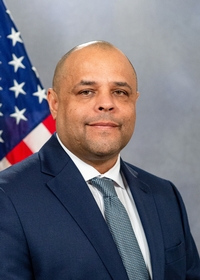
Rep. José Giral
Sponsored bills
Maddy summaryHB 98 creates a licensing system for electrical contractors, electricians, and apprentice electricians in Pennsylvania. It establishes the State Board of Electrical Licensure to set qualifications, require continuing education, mandate liability insurance, and enforce standards. The bill directly affects individuals and businesses performing electrical work in buildings, including installation, repair, and maintenance of electrical systems. Key provisions include setting licensing fees, imposing fines for violations, and creating enforcement mechanisms for the Board to suspend or revoke licenses. The bill also includes an appropriation for the Board's operations.
Maddy summaryHB 667 amends Pennsylvania's Public School Code to protect classroom teachers' instructional and planning time. It prohibits requiring teachers to attend administrative meetings during teaching hours unless covered by another qualified teacher or substitute. If meetings occur during a teacher's designated planning period (time for lesson prep, parent communication, or grading), schools must offer compensatory time or replace the diverted time. The bill applies to all public school districts, joint districts, intermediate units, and career schools, taking effect 60 days after enactment.
Maddy summaryThis resolution directs Pennsylvania's Joint State Government Commission to study the feasibility of creating a statewide low-emission and zero-emission vehicle program. The study will examine other states' approaches (like Nevada's Clean Cars program), analyze economic impacts, identify infrastructure needs, and explore funding options. The Commission must consult relevant organizations and submit a report with recommendations to the Governor and General Assembly within 18 months. This bill does not create the program but sets up a study to inform future decisions about such a program.
Maddy summaryHR 78 is a resolution directing Pennsylvania's Joint State Government Commission to study how effectively the state supports infants affected by prenatal substance exposure or fetal alcohol spectrum disorder. It requires forming an advisory committee - including health, human services, and substance use experts plus a parent with lived experience - to evaluate current "plans of safe care" implementation, including barriers like duplicate reporting requirements and gaps in tracking infant outcomes. The study will assess coordination between health, child welfare, and treatment systems, cost implications, and alignment of policies across agencies. The committee must issue findings within 18 months, focusing on improving support for infants and families without changing existing laws.
Maddy summaryHB 636 amends Pennsylvania's disabled veterans' real estate tax exemption law by extending the review period for exemption eligibility from every five years to every ten years. The bill requires the Pennsylvania Veterans' Commission to reassess applicants' economic status at least once every decade to determine if they still qualify for the exemption. This change directly affects disabled veterans currently receiving the tax exemption, as it delays the periodic review of their eligibility. The key provision modifies Section 8904(3) of Title 51 of the Pennsylvania Consolidated Statutes, shifting the review cycle without altering the exemption's eligibility criteria or benefits. The bill takes effect 60 days after enactment.
Maddy summaryThis bill requires Pennsylvania health clubs with swimming pools of 1,500 square feet or larger to have at least one certified lifeguard on duty during all hours the pool is open for swimming by members and guests. A "certified lifeguard" must hold a current certification from a lifeguard training program approved by the Pennsylvania Department of Health. This rule directly affects health clubs operating such pools, mandating a minimum safety standard during pool hours. The law takes effect 60 days after enactment.
Maddy summaryHB 619 requires Pennsylvania employers to provide employees with up to two hours of paid time off to vote in elections, affecting all public and private sector workers in the state. The bill mandates that employees give employers at least two working days' notice before an election and prohibits employers from asking about voting preferences or party affiliation. Employers must post a uniform notice about this policy (available from the Secretary of the Commonwealth) at least 10 days before an election and face fines of $100-$500 for violations. The law aims to ensure voting access without penalty, with employees required to verify voting attendance to retain paid time off.
Maddy summaryHB 657 prohibits Pennsylvania insurers from using an individual's credit history to deny coverage, increase premiums, cancel policies, or refuse renewals for personal insurance (like home or auto insurance) or life insurance. It directly affects consumers seeking insurance and insurers or insurance producers who previously used credit history for pricing decisions. The law requires the state Insurance Department to enforce these rules through fines (up to $5,000 per violation), license suspensions, or cease-and-desist orders for violations. The bill defines "credit history" broadly as any credit report used to determine insurance costs or eligibility.
Maddy summaryHB 642 increases penalties for oil and gas regulation violations in Pennsylvania. It raises fines for general violations from $1,000 to $2,000 per day and for willful violations from $5,000 to $10,000 per day, with potential jail time. The bill also prohibits the department from waiving these fines and specifies that the department, Attorney General, or county prosecutors can pursue penalties. This directly affects oil and gas operators who violate state regulations.