

Maddy summaryThis Pennsylvania House resolution (HR 109) urges the U.S. Congress to establish "Patriots' Day" as a federal holiday. It specifically references the historical significance of the April 19, 1775, battles at Lexington, Concord, and Menotomy (now Arlington) as the start of the American Revolution. The resolution notes that several states (including Massachusetts since 1894, Maine since 1907, and Connecticut since 2018) already observe Patriots' Day on the third Monday in April. As a resolution, it does not create the holiday itself but formally requests Congress take action.
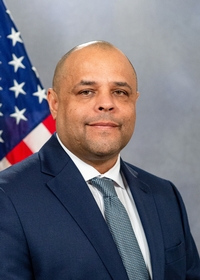
Rep. José Giral
Sponsored bills
Maddy summaryThis resolution designates March 18, 2025, as "National Transit Worker Appreciation Day" in Pennsylvania. It recognizes the work of approximately 16,800 public transit employees (including bus/train operators, drivers, and maintenance staff) who support over 237 million annual trips for Pennsylvania residents. The resolution does not create new laws or funding but encourages the public to thank transit workers for their role in connecting communities to jobs, healthcare, and education. It specifically highlights concerns about safety risks transit workers face, including recent incidents of violence. The resolution is symbolic and non-binding, limited to Pennsylvania's House of Representatives.
Maddy summaryHB 878 amends Pennsylvania's DUI laws to clarify that using medical marijuana legally under the Medical Marijuana Act is not a defense for driving under the influence, except for commercial drivers. It directly affects medical marijuana patients who drive non-commercial vehicles by allowing their legal medical use to be raised as a defense in DUI cases. The bill adds "medical marijuana" to statutory definitions and modifies Section 3802(h) to explicitly state this use is a defense, while Section 3810 confirms authorized medical use isn't a defense unless specified in the new exception. This change does not alter DUI laws for alcohol or other controlled substances, only clarifies the medical marijuana exception. The bill takes effect 60 days after enactment.
Maddy summaryThis bill (HB 866) expands free hunting and furtaking license access in Pennsylvania for eligible disabled veterans. It allows resident disabled veterans certified by the U.S. Department of Veterans Affairs as having a service-connected disability (such as loss of one or more limbs or 100% disability) to receive free licenses for 10 specific activities, including regular hunting, bear hunting, archery, and migratory bird hunting. The change modifies existing exemptions under Section 2706(b)(1) to include these additional license types without fee. This directly affects Pennsylvania residents who are disabled veterans meeting the VA certification criteria.
Maddy summaryHB 868 amends Pennsylvania's Right-to-Know Law by adding a new exception allowing government agencies to withhold records if producing them would be reasonably burdensome. It also changes fee rules to require agencies to charge for-profit entities additional fees for record requests (with prepayment required) while exempting news media organizations from these fees. The bill does not alter the existing $100 prepayment threshold for standard requests. This affects public agencies and requesters, particularly for-profit businesses and media organizations.
Maddy summaryHB 833 proposes a constitutional amendment to add a 4% tax on Pennsylvania residents with annual taxable income exceeding $1 million. This tax would apply only to income above the $1 million threshold, directly affecting high-income earners in the state. The amendment includes an annual cost-of-living adjustment for the income threshold, aligning it with federal tax bracket methodology. This is a policy change to the state constitution, not an immediate law, requiring approval through the constitutional amendment process.
Maddy summaryHouse Resolution 103 designates April 2025 as "National Volunteer Month" in Pennsylvania. The resolution encourages all residents to engage in volunteer activities, highlighting community benefits such as building social connections, supporting local resilience, and providing personal fulfillment as outlined in the resolution's preamble. It does not create new laws or require specific actions, serving as a symbolic recognition of volunteerism's value.
Maddy summaryHB 842 amends Pennsylvania's Tax Reform Code to create new deductions for realty transfer tax paid on certain home purchases. It directly affects low-to-moderate income buyers (those collecting SSI or with household income ≤215% of federal poverty level) and buyers purchasing primary residences at ≤80% of their county's median home price. The bill allows these buyers to deduct the transfer tax paid from their taxable income, and in the second scenario, the seller also receives this deduction. Counties must submit annual median home price data to the Department of Revenue to implement the price-based deduction. The changes take effect 60 days after enactment.
Maddy summaryHB 840 establishes the Targeted Industry Cluster Certificate Scholarship Program to provide financial assistance for Pennsylvania residents pursuing specific short-term education programs. The program, administered by the Pennsylvania Higher Education Assistance Agency, offers grants for eligible students enrolled in approved courses that take two to four years to complete, including nursing, public health, and community health bachelor's degrees. The Department of Education and Department of Labor and Industry will collaborate to identify workforce-focused programs and approve eligible educational providers. This bill directly affects students seeking credentials in high-demand fields and requires the agency to set grant awards based on available funding.
Maddy summaryThis resolution directs Pennsylvania's Joint State Government Commission to study supportive housing availability, types, and demand across the state. The study will examine both temporary and permanent supportive housing options, focusing on vulnerable populations including those experiencing homelessness, living with chronic health conditions, or struggling with low incomes. The Commission must provide policy recommendations and a final report within 18 months to legislative leaders, informing future planning for supportive housing needs. This is a procedural study request - not a law creating new housing - and aims to gather data to guide potential future policy decisions.