

Maddy summaryThis resolution designates February 14, 2025, as "Parkland School Shooting Victims Remembrance Day" in Pennsylvania to honor the 17 victims of the 2018 Marjory Stoneman Douglas High School shooting. It does not create new laws or allocate funds but serves as a formal observance for Pennsylvanians to reflect on the tragedy. The resolution expresses condolences to victims' families and references Pennsylvania's existing school safety programs, such as Safe2Say Something and the Office for Safe Schools.
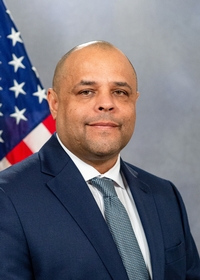
Rep. José Giral
Sponsored bills
Maddy summaryThis bill establishes the Constable William Davidson Reward Fund to provide rewards of up to $50,000 for information leading to the arrest and conviction of individuals who kill or cause the death of a law enforcement officer in Pennsylvania. It amends the Pennsylvania Commission on Crime and Delinquency Law to authorize the commission to administer the fund and offer these rewards for crimes covered under state murder and criminal homicide statutes targeting officers. The fund, which will be non-lapsing and funded by state appropriations, is intended to encourage public cooperation in solving violent crimes against law enforcement personnel.
Maddy summaryHB 1055 creates a new criminal offense in Pennsylvania for threatening healthcare workers, specifically targeting threats intended to interfere with their duties. It defines the crime as knowingly making oral/written threats against healthcare practitioners, technicians, or hospital security officers, with penalties escalating from a minor violation for a first offense to a third-degree misdemeanor for repeat offenses. The law requires healthcare facilities to post clear notices about this offense at all public entrances, and a person cannot be convicted if the notice wasn’t displayed (unless they knew about the offense). This bill directly affects anyone making threats against covered healthcare workers in Pennsylvania, aiming to protect them from intimidation during work.
Maddy summaryHB 988 creates the Jayanna Powell Hit-and-Run Direct Notification System to help identify drivers who flee the scene of accidents causing serious injury or death. The bill requires all motor vehicle repair facilities (like garages and shops) to register with the state and report any vehicle matching details provided through the system after a qualifying accident. Law enforcement must directly notify repair facilities via the system with vehicle details including make, model, color, license plate, and damage. Failure to report a matching vehicle is punishable as a misdemeanor. This bill directly affects repair businesses across Pennsylvania, mandating new reporting duties to aid investigations.
Maddy summaryHB 369 amends Pennsylvania's land bank law by updating two key definitions in the property code. It changes "land bank jurisdiction" to allow two or more small municipalities (each with fewer than 10,000 residents) to form a land bank together through an agreement. The bill also expands "municipality" to include home rule, optional plan, and optional charter municipalities. These changes clarify which local governments can establish land banks under current law. The bill takes effect 60 days after enactment.
Maddy summaryHB 60 amends Pennsylvania's Pharmacy Act to clarify rules for transferring prescriptions between pharmacies. It specifies that prescriptions can only be transferred if the drug is not excluded by federal law, specifically referencing 21 CFR 1306.08 (which governs electronic prescriptions). This change directly affects pharmacies that transfer prescriptions, ensuring state procedures align with federal electronic prescription requirements. The bill updates existing permit rules for pharmacies but does not alter who qualifies for a pharmacy permit.
Maddy summaryHB 1038 creates a new 25% tax credit for Pennsylvania property owners who install green roofs - roofs with vegetation, waterproof membranes, and drainage systems. It directly affects businesses and individuals who construct qualifying green roofs covering at least 50% of a building’s rooftop or 75% of certified eligible space, requiring structural engineering certification and local permits. Applicants must file detailed plans with the Department of Revenue, maintain the roof for five years, and claim credits against annual taxes (capped at $100,000 per applicant yearly), with $10 million in credits available statewide each fiscal year. The credit is non-refundable, non-transferable, and requires repayment if maintenance requirements are not met.
Maddy summaryThis bill amends Pennsylvania's 1929 Administrative Code to clarify the maximum size of the Pennsylvania State Police (4,310 total officers and enlisted members) and specifies that personnel assigned to the Pennsylvania Turnpike Commission, Delaware River Bridge Commission, and gaming enforcement do not count toward this limit. It also repeals an outdated reference in the Fiscal Code (Section 1733-E(3)) to align with this clarification. The change directly affects the State Police's staffing structure and reporting requirements. The bill makes a technical correction to existing law without creating new policies or changing operational responsibilities.
Maddy summaryThis bill establishes a three-year pilot program (starting 2026-2027) within Pennsylvania public schools to teach students about the political, economic, and social contributions of LGBTQ+ individuals. School districts, charter schools, and nonpublic schools may apply to participate by submitting proposals to the Department of Education by May 15, 2026. The Department must develop guidelines by March 15, 2026 in consultation with LGBTQ+ organizations and prioritize curricula from groups with at least 50% LGBTQ+ leadership. Participating schools must submit annual reports on implementation, and the Department will contract an independent evaluation to assess the program's effectiveness, with results published online.
Maddy summaryThis resolution designates March 2025 as "Women's History Month" in Pennsylvania. It is a ceremonial measure with no binding policy changes, funding, or new programs. The resolution invites all Pennsylvanians to reflect on women's contributions to the state's and nation's economic, cultural, and social development. It does not affect specific groups or create legal obligations, as it is purely symbolic recognition.