

Maddy summaryHB 93 designates specific dates for Rosh Hashanah, Yom Kippur, Eid al-Fitr, and Eid al-Adha as official holiday observances in Pennsylvania, based on Jewish and Islamic calendars. The bill recognizes these dates without requiring employers to provide paid leave or treat them as legal holidays. It explicitly states that the designation does not alter existing employment policies for businesses or schools. The law takes effect immediately upon enactment.
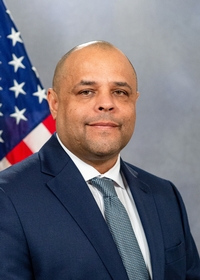
Rep. José Giral
Sponsored bills
Maddy summaryHB 50 amends Pennsylvania's Water Services Act by updating the definitions of "authority" and "city" to clarify which entities are subject to the law. It specifies that an "authority" must provide water or sewer services to at least 50% more residents outside a city's boundaries than inside, and defines "city" as a city of the third class with a population of 30,000 or less. These changes help determine which municipal authorities and cities must follow the Act's requirements for water and sewer service approvals. The bill does not alter existing service rules but ensures the law applies consistently to relevant entities.
Maddy summaryHB 104 amends Pennsylvania's protection from abuse law to define "electronic monitoring device" and allow courts to mandate its use for high-risk defendants. The bill defines a GPS-enabled device worn on the wrist or ankle that continuously tracks location within 100 miles, with data retained indefinitely by police. Courts may require this device for defendants found to pose a substantial risk of violating protection orders or committing crimes against victims, setting specific distance limits and restricted locations. The device must stay in place for the full duration of the protection order unless removed for "good cause" with notification to the victim. This directly affects individuals subject to abuse protection orders who are deemed high-risk by courts.
Maddy summaryHB 108 requires all Pennsylvania municipalities (including cities, boroughs, and townships) to establish a "real property emergency services fund" financed by a $25 fee paid by both buyers and sellers during real estate transactions. The fund can only be used for specific emergency services expenses, such as purchasing/maintaining firefighting equipment, firehouse construction, firefighter and emergency medical personnel salaries, and ambulance maintenance. Municipalities must deposit the fees into the fund, impose a $250 penalty for non-payment, and annually publish reports detailing fund usage. The bill mandates biennial audits of the fund and takes effect 60 days after enactment.
Maddy summaryHB 53 waives fees for certain state documents for individuals affected by domestic abuse. It applies to people who received protection orders within 90 days or verified recent abuse (within 120 days) through a victim service provider, medical professional, or standardized form. The bill covers duplicate/corrected documents like driver's licenses, vehicle titles, and birth certificates from the Departments of Transportation and Health. Eligible individuals with dependents also receive fee waivers for their dependents' documents. The Departments of Transportation and Health must create public policies for this waiver within 90 days of the law's effective date.
Maddy summaryHB 107 amends Pennsylvania's Local Option Small Games of Chance Act to allow licensed organizations (such as nonprofits and charities) to accept electronic payments for games of chance and conduct online raffles. The bill requires organizations to verify that online raffle buyers are physically located in Pennsylvania and at least 18 years old before accepting payment. It permits credit/debit cards and mobile payment services for raffle tickets but prohibits sales outside Pennsylvania or to minors. The legislation also removes a conflicting regulation in the Pennsylvania Code to align with these new provisions.
Maddy summaryHB 66 creates a Pennsylvania program providing $5,000 semester stipends to residents enrolled in accredited Master of Social Work (MSW) programs with a 3.0+ GPA. It directly affects students pursuing social work careers by funding their education through paid internships. The program requires internships at state-approved facilities to meet clinical training and licensing requirements, with stipends adjusted annually for inflation. Funding is contingent on available state budget resources, administered by the Department of Human Services.
Maddy summaryHB 74 requires Pennsylvania's Department of Human Services to develop and provide a standardized autism screening tool for use by licensed child care providers with children aged 18, 24, and 36 months. The tool must be distributed annually to providers, accompanied by clear disclaimers that screening is not a medical diagnosis and a list of local diagnosis and service resources. Licensed child care providers are not required to administer the screening but may assist families who request help using it. The bill directly affects licensed child care facilities operating under Pennsylvania's child care regulations. It takes effect 60 days after enactment.
Maddy summaryHB 49 amends Pennsylvania's 1993 Plain Language Consumer Contract Act to strengthen protections for consumers in standard form contracts (like those for services or products sold without negotiation). It makes standardized contract terms unenforceable if they materially alter a consumer's legal rights or obligations, requiring courts to evaluate factors like whether the term caused surprise or hardship, whether the consumer was aware of it, and the business context. The bill specifically creates a rebuttable presumption that certain terms - such as those restricting intellectual property rights, limiting liability, or mandating exclusive use of a merchant's products - are materially altering. This directly affects consumers signing standard contracts with businesses and merchants using such agreements across Pennsylvania. The law applies to all form contracts executed after its effective date, regardless of paper or electronic format.
Maddy summaryHB 48 creates a special "arts" vehicle registration plate in Pennsylvania for $41 extra per year (on top of standard fees), available for passenger cars, motor homes, trailers, and trucks under 14,000 pounds. The $15 portion of this fee is dedicated to the newly established Arts Promotion Fund. This fund, managed by the Council on the Arts, provides grants for arts programs, with spending estimates requiring Governor approval. The bill directly affects vehicle owners who choose the arts plate and supports arts funding through a dedicated revenue stream.