

Maddy summaryHB 2004 creates a special account to hold emergency funds for SNAP benefits, which provide food assistance to low-income residents. The bill requires the Department of Human Services, the Secretary of the Budget, and the State Treasurer to transfer these funds to pay SNAP recipients. This establishes a dedicated funding mechanism specifically for emergency SNAP benefit payments. The bill directly affects SNAP recipients by ensuring a streamlined process for receiving benefits during emergencies.
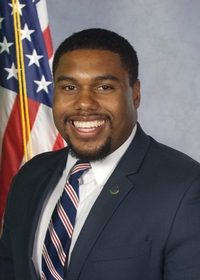
Rep. Jason Dawkins
Sponsored bills
Maddy summaryHB 1990 amends the state's Fiscal Code to adjust expiration rules for certain special funds established under the law. It directly affects how these designated state funds, used for specific purposes like infrastructure or education programs, must be renewed or terminated. The bill changes the process for these funds to expire automatically unless formally extended by the legislature. Currently, the bill has been re-committed to the Appropriations committee for further review.
Maddy summaryThe bill provides a tax exemption for certain businesses subject to a city of the first class's business income and receipts tax. It directly affects businesses operating within designated cities that impose this specific tax. The context does not specify the exact scope of the exemption (e.g., business types, tax rate thresholds, or duration), so key mechanisms cannot be detailed. As a procedural tax exemption measure, it does not describe specific policy changes beyond creating the exemption framework. More details about the exemption's terms are needed for a complete summary.
Maddy summaryHB 846 amends Pennsylvania's Prevailing Wage Act to clarify job definitions, specify how prevailing wages are calculated for public construction projects, and detail the Labor Secretary's responsibilities. It directly affects construction workers, contractors, and state agencies managing public works by updating administrative processes. The bill makes technical changes to implementation without altering the core requirement that public projects pay local standard wages. These updates aim to improve consistency in applying the existing law across state-funded projects.
Maddy summaryHB 1549 updates Pennsylvania's minimum wage law by establishing new hourly rates for workers in different county classifications, effective starting in 2026. It sets a $15 per hour minimum wage for workers in first-class counties (like Philadelphia) beginning January 1, 2026, with annual cost-of-living adjustments tied to the CPI-U index for the PA/NJ/DE/MD region. For other counties (second, third, fourth, or sixth class based on 2020 census populations), it sets a $12 hourly rate starting in 2026, increasing to $15 by 2028, followed by the same CPI-based annual adjustments. This directly affects all hourly workers in Pennsylvania, with rates varying by county size and population.
Maddy summaryHB 1486 would change bail rules for defendants charged with illegal firearm offenses in Pennsylvania's largest cities (like Philadelphia and Pittsburgh). It requires defendants to pay only 10% of the full bail amount for a first offense, 50% for a second offense, and 100% for third or subsequent offenses to be released while awaiting trial. The bill applies specifically to charges under Pennsylvania's firearm laws (18 Pa.C.S. § 61) in cities of the first class. It does not alter the underlying firearm laws but modifies the bail payment structure for these cases. The bill is currently pending in committee and has not yet become law.
Maddy summaryHB 1487 requires county boards of elections in first-class counties to establish an additional polling place inside county prisons for individuals who register their residence at the prison. It clarifies that incarcerated people (for misdemeanor or summary offenses) in these counties may choose to register and vote at the prison or use absentee ballots, without changing voting eligibility. The bill does not alter who can vote but adds a new in-person voting option for eligible incarcerated individuals. The changes take effect 60 days after enactment.
Maddy summaryHB 1484 increases Pennsylvania jury compensation to a flat $40 per day for all days jurors serve, replacing the previous tiered rate ($9 for first three days, $25 after). It also sets a travel allowance of 17¢ per mile circular (with no allowance in the first judicial district) and allows county commissioners to choose how jurors receive payments (e.g., check, debit card), without changing the compensation amount. The bill directly affects all Pennsylvanians summoned to serve on juries statewide. It makes no changes to eligibility or jury service requirements, only to payment structure and methods.
Maddy summaryHB 1441 proposes significant changes to sentencing and parole eligibility for certain serious offenses in Pennsylvania, applying these changes retroactively. The bill modifies sentences for individuals under 18 convicted of first-degree murder, murder of an unborn child, or murder of a law enforcement officer, replacing "life without parole" with minimum terms of 25 or 35 years to life, making them eligible for parole. It also removes "without parole" from life sentences for repeat violent offenders, allowing them parole consideration. The Pennsylvania Board of Probation and Parole would gain the power to parole individuals serving life sentences, though it would be prohibited from granting parole to offenders who murdered a law enforcement officer. Additionally, for those serving life sentences, parole consideration would not begin until at least five years of incarceration.
Maddy summaryHR 217 is a resolution that formally recognizes May 7, 2025, as "Philadelphia Eagles Day at the Capitol" in Pennsylvania. It also honors the 2024 Philadelphia Eagles for their victory as the Super Bowl LIX Champions.