

Maddy summaryThis resolution directs the Legislative Budget and Finance Committee to study the potential financial impact on Pennsylvania if the federal government requires the state to pay for certain health insurance mandates. The bill responds to a proposed federal policy change that could end previous exemptions allowing states to avoid these costs. The study will identify specific health benefits mandated by the state since 2011, analyze their compliance with federal rules, and estimate the resulting expenses for the Commonwealth. The committee is also instructed to gather necessary data from the Insurance Department and deliver a report with findings and recommendations to the General Assembly within one year.
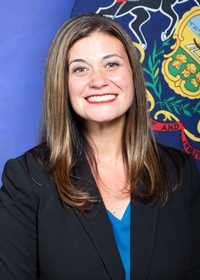
Rep. Kristin Marcell
Sponsored bills
Maddy summaryThis bill amends Pennsylvania's Fiscal Code to create a disaster recovery grant program for fruit and vegetable growers affected by freeze events between April 1 and April 21, 2026. It allocates up to $20 million from previously set-aside funds for highly pathogenic avian influenza to assist growers of specialty crops, including pome and stone fruits, grapes, berries, and vegetables, who suffered production losses exceeding 30%. The legislation explicitly excludes costs already covered by federal funding, insurance, or other contracts from receiving these state grants and requires the Department of Agriculture to publish implementation guidelines within 90 days of the bill's effective date.
Maddy summaryThis Pennsylvania bill requires health insurance companies to cover fertility preservation services for individuals facing medically necessary cancer treatments that could cause infertility. The law mandates that insurers include at least three years of egg, sperm, or ovarian tissue storage at an in-network facility, with a minimum lifetime benefit of $100,000 per person. While the coverage must follow standard policy rules like deductibles and copayments, religious employers are allowed to request exemptions if the services conflict with their beliefs, provided they notify patients and allow them to buy separate supplemental insurance.
Maddy summaryHouse Resolution 208 directs Pennsylvania's Legislative Budget and Finance Committee to study wait times, service processes, and operational challenges at two state offices: the Office of Vocational Rehabilitation and the Bureau of Blindness and Visual Services within the Department of Labor and Industry. The committee must examine current wait times for services, assess how delays affect individuals seeking support, and explore solutions like contracting with nonprofit organizations to improve efficiency. The study requires a report to the General Assembly within 180 days, focusing on concrete findings about service delivery rather than mandating policy changes. This resolution does not alter existing services but aims to inform potential improvements for Pennsylvanians with vision impairments who rely on these programs.
Maddy summaryHB 158, the "Fairness in Women's Sports Act," requires public schools and colleges in Pennsylvania to explicitly designate athletic teams as male, female, or coed based on biological sex. It prohibits teams designated for females from allowing male students to participate and allows students who face denied opportunities or harm due to violations to sue for damages. Schools can also sue entities that punish them for following the law. The bill applies directly to all public school districts, colleges, and athletic programs covered under Pennsylvania's Public School Code.
Maddy summaryThis bill designates a specific bridge carrying U.S. Route 22 in Cresson Township, Cambria County, as the PFC Stanley J. Lassak Memorial Bridge to honor a local veteran. The legislation officially names the structure after PFC Stanley J. Lassak, who served in the U.S. Army during World War II and was killed in a car accident in 1993. It requires the Department of Transportation to install and maintain signs displaying the new name for traffic traveling in both directions on the bridge. The act will take effect 60 days after being signed into law.
Maddy summaryThis House Resolution designates the week of August 19 through 30, 2026, as "Little League World Series Week" throughout Pennsylvania. The bill directly affects the state's residents and officials by formally recognizing the annual youth baseball tournament held in South Williamsport. It does not create new laws or funding but serves as a symbolic gesture to celebrate the event's impact on the local economy and community spirit. The resolution encourages Pennsylvanians to attend games and support the volunteers who help run the program.
Maddy summaryThis bill designates a specific stretch of Pennsylvania Route 611 in Plumstead Township, Bucks County, as the Joseph Kay Memorial Highway to honor Joseph W. Kay, a local electrician, volunteer firefighter, and race car driver. The legislation requires the Department of Transportation to install and maintain signs displaying this new name along the roadway. The act serves as a commemorative tribute to Kay's community service and legacy rather than implementing changes to traffic laws or road infrastructure.
Maddy summaryHB 1123 updates Pennsylvania's 1921 Insurance Company Law to require casualty insurance policies to cover colorectal cancer screening without cost-sharing. This affects insured residents in Pennsylvania who need preventive screenings, ensuring they face no copays or deductibles for this specific health service. The key provision mandates insurers to include coverage for colon cancer screenings as a standard benefit under casualty insurance policies. The bill passed final passage on October 29, 2025, and is now pending implementation under the Banking & Insurance committee. This change directly removes financial barriers for early detection of colorectal cancer through existing insurance coverage.
Maddy summaryThis bill updates Pennsylvania's Taxpayer Relief Act to change the deadline for senior citizens to apply for property tax and rent rebates. Under the new rules, eligible individuals must file their claims by December 31 of the year following the tax year, replacing the previous June 30 cutoff. The legislation also removes the requirement that late-filed claims be accepted only if funds are available, allowing the state to process applications submitted after the deadline. These changes directly affect elderly Pennsylvanians seeking financial assistance and streamline the administrative process for the state department handling these claims.