

Maddy summaryHB 998 exempts drivers of small school buses (carrying 11-15 passengers, including the driver) from needing a school bus driver endorsement or commercial driver's license. The bill amends Pennsylvania’s vehicle code to remove these requirements for buses transporting students to or from public, private, or parochial schools or school-related events. This directly affects school bus drivers operating smaller vehicles under the specified passenger capacity. The key provision eliminates a licensing hurdle for these specific school transportation roles, aligning with existing exemptions for similar vehicle types. The changes take effect 60 days after enactment.
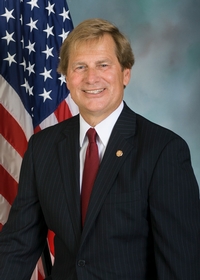
Rep. Jack Rader
Sponsored bills
Maddy summaryHB 957 amends Pennsylvania's invasion of privacy law to increase penalties for repeated violations and require convicted individuals to destroy related recordings. It upgrades the offense to a third-degree felony if there are multiple violations (previously a second-degree felony), while single violations remain a first-degree misdemeanor. The bill also adds a new requirement that anyone convicted under this law must delete or destroy all associated recordings (photos, videos, etc.) they possess; failing to do so becomes a separate third-degree felony. This directly affects individuals convicted of privacy violations involving recorded media, such as secretly filming or sharing intimate images without consent. The changes take effect 60 days after enactment.
Maddy summaryHB 685 requires Pennsylvania schools to accept U.S. currency as payment for admission to school-sponsored activities, such as athletic events, assemblies, or field trips. It applies to all school entities, including public school districts, charter schools, and private schools participating in school activities. The bill mandates that cash must be accepted when fees are charged, while allowing schools to also accept other payment methods like credit cards. It defines "cash" as U.S. coins and paper money recognized as legal tender and clarifies that schools may refuse payments in large denominations that exceed the fee amount.
Maddy summaryHB 913 renames Pennsylvania's Department of Environmental Protection to the Department of Environmental Services. The bill updates all references to the department in state law and outlines a phased transition for documents, signage, licenses, and computer systems to avoid disruption during the name change. It repeals outdated references to the "Department of Environmental Protection" while preserving existing powers, duties, and contracts. This is a procedural change with no impact on environmental policies or regulations.
Maddy summaryHB 762 amends Pennsylvania's Tax Reform Code to exempt volunteer emergency service organizations from paying state sales and use tax on protective equipment. The bill specifically covers volunteer EMS companies, fire companies, and rescue companies - defined as nonprofit groups providing emergency medical, fire, or rescue services. It excludes purchases like helmets, turnout gear, boots, gloves, and respiratory protection units from taxation when bought for members performing their duties. This tax exemption will apply to sales occurring on or after July 1, 2025.
Maddy summaryHB 702 amends the definition of "claimant" in Pennsylvania's Taxpayer Relief Act to clarify eligibility for senior citizens' property tax and rent rebate assistance. The bill specifies three qualifying categories: individuals aged 65 or older (or with a spouse aged 65+), widows or widowers aged 50 or older, and permanently disabled persons aged 18 or older during the tax year. This change directly affects seniors, widows/widowers, and disabled residents applying for the rebate program by providing clearer eligibility standards. The amendment updates existing definitions without creating new benefits or altering funding. The bill takes effect 60 days after enactment.
Maddy summaryHB 565 creates a new tax credit for Pennsylvania employers who pay for their employees' health insurance. It allows businesses to reduce their state tax bill by up to 100% of their contributions toward employee health insurance premiums, but only the first $500 per employee counts toward the credit. The credit percentage decreases as the number of covered employees increases: 100% for fewer than 50 employees, 75% for 50-99 employees, and 50% for 100+ employees. Employers must submit specific employee and insurance provider details to the Department of Revenue to claim the credit, which cannot be carried over, refunded, or sold.
Maddy summaryHB 546 creates a military exception for minors under 18 seeking a junior driver's license in Pennsylvania. It allows the state to count time spent with a learner's permit and driving practice hours completed in another state toward eligibility requirements. This applies specifically to minors who are family members of active duty military members living in Pennsylvania with them, hold a valid out-of-state learner's permit, and have received a Pennsylvania learner's permit. The Pennsylvania Department of Transportation must credit this prior experience if all conditions are met.
Maddy summaryHB 548 strengthens Pennsylvania's state preemption of local firearm regulations by declaring that all aspects of firearm regulation - including purchase, sale, possession, and transportation - must follow state law, invalidating any conflicting local ordinances. It directly affects counties, municipalities, and townships that previously enacted stricter gun rules, as well as residents, gun dealers, or organizations challenging such local laws. Key provisions include creating legal remedies for those harmed by illegal local regulations (allowing lawsuits for damages, attorney fees, and injunctions) and explicitly stating that state law supersedes all local efforts. The bill takes effect in 90 days for its core preemption rules, requiring local governments to align with state firearm laws immediately.
Maddy summaryHB 530 modifies Pennsylvania's criminal codes to adjust penalties for property damage crimes and create a new process for removing trespassers. It reclassifies criminal mischief as a felony if financial damage exceeds $1,000 (for building entry) or $5,000 (for public services), and as a misdemeanor for smaller losses. The bill also establishes a formal procedure allowing property owners to request law enforcement to remove trespassers by submitting a signed affidavit proving the person isn't a tenant, has been asked to leave, and lawful eviction occurred if applicable. This directly affects property owners seeking to remove unauthorized occupants, tenants facing potential unlawful removal, and law enforcement officers handling such requests. The law requires officers to provide individuals removed a chance to prove lawful occupancy and prohibits violations of Pennsylvania's Landlord and Tenant Act.