

Maddy summaryThis Pennsylvania House resolution (HR 402) urges the U.S. Congress to require meaningful accountability and civil rights reforms before approving new funding for the Department of Homeland Security (DHS) and Immigration and Customs Enforcement (ICE). It directly addresses federal agencies by demanding reforms like enforceable use-of-force standards, independent reviews of serious incidents, and public release of body-camera footage after deaths or injuries during enforcement. The resolution cites the January 2026 deaths of two U.S. citizens during an ICE operation in Minneapolis as a catalyst for requiring transparency and oversight before additional federal appropriations are granted. It does not create new law but calls on Congress to condition future funding on specific, concrete reforms to protect civil rights and public safety.
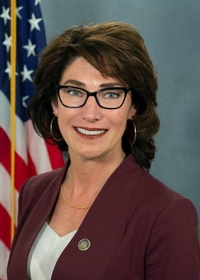
Rep. Mary Isaacson
Sponsored bills
Maddy summaryThis Pennsylvania House resolution (HR 397) urges the U.S. Congress to pass H.R. 2540, the SSI Savings Penalty Elimination Act. The resolution supports increasing Supplemental Security Income (SSI) resource limits from $2,000 (individual) and $3,000 (couple) to $10,000 and $20,000, respectively - adjusting for inflation since 1989. It directly affects SSI recipients (primarily seniors, people with disabilities, and low-income individuals) who currently lose benefits or face penalties for holding savings or assets above current limits. The resolution notes that current rules cause over 70,000 annual benefit reductions and 40,000 terminations, limiting financial security and housing options.
Maddy summaryHB 2148 requires Pennsylvania school entities (including school districts, charter schools, and cyber charters) to adopt policies ensuring all students, parents, guardians, and school personnel can access school property regardless of immigration status. Specifically, schools must develop and publicly adopt inclusive policies within 90 days of the bill’s effective date, requiring school boards to approve these policies via public resolution with 45 days’ notice. Policies must be published in all languages spoken by students at home and reviewed quarterly to maintain accessibility. The bill explicitly prohibits immigration or law enforcement officials (including ICE, Customs, and local agencies acting under federal immigration authority) from restricting access to school zones without proper legal process. This directly affects all Pennsylvania public and private schools serving students, mandating concrete procedural changes to protect school access.
Maddy summaryHB 2135 requires Pennsylvania employers to reasonably accommodate employees experiencing pregnancy, childbirth, menopause, or related medical conditions (like lactation or managing vasomotor symptoms). Key provisions include prohibiting employers from refusing such accommodations unless it creates an "undue hardship" (considering cost and business size), banning forced leave when alternatives exist, and mandating written notices about these rights to all employees. Employers must provide accommodations like modified schedules, more breaks, or temporary position changes, while protecting employees from retaliation for requesting them. The bill applies to all Pennsylvania employers and takes effect 60 days after enactment.
Maddy summaryHB 150 proposes changes to Pennsylvania's sentencing laws by removing outdated rules about transferring inmates requiring medical care and creating a new process for judges to modify prison terms when an individual's illness prevents them from serving their full sentence. The bill directly affects people incarcerated in Pennsylvania who develop serious medical conditions during their sentence. Key provisions include ending the current transfer system for medical cases and establishing a clear procedure for courts to adjust sentences based on documented health issues. This would allow judges to shorten sentences for health-related reasons without requiring a separate legal process. The bill is currently under review in the Appropriations committee.
Maddy summaryHB 1881 updates Pennsylvania's Pharmacy Act to modernize requirements for pharmacy technicians and trainees, including new registration qualifications and supervision rules by licensed pharmacists. It adds specific protocols for pharmacies administering injectable medications, biologicals (like vaccines), and immunizations, while requiring detailed reports on vaccine administration. The bill also establishes new standards for clinical laboratory certificates and repeals outdated sections of the original 1961 law. These changes directly affect pharmacies, pharmacy technicians, trainees, and pharmacists who oversee vaccine and medication administration.
Maddy summaryThis resolution formally designates September 2025 and September 2026 as "Hunger Action Month" in Pennsylvania. It serves as a commemorative designation to raise awareness about hunger issues but does not create new laws, allocate funding, or impose requirements on any entities. The resolution was referred to the Agriculture & Rural Affairs committee and reported as amended on September 30, 2025. It directly affects Pennsylvania by providing a state-level framework for community and organizational efforts focused on hunger during those months.
Maddy summaryHR 323 is a symbolic resolution designating October 2025 and October 2026 as "National Animal Safety and Protection Month" within Pennsylvania. It does not create new laws, impose requirements, or directly affect individuals or organizations. The resolution serves only to recognize and promote awareness of animal safety and protection efforts during those specific months. This is a ceremonial measure with no binding policy impact.
Maddy summaryHB 1676 establishes Pennsylvania's Nursing Shortage Assistance Program, which provides state grants to "qualified nursing servicers" to help nursing students repay loans after graduation. The program requires partner hospitals to match state funds 1:1 for loan repayment and commit to hiring graduates, with grants only covering tuition expenses (not administrative costs). Nursing students working at participating hospitals may receive up to $10,000 annually or $30,000 total in loan repayment assistance. The Department of Labor and Industry administers the program, sets application rules, and reports annually on its effectiveness to the legislature.
Maddy summaryHB 2079 establishes a program to reimburse eligible entities - such as school districts, counties, human services providers, Pre-K programs, and Head Start providers - for documented financing costs or lost interest income caused by delays in passing the state budget (defined as the period from July 1, 2025, until the 2025-2026 budget takes effect). The program is funded primarily by "impasse-generated interest" (interest earned from delayed state spending during the budget impasse), with the legislature providing additional funds if needed. The Office of the Budget will administer the program, including processing applications and reporting annually on reimbursements, funding sources, and recipient details.