

Maddy summaryThis bill establishes a new Earned Paid Leave Act that requires employers to allow employees to accrue and use paid time off after working for 90 days. Under the program, workers earn one hour of paid leave for every 40 hours worked, with a maximum cap of 40 hours per year, and they must be paid their regular rate of pay while on leave. The legislation also creates a Small Business Grant Program and assigns specific duties to the Department of Labor and Industry for administering the law and enforcing penalties for violations.
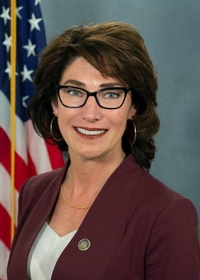
Rep. Mary Isaacson
Sponsored bills
Maddy summaryThis bill designates September 2024 as "Back to School Month" throughout Pennsylvania. It is a symbolic resolution intended to highlight the start of the academic year and the state's commitment to public education. The measure does not create new laws, funding, or administrative requirements but serves to recognize the importance of schools for students, families, and educators.
Maddy summaryThis Pennsylvania House resolution formally recognizes September 2024 as Suicide Prevention Awareness Month and designates September 10, 2024, as World Suicide Prevention Day within the state. The measure is sponsored by a group of representatives and addresses the issue by officially highlighting these dates to raise public awareness about suicide prevention. It encourages residents of Pennsylvania to offer support to those struggling with mental health challenges, aiming to reduce the stigma that often prevents people from seeking help.
Maddy summaryThis bill proposes constitutional amendments to Pennsylvania that would disqualify individuals convicted of specific crimes from holding public office. It bars anyone sentenced for embezzlement, bribery, perjury, or abusing a family member from serving as a state legislator, governor, lieutenant governor, attorney general, judge, or justice of the peace. The legislation also requires the attorney general to be a member of the state bar and mandates that judges complete specific training or pass an exam. These changes would be presented to voters as separate ballot questions at the next general election.
Maddy summaryThis bill updates the membership rules for Pennsylvania's State Veterans' Commission to ensure broader representation of different veteran groups. It mandates that the commission include representatives from sixteen specific national veterans' organizations, such as the American Legion and VFW, along with four members appointed by the Governor who must be female or Vietnam-era veterans. The legislation also clarifies the roles of state-level leaders from the American Legion, Disabled American Veterans, and Veterans of Foreign Wars as nonvoting members. These changes aim to modernize the commission's composition while maintaining its existing structure under Pennsylvania law.
Maddy summaryThis bill, known as the Online Safety Protection Act, requires businesses that provide online services likely to be used by children to prioritize the privacy, safety, and well-being of minors over commercial interests. Companies covered by the law must conduct data protection impact assessments to ensure their products do not cause foreseeable physical, financial, or psychological harm, nor engage in discriminatory practices or use deceptive design tricks called dark patterns. The legislation also defines specific rules for how personal information can be collected and sold, while excluding deidentified data and publicly available information from these restrictions. Penalties are imposed on entities that fail to comply with these duties to protect children's best interests.
Maddy summaryThis bill updates Pennsylvania zoning laws to allow municipalities with over 5,000 residents in growing counties to create rules for multiple-unit housing. It directly affects local governments in these specific areas by expanding their authority to regulate apartment and condominium developments. The key provision adds new eligibility criteria based on population size and recent growth, removing previous restrictions that limited these zoning options. This change aims to provide a clearer legal framework for communities seeking to increase housing density in response to population increases.
Maddy summaryThis bill amends Pennsylvania zoning laws to allow municipalities with over 5,000 residents in growing counties to permit multi-family housing, specifically duplexes, triplexes, and quadplexes, on lots where single-family homes are allowed. The legislation requires that rules for these smaller multi-unit buildings cannot be more restrictive than those for single-family homes, while also defining specific criteria for what constitutes each housing type. Localities can petition a county or regional planning agency to review proposed developments to ensure existing infrastructure can support them, potentially requiring developers to make necessary improvements. The act applies only to municipalities meeting specific population and growth thresholds and takes effect 180 days after passage.
Maddy summaryThis Pennsylvania bill prohibits the intentional addition of perfluoroalkyl and polyfluoroalkyl substances, commonly known as PFAS, to a wide range of consumer products including cookware, cosmetics, food packaging, and artificial turf. While the law generally bans these chemicals, it allows for their use in specific items if the Department of Environmental Protection determines that no safer alternative exists and the chemical is critical for the product's function. The Department of Environmental Protection is tasked with enforcing these restrictions, managing a public database of PFAS information, and imposing penalties for violations.
Maddy summaryThis bill creates the Maternal Care Access Program within the Pennsylvania Department of Health to improve maternal health outcomes by directing resources to underserved areas. The legislation defines specific terms like "maternity care desert" and "at-risk" zones based on the availability of obstetric care, birth centers, and medical providers. It authorizes the department to distribute funds to birth centers, obstetrician-gynecologists, certified nurse midwives, and hospitals located in designated zones that lack adequate care options. Additionally, the bill establishes criteria for identifying distressed hospitals and outlines various health and social indicators used to assess maternal vulnerability.