

Maddy summaryHouse Resolution 167 recognizes May 9-18, 2025, as "Go Public Gardens Days" in Pennsylvania. The resolution highlights the economic and community benefits of public gardens, including supporting over 2,000 jobs, contributing more than $500 million to the state economy, and welcoming 4.2 million annual visitors. It emphasizes public gardens' roles in conservation, education, and promoting health through outdoor engagement. This symbolic resolution does not create new laws or obligations but aims to raise awareness of these institutions' value.
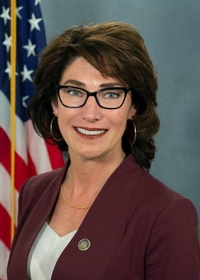
Rep. Mary Isaacson
Sponsored bills
Maddy summaryHR 114 is a resolution that recognizes the week of March 10 through 14, 2025, as "Civic Learning Week" in Pennsylvania. It highlights the importance of civic education for an informed and engaged citizenry.
Maddy summaryHB 1411 requires Pennsylvania's Department of Health to partner with healthcare providers (including OB/GYNs and community health centers) to create and distribute educational materials about perimenopause and menopause. The materials must cover symptoms, treatments, biological processes, and communication strategies for women identified by their providers as experiencing or approaching these stages. This directly affects women in Pennsylvania who are navigating perimenopause or menopause, providing them with standardized information to better understand and manage these health transitions. The bill amends the 1929 Administrative Code to add this specific duty to the Department of Health's responsibilities.
Maddy summaryThis resolution designates May 2025 as "Asian-American and Pacific Islander Heritage Month" in Pennsylvania. It symbolically recognizes the contributions of Asian-American and Pacific Islander communities to Pennsylvania and the nation, citing historical milestones like the arrival of the first Japanese immigrant in 1843 and Chinese railroad workers in 1869. The resolution encourages all Pennsylvania residents to learn about this heritage but does not create new laws, funding, or obligations. It directly affects the entire Commonwealth by formally designating a month for commemoration. As a non-binding resolution, it has no legal or financial impact beyond raising awareness.
Maddy summaryHB 1372 amends Pennsylvania's Public School Code to update rules for charter and cyber charter schools. It prohibits public school entities from paying for or accepting sponsorship for public events (Section 134(a.1)), and adds definitions for terms like "family member," "school district of residence," and "emergency" to clarify enrollment and operational requirements. The bill revises charter school accountability standards, requiring them to participate in state assessments, maintain nonsectarian operations, and follow specific enrollment rules (Section 1715-A). These changes directly affect charter school operators, school districts, and students by setting clearer financial limits, enrollment criteria, and operational expectations.
Maddy summaryHB 1376 amends Pennsylvania's Public School Code to establish standards for school-based health centers in public, private, and parochial schools. It requires these centers to provide accessible care without denying services based on payment ability, insurance status, or health conditions, while coordinating with students' existing primary care providers. Centers must offer a full range of services with proper parental consent, minimize barriers to care, and maintain confidentiality per federal law. The bill also creates a statewide advisory council and a department liaison to oversee implementation and ensure centers align with student needs like age, demographics, and community resources.
Maddy summaryHB 1371 creates new antitrust enforcement tools in Pennsylvania, primarily affecting health care providers, insurers, and consumers. It establishes a legal cause of action for antitrust violations, allows indirect purchasers (like patients) to seek recovery for harm caused by anti-competitive practices, and requires premerger notification for health care mergers and transactions. The bill also imposes penalties for violations and defines key terms like "health care facility system" and "provider organization." This directly impacts health care entities planning mergers and gives consumers a new avenue to challenge unfair pricing or reduced competition.
Maddy summaryHB 1329 makes it illegal to share secretly recorded videos or images of people in private settings, specifically targeting the transmission of such material via phone, email, internet, or physical media. It directly affects individuals who secretly record others' intimate areas (like genitals or nipples with minimal covering) in places where privacy is expected - such as bathrooms or changing rooms - and then share those recordings. The bill updates Pennsylvania's invasion of privacy law to explicitly prohibit this sharing, with harsher penalties when the victim is a student or minor. This law aims to protect people from non-consensual sharing of intimate content, particularly in vulnerable situations.
Maddy summaryHB 1345 would expand Pennsylvania's medical assistance program to cover FDA-approved treatments for menopause symptoms, including hormonal and non-hormonal drugs, devices, and behavioral therapy, for eligible low-income residents. The bill specifically requires coverage for all defined menopausal symptoms - such as hot flashes, bone density loss, and sleep disturbances - as well as treatments for menopause following a hysterectomy. It mandates that the state seek federal approval via a plan amendment or waiver to implement these changes. This policy directly affects enrolled medical assistance recipients experiencing menopausal symptoms, ensuring they receive covered care without additional out-of-pocket costs.
Maddy summaryHB 308 establishes new workplace health and safety standards specifically for public employees in Pennsylvania, including those working for the Commonwealth, counties, cities, schools, and public institutions. It creates the Pennsylvania Occupational Safety and Health Review Board, grants the Secretary of Labor new enforcement powers for workplace inspections, and requires public employers to meet safety standards comparable to those in the private sector under federal OSHA. The bill imposes penalties for violations, prohibits employer retaliation against employees reporting safety concerns, and mandates recordkeeping and reporting procedures. This legislation directly affects all public employees across Pennsylvania who previously lacked consistent state-level safety protections.