

Maddy summaryThis bill expands the enforcement powers of Pennsylvania's Pharmacy Audit Integrity and Transparency Act to address how Pharmacy Benefit Managers handle Medicaid prescriptions. It directly affects PBMs, pharmacies, and pharmacists by requiring PBMs to accept and process prescriptions from any pharmacy or pharmacist that is in good standing with state regulators. The law prohibits PBMs from limiting patient access to specific pharmacies based on the PBM's own private contracting choices. These changes are designed to ensure that Medicaid patients can use any qualified pharmacy without facing artificial restrictions imposed by their benefit manager.
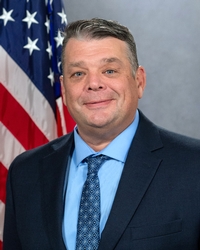
Rep. Pat Gallagher
Sponsored bills
Maddy summaryThis Pennsylvania House resolution designates September 2026 as "Healthy Hunger-Free Kids Month" to raise awareness about child hunger and food waste in the state. The document highlights statistics on food insecurity among students and discusses strategies like "share tables" to help reduce waste while providing extra meals. It serves as a symbolic gesture to focus attention on these issues rather than implementing new laws or funding changes.
Maddy summaryThis bill amends Pennsylvania's Municipalities Planning Code to create a streamlined approval process for high-density housing in designated growth areas. It requires the state Department of Community and Economic Development to establish rules that allow municipalities to fast-track land use decisions for vacant lots in zones where such housing is already permitted by right. The expedited process applies specifically to attached or detached homes, including accessory dwelling units, provided they meet minimum density standards and do not involve environmentally sensitive or hazard-prone areas. To support this initiative, the bill mandates the use of pre-approved building plans, concurrent review procedures, and a technical assistance hub to help local governments reduce delays and meet permitting timelines.
Maddy summaryThis bill creates a new Office of Transformation and Opportunity within the Governor's Office to streamline economic development projects and coordinate resources across state agencies. The office will act as a central hub to speed up permit reviews, manage funding applications, and ensure that projects benefit disadvantaged communities. It also establishes a Commonwealth Housing Ombudsman to resolve disputes and align policies related to residential housing needs. The office will be led by a Chief Officer appointed by the Governor, who will report directly to the Governor and produce annual reports on economic progress.
Maddy summaryThis bill creates a new grant program in Pennsylvania to encourage the construction of workforce housing in areas that might otherwise resist such development. Local governments can apply for funding if they commit to adopting at least five specific pro-housing policies, such as reducing permit fees, allowing higher-density zoning, or eliminating parking requirements. The program aims to increase home ownership and support major economic projects by providing financial assistance to counties and municipalities that streamline their housing approval processes.
Maddy summaryThis bill authorizes Pennsylvania to join the Respiratory Care Interstate Compact, a legal agreement designed to allow licensed respiratory therapists to practice in other member states without needing separate licenses for each location. The legislation establishes a framework where a therapist's home state retains primary regulatory authority while granting temporary practice privileges in other states to improve patient access and support military families. Key provisions include creating a central data system to track licenses, defining strict rules for handling disciplinary actions across state lines, and setting requirements for criminal background checks and jurisprudence exams. By adopting this compact, the state aims to streamline administrative processes and address workforce shortages while maintaining public safety standards.
Maddy summaryThis Pennsylvania House resolution designates the week of April 13 through 17, 2026, as "Local Government Week" and April 22, 2026, as "Local Government Day" within the state. The measure aims to highlight the work of the Commonwealth's thousands of local officials and employees who provide essential services such as road maintenance, public safety, and utilities. By formally recognizing these contributions, the bill seeks to bring attention to the importance of local governance in daily community life.
Maddy summaryThis bill amends Pennsylvania's Price Gouging Act to specifically target price increases for petroleum products like gasoline, diesel, and heating oil during market emergencies. It defines a market emergency as disruptions caused by severe weather, supply shortages, strikes, or other extraordinary events and gives the governor authority to declare such emergencies for up to 30 days, with possible extensions. Under the new rules, businesses selling petroleum products cannot change prices more than once every 24 hours, and during a declared emergency, they are prohibited from charging prices that are grossly higher than those offered seven days prior. These measures apply to producers, wholesalers, distributors, and retailers of fuel and take effect 60 days after the bill is passed.
Maddy summaryThis bill designates April 2026 as "Donate Life Month" and April 10, 2026, as "Blue and Green Day" in Pennsylvania to raise awareness about organ and tissue donation. The resolution does not change laws or create new programs but serves as a symbolic gesture to encourage public support for donation efforts. It highlights Pennsylvania's existing donation statistics and the work of state health agencies and organ procurement organizations in promoting donor registration. The measure is intended to increase visibility for organ donation awareness campaigns during the designated month and day.
Maddy summaryHR 390 is a ceremonial resolution recognizing March 2026 as "Women's History Month" in Pennsylvania. It does not create new laws or policies but formally acknowledges women's historical contributions to Pennsylvania and the nation through symbolic recognition. The resolution invites all Pennsylvanians to reflect on women's economic, cultural, and social roles, as detailed in the preamble's historical context. This is a non-binding gesture with no direct impact on specific groups or funding.