

Maddy summaryHB 1676 establishes Pennsylvania's Nursing Shortage Assistance Program, which provides state grants to "qualified nursing servicers" to help nursing students repay loans after graduation. The program requires partner hospitals to match state funds 1:1 for loan repayment and commit to hiring graduates, with grants only covering tuition expenses (not administrative costs). Nursing students working at participating hospitals may receive up to $10,000 annually or $30,000 total in loan repayment assistance. The Department of Labor and Industry administers the program, sets application rules, and reports annually on its effectiveness to the legislature.
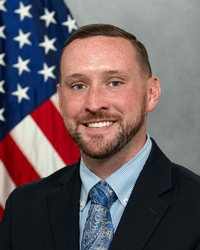
Rep. Sean Dougherty
Sponsored bills
Maddy summaryHB 2086 repeals two existing provisions: Section 704 (which established advisory councils for Pennsylvania's veterans' homes) and Section 1705 (which created a "veterans' home hall of fame"). The bill replaces these with a new State Veterans' Home Board to oversee state veterans' homes. This change directly affects Pennsylvania's veterans' homes by shifting governance from appointed advisory councils to the new board, while removing the commemorative hall of fame program. The bill focuses on structural changes to administration rather than altering resident care policies or admission criteria.
Maddy summaryHB 2079 establishes a program to reimburse eligible entities - such as school districts, counties, human services providers, Pre-K programs, and Head Start providers - for documented financing costs or lost interest income caused by delays in passing the state budget (defined as the period from July 1, 2025, until the 2025-2026 budget takes effect). The program is funded primarily by "impasse-generated interest" (interest earned from delayed state spending during the budget impasse), with the legislature providing additional funds if needed. The Office of the Budget will administer the program, including processing applications and reporting annually on reimbursements, funding sources, and recipient details.
Maddy summaryHB 2069 creates new rules for Pennsylvania municipalities to use automated systems that enforce vehicle noise limits using stationary cameras and decibel meters. It requires cities, towns, or counties to get state approval before installing these systems, including submitting details about proposed locations and justifications. The bill establishes procedures for application review, defines key terms like "automated vehicle noise enforcement system," and specifies penalties for violations of existing noise limits (67 Pa. Code § 157.11). Municipalities must designate a system administrator to manage the equipment and ensure compliance with the new framework.
Maddy summaryHB 2044 requires gun owners in Pennsylvania to report the theft or loss of a firearm to law enforcement within 48 hours. It directly affects individuals who legally own firearms by imposing a new reporting obligation. The bill specifies that failure to report within the required timeframe would be considered a misdemeanor offense, subjecting violators to penalties. This amendment modifies existing firearm laws under Title 18 to strengthen accountability for lost or stolen weapons.
Maddy summaryThis bill is a symbolic resolution designating the week of November 17-21, 2025, as "Certified Public Accountant Week" in Pennsylvania. It directly recognizes the profession of Certified Public Accountants (CPAs) within the state through a formal legislative designation. The resolution has no policy or regulatory impact - it serves solely as a commemorative gesture without imposing new requirements or altering laws. The bill was adopted by the Pennsylvania legislature on November 17, 2025.
Maddy summaryHB 1540 creates a "Buy America, Buy Union" grant program and fund under Pennsylvania's Department of Community and Economic Development. It requires state-funded projects to prioritize American-made materials and union labor by offering grants to qualifying contractors. The bill establishes a dedicated fund to finance these grants, directly affecting state agencies and contractors working on public projects. Key provisions mandate that projects receiving grants must meet specific union labor and domestic sourcing standards, altering how state procurement contracts are awarded. This policy change shifts procurement incentives toward union workers and U.S. manufactured goods for eligible state projects.
Maddy summaryHB 1891, a Pennsylvania firearms bill, aims to amend state laws governing firearm sales and transfers under Title 18. However, the provided context does not include the bill's specific provisions or policy changes, only its procedural history (referred to Judiciary, amended, and laid on the table in November 2025). Without access to the bill's text or detailed amendments, a substantive summary of its mechanisms or affected parties cannot be provided. The bill appears stalled in the legislative process as of its most recent action. For concrete details, the full bill text would be required.
Maddy summaryHB 1385 amends Pennsylvania's juvenile justice laws to clarify definitions and update how courts handle cases involving young people who commit offenses. It directly affects juvenile offenders, courts, and child welfare agencies by standardizing terms like "delinquent child" and specifying court procedures for dispositions. Key provisions include revising legal definitions to reduce ambiguity and establishing clearer guidelines for court decisions on supervision, treatment, or other outcomes for minors. The bill aims to create more consistent and transparent processes within the juvenile justice system. (Note: The bill is currently "laid on the table" and not actively moving forward in the legislative process.)
Maddy summaryHB 2007 mandates a specific $62 million transfer from Pennsylvania's Budget Stabilization Reserve Fund by November 1, 2025, to address the loss of federal SNAP benefits. The funds are allocated as follows: $50 million to the Department of Agriculture for food bank grants under existing state food programs, $10 million to the Department of Human Services for senior meal assistance, and $2 million for administration and outreach. This bill directly affects food banks, senior assistance organizations, and state agencies managing these programs. It requires the transfer to occur regardless of the usual emergency funding process outlined in Section 1703-A(b), which typically requires a two-thirds legislative vote for reserve fund appropriations. The bill takes effect immediately upon enactment.