

Maddy summaryThis Pennsylvania bill updates state laws to make it illegal to operate a watercraft if a person has completed a diversion program for a similar boating offense within the last 10 years. It also clarifies that evidence of alcohol or drug levels found more than two hours after driving a boat can still be used to prove impairment. Finally, the legislation adjusts how penalties are graded based on the number of prior offenses and whether an accident occurred.
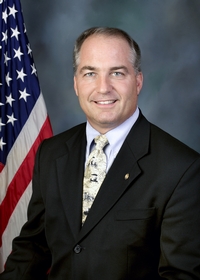
Rep. Kerry Benninghoff
Sponsored bills
Maddy summaryHB 1106 establishes a certification program for chiropractic assistants in Pennsylvania. To become certified, individuals must be at least 18, have a high school diploma, complete an approved training program, pass an exam, and meet background requirements. Certified assistants can only perform tasks delegated by a licensed chiropractor under direct on-premises supervision and must complete 16 hours of continuing education (including 8 in-person hours) every two years to maintain certification. The bill also makes minor editorial changes to the existing Chiropractic Practice Act.
Maddy summaryThis House Resolution designates June 2026 as "Life Month" in Pennsylvania to honor the four-year anniversary of the Supreme Court's decision overturning Roe v. Wade. The measure calls on churches, businesses, and communities across the state to celebrate this date and reaffirm the protection of unborn lives. As a symbolic gesture, the bill does not create new laws or policies but serves to recognize a specific timeframe for public observance.
Maddy summaryThis bill is a non-binding resolution that officially designates June 2, 2026, as "Cancer Action Day" in Pennsylvania to raise awareness about the state's high cancer rates. It highlights statistics on cancer diagnoses and deaths in the Commonwealth while noting disparities in access to care for various communities. The resolution urges lawmakers to support future legislation aimed at improving cancer prevention, detection, and treatment services. As a commemorative measure, the bill does not create new laws or allocate funding but serves to honor those affected by cancer and advocate for improved health outcomes.
Maddy summaryThis bill designates July 4, 2026, as "Knoebels Amusement Resort Day" in Pennsylvania to commemorate the 100th anniversary of the Knoebels Amusement Resort, a family-owned park in Elysburg that opened on July 4, 1926. The resolution recognizes the park's history, including its origins as a picnic destination and its growth into a major attraction with over 50 rides and games. It highlights the Knoebel family's long-standing connection to the land and the park's resilience through various natural challenges, including multiple flooding events. The designation serves as a symbolic celebration of the resort's century of operation and its contribution to Pennsylvania's tourism and entertainment industry.
Maddy summaryThis bill, known as the Legacy Law, amends Pennsylvania's homicide statutes to mandate financial restitution for parents or guardians when a child under 18 or a dependent dies due to a parent driving under the influence. If a court convicts a driver of this offense and the victim was a minor or dependent, the defendant must pay reasonable financial support to the victim's family until the child turns 18 or 19, depending on their education status. The law requires courts to consider various factors, such as the child's needs and the surviving parent's resources, when calculating these payments, which can be made directly to the family or held in a court trust. Additionally, the bill specifies that if a surviving parent has already won a civil lawsuit for damages, the criminal restitution order will be adjusted to avoid double compensation. The new provisions take effect 60 days after the bill is enacted.
Maddy summaryThis resolution (HR 411) symbolically designates February 2026 as "Blood Cancer Awareness Month" in Pennsylvania. It does not create new laws, allocate funding, or directly affect specific groups - it is a formal recognition intended to raise public awareness about blood cancers (like leukemia and lymphoma), which impact residents across all ages and communities. The resolution encourages Pennsylvanians to educate themselves about blood cancers, support affected families, and advocate for better awareness and care. As a non-binding resolution, it has no legal effect but aims to foster community solidarity around this health issue.
Maddy summaryThis bill prohibits airports and aviation businesses in Pennsylvania from using Automatic Dependent Surveillance Broadcast (ADS-B) data to charge fees to aircraft owners or operators. ADS-B is a technology that automatically shares an aircraft's location, speed, and other flight details with ground stations and other planes. The law makes it illegal for these entities to collect money based on this surveillance information and gives the state Attorney General the power to enforce the rule. The ban applies to any fees calculated or generated from this data within the state's borders.
Maddy summaryThis bill directs Pennsylvania municipalities to update their planning and zoning laws to specifically regulate large commercial data centers, which are defined as facilities with a peak power demand of 25 megawatts or more. It requires local comprehensive plans to identify suitable sites near existing infrastructure while explicitly protecting prime agricultural land and areas under conservation easements from such development. Additionally, the legislation establishes minimum standards for any data center zoning, including mandatory setbacks of 2,500 feet from residential areas and 300 feet from public roads, along with rules for noise, lighting, water usage, and site restoration. Local governments retain the authority to adopt stricter regulations but must follow these baseline requirements if they choose to permit these facilities.
Maddy summaryThis bill updates Pennsylvania's transportation laws to establish specific rules for selecting projects funded by the Multimodal Fund. It requires the Department of Transportation to award grants competitively without reserving a fixed percentage of money for any single applicant before the application process is finished. Additionally, the legislation mandates that the department give priority to projects using recycled materials, such as reclaimed asphalt pavement and recycled asphalt shingles. These changes aim to ensure fair competition while encouraging the use of sustainable building materials in state-funded infrastructure projects.