

Maddy summaryHB 685 requires Pennsylvania schools to accept U.S. currency as payment for admission to school-sponsored activities, such as athletic events, assemblies, or field trips. It applies to all school entities, including public school districts, charter schools, and private schools participating in school activities. The bill mandates that cash must be accepted when fees are charged, while allowing schools to also accept other payment methods like credit cards. It defines "cash" as U.S. coins and paper money recognized as legal tender and clarifies that schools may refuse payments in large denominations that exceed the fee amount.
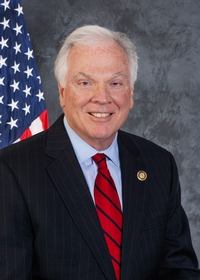
Rep. Tim Bonner
Sponsored bills
Maddy summaryHB 935 amends Pennsylvania's Solid Waste Management Act to prohibit new or expanded landfills (for municipal, residual, or hazardous waste) within three miles of any municipality with a population density of at least 1,000 residents per square mile. This directly affects landfill operators seeking permits to open, reopen, or expand operations that haven't yet received final approval from the Department of Environmental Protection or a court. The key provision establishes a 3-mile buffer zone around densely populated areas to restrict landfill siting. The law applies immediately to permit applications pending final approval.
Maddy summaryHB 934 amends Pennsylvania's Solid Waste Management Act to prohibit new landfills (for municipal, residual, or hazardous waste) from being located within 2,500 feet of any occupied dwelling. This rule applies specifically to landfill permit applications seeking initial approval, reopening, or expansion that have not yet been finalized by the Department of Environmental Protection or a court. The bill directly affects landfill operators seeking new permits and residents living near potential landfill sites. It creates a mandatory buffer zone around homes to address proximity concerns, without altering existing landfill operations.
Maddy summaryPennsylvania's House Resolution 125 is a petition to Congress requesting an Article V constitutional convention to propose amendments focused on three specific areas: imposing fiscal restraints on the federal government, limiting federal power and jurisdiction, and setting term limits for federal officials and members of Congress. The resolution specifies that any convention must be limited to these topics only, cannot consider changes to the Bill of Rights, and requires two-thirds of states to apply for the same purpose before Congress acts. It details Pennsylvania's delegate selection process (five members chosen by the legislature with voting rules) and includes conditions like Congress only setting the convention's time/place, states having equal voting power, and delegates disqualifying if accepting gifts. The resolution explicitly recommends ratification of any amendments through state legislatures rather than conventions.
Maddy summaryHB 898 requires Pennsylvania gas stations to display clear, standardized labels on fuel dispensers showing the exact federal and state taxes for both gasoline and diesel fuel. The labels must list individual taxes (federal gasoline tax, state gasoline tax, federal diesel tax, state diesel tax) and their combined totals in a consistent location. The Pennsylvania Department of Agriculture will design these labels, update them within 60 days of any tax rate changes, and cover all costs for retailers - no fees for initial or replacement labels. This bill directly affects fuel retailers and the Department of Agriculture, aiming to increase transparency about tax costs for consumers.
Maddy summaryHB 744 amends Pennsylvania's ethics laws to restrict gifts to public officials. It prohibits public officials, employees, nominees, or candidates from accepting cash gifts or non-cash gifts exceeding $50 in value from a single source in a year (Section 1103.1). Key exceptions include gifts from family members (excluding cash for candidates), lobbyists for major life events like weddings, and election contributions made under state law (Section 1103.2). The bill aims to prevent undue influence by clarifying what constitutes a prohibited gift under the state's financial disclosure framework.
Maddy summaryHR 87 is a resolution directing Pennsylvania's Joint State Government Commission to study security risks to critical infrastructure from foreign purchases of infrastructure assets and adjacent land. The study will examine current state protections, compare approaches used by other states, and assess whether adopting a process similar to the federal CFIUS review (which evaluates foreign investments for national security risks) would be feasible. It requires the Commission to report findings and recommendations to the General Assembly within 24 months. This resolution does not create new laws but aims to inform future policy decisions about protecting critical infrastructure.
Maddy summaryHB 691 amends Pennsylvania's Public Official Compensation Law to update how annual cost-of-living adjustments (COLA) are calculated and published for state legislators and legislative leaders. The bill maintains that COLA will continue to be based on the Consumer Price Index for the Pennsylvania, New Jersey, Delaware, and Maryland area, with adjustments calculated using the most recent 12-month data. It specifies that adjusted salaries for legislators must be published within 10 days of determination, while adjustments for legislative leaders (like the Speaker or Majority Leader) must be published 20 days before the change takes effect. This bill directly affects the compensation of all members of the Pennsylvania General Assembly and their top leadership.
Maddy summaryHB 165 amends Pennsylvania's abortion law to require pain relief medication for fetuses over 15 weeks' gestation during abortion procedures, directly affecting abortion providers performing such procedures. The bill adds a new provision (Section 3204(b.1)) stating that pain relief medication must be administered prior to the procedure unless the physician knows the pregnant person has an adverse reaction to it or a medical emergency prevents timely administration. This change applies specifically to abortions at or beyond 15 weeks' gestation. The law would take effect 60 days after enactment. It focuses on procedural requirements for medical care during abortion, not on restricting access.
Maddy summaryHB 530 modifies Pennsylvania's criminal codes to adjust penalties for property damage crimes and create a new process for removing trespassers. It reclassifies criminal mischief as a felony if financial damage exceeds $1,000 (for building entry) or $5,000 (for public services), and as a misdemeanor for smaller losses. The bill also establishes a formal procedure allowing property owners to request law enforcement to remove trespassers by submitting a signed affidavit proving the person isn't a tenant, has been asked to leave, and lawful eviction occurred if applicable. This directly affects property owners seeking to remove unauthorized occupants, tenants facing potential unlawful removal, and law enforcement officers handling such requests. The law requires officers to provide individuals removed a chance to prove lawful occupancy and prohibits violations of Pennsylvania's Landlord and Tenant Act.