

Maddy summaryHB 156 requires child care centers and family child care homes in Pennsylvania that use fossil-fuel heaters, fireplaces, or have attached garages to install operational carbon monoxide alarms. Specifically, alarms must be placed within 15 feet of these hazards and on every level of the facility, with full compliance needed within 18 months of the law's effective date. The Department of Human Services must notify all affected facilities within 12 months of the law taking effect. This bill amends the Human Services Code to add these safety standards, referencing existing carbon monoxide alarm definitions from the 2013 Carbon Monoxide Alarm Standards Act. It does not change the Department of Labor and Industry's authority under the Pennsylvania Construction Code Act.
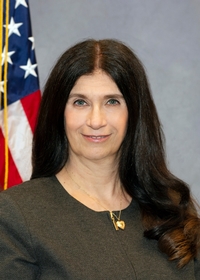
Rep. Kristine Howard
Sponsored bills
Maddy summaryHB 764 establishes the Pennsylvania Fresh Food Financing Initiative, a program that provides grants to support the construction, renovation, or expansion of grocery stores, farmers' markets, and retail food businesses in underserved low-income and moderate-income communities across Pennsylvania. The initiative prioritizes projects located in, owned by, or primarily serving Black, Indigenous, and people of color (BIPOC) communities, as defined by population data from the Center for Rural Pennsylvania. The Pennsylvania Department of Agriculture will administer the program, develop eligibility guidelines, and ensure grants promote local food systems, job creation, and the use of Pennsylvania agricultural products. The bill also creates a dedicated "Fresh Food Financing Initiative Restricted Account" to hold program funds.
Maddy summaryThis Pennsylvania House Resolution (HR 62) symbolically recognizes April 5-11, 2025, as "Week of the Young Child" in Pennsylvania. It acknowledges the National Association for the Education of Young Children's (NAEYC) annual observance, which highlights early childhood education, development, and the importance of quality early learning opportunities for children birth through age eight. The resolution does not create new laws or allocate funding; it solely encourages public awareness and community support for early childhood programs. It aligns with NAEYC's longstanding tradition (since 1971) of focusing attention on young children's needs and their families.
Maddy summaryThis House Resolution (HR 144) symbolically recognizes April 14-20, 2025, as "National Osteopathic Medicine Week" in Pennsylvania. It directly affects Pennsylvanians by designating a week for public awareness about osteopathic physicians (DOs), who provide patient-centered care focusing on the whole person. The resolution urges Pennsylvanians to learn about and promote DOs, who make up over 11% of U.S. physicians and are prominent in primary care and Pennsylvania’s medical community. It has no binding effect or policy changes - it is purely a ceremonial observance.
Maddy summaryHB 1179, the Genetic Materials Privacy and Compensation Act, requires genetic testing entities (including medical facilities, genealogy services, and law enforcement) to clearly disclose to individuals what genetic data they collect, how it may be used, and with which third parties it will be shared. The bill mandates "prominent disclosure" in plain language before data collection, prohibiting misleading claims about data privacy or usage. It specifically requires testing entities to obtain explicit consent before sharing genetic material with third parties. The law directly affects individuals using genetic tests and the companies providing those services, focusing on transparency rather than compensation mechanisms.
Maddy summaryHB 1187 amends Pennsylvania's Air Pollution Control Act to require major facilities (as defined in state code) to create and maintain municipal notification plans. These plans must alert nearby municipalities within 12 hours of air pollution incidents posing health risks, including communication methods, public safety measures, and annual updates. The bill also increases civil penalties for violations, raising daily fines to $37,500 after the fifth year of implementation based on factors like severity and environmental damage. This affects industrial facilities and their adjacent communities by mandating faster emergency communication and strengthening enforcement.
Maddy summaryHB 183 amends Pennsylvania's Workers' Compensation Act to increase the maximum compensation period for serious permanent disfigurement of the head, neck, or face from 275 weeks to 400 weeks. It specifically updates Section 306(c)(22) to clarify that disfigurement benefits are paid separately from disability benefits, allowing injured workers to receive both simultaneously. The change applies to injuries sustained on or after the bill's effective date (60 days from enactment), regardless of when the original injury occurred. This directly affects workers who sustain qualifying permanent disfigurement in workplace injuries.
Maddy summaryHB 1046 establishes the Pennsylvania Poet Laureate position and a nomination committee to select the appointee. The Governor appoints the Poet Laureate from a shortlist of three nominees provided by the committee (which includes education, arts, and humanities representatives), with the Laureate serving a two-year term and performing ceremonial duties like reading poems at the Governor's inauguration and legislative sessions, all without pay but with travel expenses reimbursed. This bill directly affects Pennsylvania residents by creating a state position to promote poetry and literary arts through official events.
Maddy summaryHB 1126 amends Pennsylvania's tax code to create two new provisions: (1) a tax deduction for fitness facilities that provide free or discounted memberships to active-duty military personnel, National Guard members, or reservists, limited to the regular membership fee and not reducing taxable income below zero; and (2) a personal health investment tax credit of up to $600 per year for eligible military members to cover qualified fitness expenses like gym memberships or exercise equipment. The deduction for facilities is only available if they did not claim the same expense for federal taxes. The credit applies to Pennsylvania resident individuals who qualify as active-duty military, National Guard, or reserve members under state definitions. These changes directly affect fitness businesses and military-affiliated taxpayers in Pennsylvania.
Maddy summaryHB 707 amends Pennsylvania's Freedom to Breastfeed Act to require all Commonwealth-owned buildings (like state offices, courthouses, and the State Museum) to provide dedicated nursing parent rooms. These rooms must be at least 50 square feet, lockable, accessible, and include essentials like a chair, work surface, sink, refrigerator, and privacy. The Department of General Services must install signage, maintain a public online list of room locations, and ensure compliance with accessibility standards. This directly affects employees and the public using state buildings who need to breastfeed or express milk.