

Maddy summaryHB 1130 requires food manufacturers to report "Generally Recognized as Safe" (GRAS) substances used in food to Pennsylvania's Department of Agriculture, including safety data. This affects companies adding GRAS substances to food products, with exemptions for small businesses and certain FDA-approved substances. The bill mandates a searchable public database on the state website where all submitted reports will be accessible to consumers. It creates new transparency requirements for substances deemed safe without full FDA food additive approval, aligning with federal GRAS reporting standards.
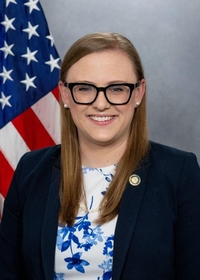
Rep. Jenn O'Mara
Sponsored bills
Maddy summaryThis bill (HB 1252) amends Pennsylvania's Credit Services Act to prohibit credit services organizations from discriminating against consumers based on sexual orientation, gender identity, or gender expression. It specifically bans denying credit, increasing fees, restricting credit amounts, or imposing different terms for these reasons. The law allows organizations to still consider credit history and apply community property laws. This directly affects all credit services providers and their customers in Pennsylvania.
Maddy summaryHB 1266 requires Pennsylvania hospitals to publicly post detailed pricing information for standard medical services on their websites within six months of the law taking effect. Hospitals must list the full price (gross charge), negotiated prices for each insurance company (with the insurer's name), the minimum and maximum negotiated prices across all insurers, and the cash price for self-pay patients, along with service descriptions and standard billing codes. This transparency requirement applies to all hospitals and hospital systems in Pennsylvania and mandates ongoing disclosure even if federal pricing rules are repealed or no longer enforced.
Maddy summaryHB 1255 proposes a constitutional amendment to Pennsylvania's Constitution, adding Section 30 to guarantee employees the right to organize, bargain collectively over wages and working conditions, and protect workplace safety. It specifically prohibits laws that interfere with these rights, including bans on union membership as a condition of employment. The amendment must pass both legislative chambers and then be approved by Pennsylvania voters at the next qualifying election. This would establish a constitutional right affecting all Pennsylvania workers and employers, not just current labor laws.
Maddy summaryHB 1259 would amend Pennsylvania's procurement laws to require contractors and subcontractors working on public work projects costing $300,000 or more to certify compliance with specific qualifications. These qualifications include maintaining required registrations and insurance, being in good standing with government agencies, and having no recent debarments, license revocations, or project defaults. The bill creates a new certification form that must be submitted with bids, and gives purchasing agencies authority to review compliance and disqualify non-compliant contractors. The Office of State Inspector General would have enforcement duties, with penalties for violations of these requirements.
Maddy summaryHB 1192 establishes a "Mothers Treatment Court Pilot Program" within Pennsylvania's minor courts, targeting mothers involved in the criminal justice system who require substance abuse or mental health treatment. The bill requires the Administrative Office of Pennsylvania Courts to create guidelines within six months for identifying eligible mothers, addressing their specific needs, and collecting data on program outcomes. Counties implementing the program must track participant referrals, charges, outcomes, and report annually - without personally identifiable information - to a public website. This pilot program, initially limited to minor courts, aims to provide court-supervised treatment alternatives rather than standard criminal penalties for qualifying mothers.
Maddy summaryHR 190 is a resolution designating April 7-11, 2025, as "Health Equity Week" in Pennsylvania. It aims to raise public awareness about health inequities affecting marginalized communities, including those based on race, ethnicity, disability, socioeconomic status, and geographic location. The resolution encourages Pennsylvanians to support efforts advancing health equity across all communities and sectors. As a symbolic measure, it does not create new laws or allocate funding but formally recognizes the need for systemic change in health access.
Maddy summaryHB 31 proposes a constitutional amendment to replace Pennsylvania's current Legislative Reapportionment Commission - which includes legislative leaders - with an Independent Redistricting Commission. The new commission would draw state legislative and congressional district boundaries after each federal census, following specific redistricting criteria outlined in the amendment. This change aims to reduce partisan influence by removing direct legislative control over redistricting. The bill does not detail the exact criteria but requires the commission to adhere to them when creating district maps.
Maddy summaryHB 411 adds a new supplemental annuity for eligible Pennsylvania state retirees, starting July 2025. It applies to retirees who retired before July 2, 2001, have specific service credit (excluding certain classifications), and are receiving monthly payments on July 1, 2025. The amount equals a percentage (ranging from 15% to 24.5%) of their July 2025 monthly annuity, based on their retirement date. The benefit is paid automatically unless retirees opt out, and the cost will be funded over 10 years starting July 2026. This bill does not apply to survivors or retirees with certain service types.
Maddy summaryHR 181 is a symbolic resolution recognizing April 11-17, 2025, as "Black Maternal Health Week" in Pennsylvania. It aims to raise awareness about racial disparities in maternal health outcomes, specifically highlighting that Black women in Pennsylvania face maternal mortality rates twice as high as White women (148 vs. 74 deaths per 100,000 live births in 2020) and that 93% of pregnancy-related deaths in the state are preventable. The resolution does not create new laws or funding but uses official recognition to spotlight these inequities, citing data on higher rates of complications and preventable deaths among Black mothers across Pennsylvania. It directly focuses attention on Black women in the state, particularly in high-impact areas like Philadelphia and Allegheny County.