

Maddy summaryHB 1802 requires all health insurance policies issued in Pennsylvania to cover FDA-approved COVID-19 vaccines with no cost-sharing for enrollees. This applies to insurers offering policies covering medical care (excluding accident-only, dental, or Medicare supplement plans), and mandates that government programs like Medicaid must also provide this coverage without deductibles, copays, or coinsurance. The bill defines "cost-sharing" to exclude premiums but includes standard out-of-pocket expenses, ensuring vaccines remain fully covered. It takes immediate effect and prevents insurers from reducing or eliminating this coverage for existing policies. This directly affects Pennsylvania residents with health insurance and the insurers providing those plans.
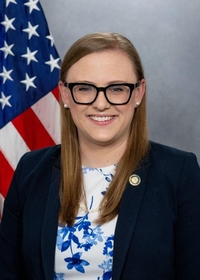
Rep. Jenn O'Mara
Sponsored bills
Maddy summaryThis resolution directs the Legislative Budget and Finance Committee to study the pay and benefits provided to game wardens, waterways conservation officers, and Department of Conservation and Natural Resources rangers. It requires the committee to issue a report on these compensation packages but does not change current pay policies. The bill is procedural and focuses solely on initiating a study, not enacting new laws.
Maddy summaryThis bill is a commemorative resolution designating July 26, 2025, as "Americans with Disabilities Act Day" within Pennsylvania. It does not create new laws or policies but formally recognizes the anniversary of the federal Americans with Disabilities Act (ADA) through a symbolic observance. The resolution directly affects Pennsylvania residents by designating a specific day for community recognition of the ADA's impact. As a procedural resolution, it has no binding legal effect and is referred to the Human Services committee for consideration.
Maddy summaryHB 1756 allows volunteer fire companies, nonprofit rescue squads, ambulance services, and senior citizen centers in Pennsylvania to apply for electricity rates matching residential service costs instead of commercial rates. To qualify, these organizations must sign a one-year contract with their utility provider. The bill amends Pennsylvania's Public Utilities code (Title 66) to require utilities to offer this rate option upon request. This change directly affects eligible nonprofit organizations by potentially lowering their electricity costs through simplified rate access. The bill takes effect 60 days after enactment.
Maddy summaryHB 1299 amends Pennsylvania's Unfair Trade Practices and Consumer Protection Law to regulate automatic renewal and continuous service offers. It requires businesses to clearly disclose renewal terms, pricing after trials, and cancellation options in a way consumers can retain, and to allow online cancellation. The law applies to most subscription-based goods/services but excludes health clubs, federally regulated utilities, natural gas/electricity contracts, and insurance entities. Violations would be treated as unfair trade practices under existing enforcement mechanisms.
Maddy summaryHB 564 updates Pennsylvania law to establish a new mental health crisis response system. It requires the Department of Human Services to create and operate this system, including training crisis responders and coordinating care. The bill directly affects individuals experiencing mental health crises and the state agencies responsible for emergency mental health services. Key provisions mandate specific duties for DHS to ensure timely, accessible crisis support statewide. The bill passed final passage on July 14, 2025, and is now under review by the Health & Human Services committee.
Maddy summaryHB 1407 updates Pennsylvania's teacher certification rules, effective July 1, 2027. It establishes new grade spans for certificates: "Primary" (pre-K through grade 6), "Secondary" (grades 7-12), and "Specialized" (pre-K through grade 12). Current teachers with early childhood certificates can add grades 5-6 by passing an assessment or earning continuing education credits, while those with elementary/middle certificates can expand to grades 7-12 using similar pathways. The bill also requires teacher preparation programs to adjust coursework and field placements for early childhood certification, and abrogates outdated regulations inconsistent with these changes.
Maddy summaryHB 1234 amends Pennsylvania's Human Services Code to require public assistance programs to cover the cost of blood pressure monitors for eligible recipients. This change directly affects individuals enrolled in state public assistance programs who need blood pressure monitoring for health management. The bill adds blood pressure monitors to the list of covered medical equipment under the public assistance program, ensuring these devices are provided without cost to recipients. It does not change eligibility requirements but expands existing coverage to include this specific monitoring tool. The bill passed final passage on July 1, 2025, and was referred to the Health & Human Services committee.
Maddy summaryThis resolution designates September 2025 as "International Underground Railroad Month" in Pennsylvania. It is a commemorative measure with no binding legal effect, intended to honor the historical significance of the Underground Railroad network. The resolution does not create new programs, alter laws, or directly affect any individuals or entities. It was adopted by the Pennsylvania House of Representatives on July 7, 2025.
Maddy summaryHB 1686 creates the Public Natural Resources Trust Fund to receive excess oil and gas royalties (over $70 million annually) starting in the 2025-2026 fiscal year. It increases annual transfers from the Oil and Gas Lease Fund to the Environmental Stewardship Fund from $20 million to $35 million while continuing $15 million for the Hazardous Sites Cleanup Fund. The Trust Fund will allocate 57% of funds for state park/forest projects and community recreation, and 43% for environmental cleanup and farmland preservation, with disbursements only when the fund balance exceeds $700 million. This bill directly affects oil and gas lease revenue streams, state environmental agencies, and conservation programs.