

Maddy summaryThis resolution recognizes March 14, 2025, as "Black Midwives Day" in Pennsylvania. It symbolically honors Black midwives' historical and ongoing contributions to maternal health while highlighting persistent disparities, including that Black women in Pennsylvania faced nearly three times the pregnancy-related mortality rate of White women in 2020. The resolution aims to raise awareness about systemic barriers like discrimination, maternity care deserts, and preventable maternal deaths, aligning with the National Black Midwives Alliance's campaign. It does not create new laws or allocate funding but serves as a statement of recognition.
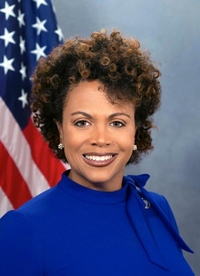
Rep. Gina Curry
Sponsored bills
Maddy summaryHB 707 amends Pennsylvania's Freedom to Breastfeed Act to require all Commonwealth-owned buildings (like state offices, courthouses, and the State Museum) to provide dedicated nursing parent rooms. These rooms must be at least 50 square feet, lockable, accessible, and include essentials like a chair, work surface, sink, refrigerator, and privacy. The Department of General Services must install signage, maintain a public online list of room locations, and ensure compliance with accessibility standards. This directly affects employees and the public using state buildings who need to breastfeed or express milk.
Maddy summaryHB 337 requires Pennsylvania's Department of General Services to provide free menstrual hygiene products (such as tampons and pads) in at least half of all bathrooms across state-owned buildings, including government offices and courthouses. The bill mandates installation of dispensers and disposal bins, along with public signage, to ensure accessibility without cost to users. Exceptions apply to buildings without bathrooms or those not regularly occupied, such as storage facilities, maintenance sheds, or unoccupied structures. This policy change directly affects the general public using state buildings and the Department of General Services, which must implement the requirements within 60 days.
Maddy summaryHB 1154 requires Pennsylvania's Department of Health to develop and implement a mobile application targeting Medicaid-eligible individuals for pregnancy, prenatal, postpartum, and infant care programs. The app must provide multilingual resources, connect users to state health services, meet clinical standards from major medical organizations, and operate on Android/iOS platforms. The department must select a vendor through competitive bidding within 90 days, paying $10 per user monthly with an annual cap of $500,000. The bill mandates the vendor to report de-identified usage data, including Medicaid eligibility engagement and app interaction metrics, to the department.
Maddy summaryHB 541 amends Pennsylvania's vehicle registration law to expand who can verify lost, stolen, damaged, or illegible license plates. It allows trained staff in state legislators' district offices (after department-approved training) and contracted messenger service employees to serve as authorized representatives for this purpose. The bill directly affects vehicle owners needing to replace plates by adding these new verification options. It does not change fees, timelines, or the core registration process, only specifying who may complete the verification step.
Maddy summaryHB 109 creates a new permit review process for specific industrial facilities in Pennsylvania's designated "environmental justice areas" - communities with high pollution burdens and vulnerable populations (low-income, communities of color). It requires the Department of Environmental Protection to consider cumulative environmental and public health impacts when reviewing permits for facilities like large wastewater plants (50,000+ gal/day), major air polluters, waste sites (25+ tons/month), mining operations, and certain landfills. The bill mandates that permits in these areas must address disproportionate environmental impacts, as defined by demographic, economic, health, and environmental data. This directly affects developers and operators of industrial facilities seeking new or expanded permits in designated communities.
Maddy summaryHB 1150 raises Pennsylvania's minimum wage to $15 per hour starting January 1, 2026, with annual increases thereafter. It also establishes a phased timeline for tipped employees: requiring higher base cash wages starting in 2025 (e.g., $5.00/hour after June 2025) and mandating that by July 1, 2029, employers must pay the full minimum wage without relying on tips. The bill ensures all tips received by employees remain their property and cannot be used by employers to meet minimum wage requirements. This directly affects most private-sector employers and tipped workers in Pennsylvania, particularly in hospitality and service industries.
Maddy summaryHB 1070 requires all health insurance policies covering maternity benefits in Pennsylvania to provide 24 additional hours of elective postpartum observation and care beyond the existing 48-96 hours of inpatient coverage, starting January 1, 2026. It also prohibits hospitals from involuntarily discharging postpartum patients or newborns between 10 p.m. and 8 a.m., with billing under "observation status" if discharge is refused. The bill directly affects mothers, newborns, hospitals, and health insurers by extending coverage duration and restricting nighttime discharges. The Department of Human Services must seek a federal waiver to extend government program coverage for this additional 24-hour period.
Maddy summaryHR 150 is a Pennsylvania House resolution designating April 11-17, 2025, as "Black Maternal Health Week" to highlight the disproportionate maternal health disparities affecting Black women and birthing persons in the state. It references Pennsylvania data showing Black women face maternal mortality rates twice as high as White women (148 vs. 74 deaths per 100,000 live births in 2020) and higher morbidity rates. The resolution does not create new laws or funding but aims to raise public awareness about preventable maternal health outcomes. It specifically targets state-level attention to this crisis, citing local statistics from Philadelphia and Allegheny Counties. As a symbolic resolution, it has no binding effect but seeks to spur broader discussion and action.
Maddy summaryThis bill establishes a grant program to provide free menstrual products (such as pads and tampons) in Pennsylvania public schools. Schools with 25% or more students eligible for free or reduced-price lunch programs can apply for grants to purchase these products and install dispensers or disposal units. Recipients must report annual spending on products and dispenser maintenance to the state. The program is funded by a state appropriation for the 2025-2026 fiscal year.