

Maddy summaryThis Pennsylvania bill updates state regulations on cigarette sales and retailer licensing by adding new definitions for youth centers and recreational places. It establishes stricter requirements for new cigarette retailers starting January 1, 2027, prohibiting stores from opening within 500 feet of schools, day-care centers, youth centers, recreational facilities, or other licensed cigarette retailers. The law also clarifies rules for transferring cigarette vending machine licenses and maintains existing requirements for accurate tax reporting and compliance with state pricing rules.
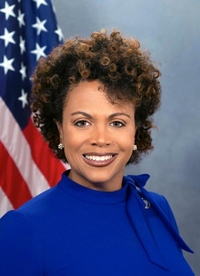
Rep. Gina Curry
Sponsored bills
Maddy summaryThis bill amends Pennsylvania's tax code to establish a new licensing requirement for tobacco retailers, mandating that applicants meet specific criteria to obtain or renew their retail licenses. The law introduces a distance restriction effective January 1, 2027, prohibiting tobacco retailers from operating within 1,000 feet of any school property line, while also requiring applicants to demonstrate adequate premises for revenue protection, maintain accurate tax reporting, and have no history of tax violations. The measure directly affects tobacco retailers and applicants seeking to sell tobacco products in Pennsylvania, adding compliance steps to the existing licensing process.
Maddy summaryHB 554 would authorize Pennsylvania to join the Social Work Licensure Compact, a multi-state agreement that allows social workers licensed in one member state to practice in others without additional exams. The bill provides Pennsylvania with the legal framework to adopt the compact's standard terms, directly affecting licensed social workers seeking to practice across state lines. Key provisions include aligning Pennsylvania's licensing requirements with the compact's uniform standards, simplifying the process for social workers to obtain reciprocal licenses in participating states. This change would streamline professional mobility for social workers while maintaining consistent regulatory oversight.
Maddy summaryThis Pennsylvania bill requires law enforcement agencies to conduct additional background checks on applicants who previously worked for U.S. Immigration and Customs Enforcement. The law mandates that these applicants submit detailed employment history forms, including contact information for all supervisors and written statements about any deadly force investigations or disciplinary actions. If an applicant discloses negative information, the hiring agency must request full records from the former employer, and a state commission will review the case to determine fitness for employment. The bill also establishes confidentiality protections for the information gathered and prohibits hiring applicants who fail to provide the required disclosures.
Maddy summaryHB 2241 requires Pennsylvania hospitals and medical offices to publish standard charges for services online in a readable digital format and provide printed copies upon request. It mandates that hospitals list all standard charges - including gross charges, negotiated rates with insurers, and discounted cash prices - for every item or service, including both inpatient and outpatient care. The bill specifically requires a simplified, consumer-friendly list of "shoppable services" (like elective procedures patients can schedule in advance) alongside the full charge list. This applies directly to all hospitals operating under Pennsylvania's Health Care Facilities Act, aiming to help patients compare costs before receiving care.
Maddy summaryHB 1556 amends Pennsylvania's Tax Reform Code of 1971 to add new tax credits under the PA EDGE program specifically for "advanced clean manufacturing projects." This bill directly affects businesses constructing or expanding facilities that produce clean energy technology, such as solar panels or battery components. The key change expands the existing PA EDGE tax credit program to include these advanced clean manufacturing projects, providing financial incentives for qualifying investments. The bill does not alter other existing PA EDGE provisions or create new tax credit categories beyond this specific addition.
Maddy summaryHB 1936 amends Pennsylvania's juvenile justice laws to change procedures for handling cases involving minors. It specifies when courts must hold hearings before releasing or committing a juvenile, alters where juveniles can be placed for treatment or supervision, and adds requirements for reviewing dispositions (how cases are resolved) after commitment. The bill directly affects juveniles charged with offenses, their families, and juvenile court judges and probation officers who manage these cases. Key changes include setting clearer timelines for hearings, limiting where juveniles can be committed (e.g., away from home), and mandating periodic reviews of their case plans. These provisions aim to standardize court processes while prioritizing youth safety and appropriate supervision.
Maddy summaryHB 1909 updates Pennsylvania's criminal code by clarifying and adjusting definitions and penalties for several existing offenses. It specifically addresses simple assault, reckless endangerment, terroristic threats, harassment, stalking, unlawful restraint, false imprisonment, indecent assault, and disorderly conduct. The bill aims to refine how these crimes are defined and prosecuted under current law. It directly affects individuals charged with these specific offenses in Pennsylvania courts. The changes focus on improving legal clarity without creating new criminal categories.
Maddy summaryHB 2215 requires AI chatbot providers to verify user age using reliable methods like government-issued ID, not just birth dates, to prevent minors from accessing AI companions designed for emotional interaction. The bill prohibits creating or distributing AI chatbots that risk encouraging minors to engage in or share sexually explicit content or violent behavior, with penalties of up to $100,000 per violation. It defines "AI companion" as chatbots simulating friendship or therapy and mandates that age verification must reliably block minors without relying on IP addresses or other technical indicators. This law applies to any entity making AI chatbots available in the U.S., focusing on protecting minors from harmful content through concrete verification requirements.
Maddy summaryHB 710 updates Pennsylvania's vehicle financial responsibility rules by requiring drivers to prove they can cover accident costs. It directly affects Pennsylvania drivers who need to show proof of financial responsibility (like insurance) when registering vehicles or after incidents. The key change is creating an online verification system to replace paper documents, allowing real-time checks by law enforcement and state agencies. This simplifies the process for drivers and officials while ensuring compliance with existing financial responsibility standards.