

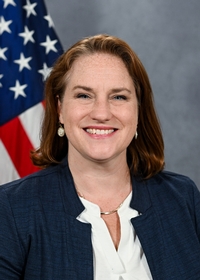
Photo of Heather Boyd
D Pennsylvania House · District 163 On the 2026 ballot

Rep. Heather Boyd

Compare
Total votes
3,432
all sessions
Attendance
100%
of floor votes
Near the chamber average
With party
99%
of cast votes
Higher than 85% of chamber peers
Bipartisan score
0%
crosses aisle rarely
Lower than 88% of chamber peers
Sponsored
670
bills & resolutions
Higher than 78% of chamber peers
Committees
7
assignments
670 bills and resolutions

Sponsored bills

Total
670
Primary
7
Co-sponsor
663
This page
670
matching current filters
Co-sponsor HB 2443
In committee · Pennsylvania House · Co-sponsor
An Act establishing the Right to Counsel Program and the Tenant Right to Counsel Task Force; and imposing duties on the Department of Human Services.

Maddy summaryThis bill creates a new Right to Counsel Program within Pennsylvania's Department of Human Services to provide free legal representation to low-income tenants facing eviction or housing discrimination. The program will fund designated nonprofit organizations to offer direct legal services to eligible individuals, defined as renters earning less than 200% of the federal poverty level or those receiving medical assistance. Additionally, the legislation establishes a Tenant Right to Counsel Task Force to oversee the initiative and report on its progress.

In committee Jun 24, 2024 1 co-sponsor
Co-sponsor HR 436
Passed · Pennsylvania House · Co-sponsor
A Resolution designating the week of June 24 through 28, 2024, as "Union Organizing Week" in Pennsylvania, in honor of those workers who have fought for their right to organize and bargain collectively at their workplace.

Maddy summaryThis bill designates the week of June 24 through 28, 2024, as "Union Organizing Week" in Pennsylvania to honor workers who advocate for their right to organize. The resolution includes language acknowledging the contributions of union negotiators and diverse workers, including veterans, to the state's economy and communities. It also expresses the view that employers and unions should collaborate for mutual success and recognizes the dedication of those seeking fair treatment at the workplace.

Passed Jun 24, 2024 1 co-sponsor
Co-sponsor HB 2415
In committee · Pennsylvania House · Co-sponsor
An Act amending Title 53 (Municipalities Generally) of the Pennsylvania Consolidated Statutes, in general provisions relating to area government and intergovernmental cooperation, providing for Municipal Police Enhancement Consolidation Grant Program and establishing the Municipal Police Enhancement Consolidation Grant Program Fund.

Maddy summaryThis bill creates a new grant program called the Municipal Police Enhancement Consolidation Grant Program to help Pennsylvania municipalities improve their local police departments. Administered by the Pennsylvania Commission on Crime and Delinquency, the program provides funding for specific goals such as merging small police departments, achieving professional accreditation, officer training, and community outreach. Grants range from $5,000 to $100,000 depending on the purpose, with smaller departments receiving extra points for consolidation or accreditation efforts. The legislation establishes a dedicated fund to finance these awards and sets specific deadlines for publishing program details and accepting applications starting in fiscal year 2025.

In committee Jun 13, 2024 1 co-sponsor
Co-sponsor HB 2411
In committee · Pennsylvania House · Co-sponsor
An Act providing for criteria for independent contractors and for powers and duties of the Department of Labor and Industry and the Secretary of Labor and Industry; and imposing penalties.

Maddy summaryThis bill, known as the Workplace Misclassification Act, establishes clearer rules for determining when workers in Pennsylvania are classified as independent contractors versus employees, primarily affecting businesses and workers outside the construction industry. To qualify as an independent contractor, an individual must have a specific written contract, operate their own business with their own tools, and be free from the hiring company's control over how they perform their work. The law also creates new penalties for employers who incorrectly classify workers, including the ability for the Department of Labor and Industry to issue stop-work orders and ban companies from future public contracts. Additionally, the act allows individuals to sue for violations and prohibits employers from retaliating against workers who report misclassification issues.

In committee Jun 12, 2024 1 co-sponsor
Co-sponsor HB 2370
Passed · Pennsylvania House · Co-sponsor
An Act amending the act of March 10, 1949 (P.L.30, No.14), known as the Public School Code of 1949, in preliminary provisions, providing for advertising and sponsorships; in charter schools, further providing for definitions, for charter school requirements and for funding for charter schools, providing for funding for cyber charter schools, for cyber charter school requirements, for powers and composition of board of trustees and for educational management service providers, further providing for powers and duties of department and for assessment and evaluation, providing for annual reports and public reporting and for fund balance limits, further providing for cyber charter school requirements and prohibitions and for school district and intermediate unit responsibilities, providing for access to other schools' facilities, further providing for establishment of cyber charter school, providing for renewals, for charter amendments and for causes for nonrenewal, revocation or termination, further providing for State Charter School Appeal Board review, for cyber charter school application and for enrollment and notification, providing for enrollment parameters and for enrollee wellness checks and further providing for applicability of other provisions of this act and of other acts and regulations; and, in reimbursements by Commonwealth and between school districts, further providing for student-weighted basic education funding, providing for adequacy and tax equity supplements and for accountability to Commonwealth taxpayers and further providing for Pennsylvania accountability grants.

Maddy summaryHB 2370 amends Pennsylvania's Public School Code to update regulations for public schools and charter schools, with specific new rules on advertising and funding. The bill requires public schools to clearly state that any advertised costs for tuition or technology are paid by taxpayers and prohibits schools from using taxpayer money to sponsor public events. It also establishes reporting requirements for school advertising expenditures and expands definitions related to charter school management and enrollment. Additionally, the legislation modifies how student-weighted basic education funding is calculated and introduces new accountability grants for the state.

Passed Jun 12, 2024 1 co-sponsor
Co-sponsor HB 2406
In committee · Pennsylvania House · Co-sponsor
An Act amending the act of March 4, 1971 (P.L.6, No.2), known as the Tax Reform Code of 1971, in city revitalization and improvement zones, further providing for definitions, for establishment or designation of contracting authority, for approval, for functions of contracting authorities, for qualified businesses, for funds, for reports, for calculation of baseline, for certification, for transfers, for restrictions and for transfer of property, providing for floating zones, further providing for Commonwealth pledges and for confidentiality, providing for operational funding and technical support and further providing for guidelines and for review.

Maddy summaryThis bill amends Pennsylvania's Tax Reform Code to update and expand the rules for city revitalization and improvement zones, which are designated areas intended to spur economic development and job creation. It primarily affects cities with at least 20,000 residents and establishes a "contracting authority" to manage these zones, including the power to designate specific areas and oversee construction projects. The legislation clarifies definitions for various terms, outlines the types of taxes that can be used for zone funding, and sets new guidelines for how baseline calculations and financial transfers are handled within these districts. Additionally, the bill introduces provisions for "floating zones," which allow for more flexible designation of areas, and ensures confidentiality regarding Commonwealth pledges related to these initiatives.

In committee Jun 11, 2024 1 co-sponsor
Co-sponsor HB 1657
In committee · Pennsylvania House · Co-sponsor
An Act amending the act of June 13, 2008 (P.L.182, No.27), known as the Clean Indoor Air Act, further providing for title of act, for definitions, for prohibition, for signage, for enforcement, for preemption of local ordinances and for repeal; and making editorial changes.

Maddy summaryThis bill amends Pennsylvania's Clean Indoor Air Act to update definitions and clarify which specific types of businesses are subject to smoking restrictions. It directly affects establishments such as drinking establishments, cigar bars, and gaming floors by refining the criteria used to classify them under the law. Key provisions include adding new definitions for terms like "electronic smoking device" and "private club," while also removing certain categories like "cigar bars" from the list of regulated venues. The legislation maintains the state's authority to set these rules and prevents local governments from passing conflicting ordinances.

In committee Jun 11, 2024 1 co-sponsor
Co-sponsor HB 851
Passed · Pennsylvania House · Co-sponsor
An Act amending the act of March 10, 1949 (P.L.30, No.14), known as the Public School Code of 1949, in school health services, providing for Menstrual Hygiene Products Accessibility Grant Program; and making an appropriation.

Maddy summaryThis bill establishes a grant program to provide menstrual hygiene products to students in Pennsylvania public schools without charge. It directs the Department of Education to award funding to school districts that have at least 50% of their students eligible for free or reduced-cost lunch, allowing recipients to purchase items like tampons and pads or install dispensing machines. The program requires that these products be accessible to all students regardless of their gender identity and mandates that schools report how the funds are spent. A total of $100,000 is appropriated from the state's General Fund to support this initiative.

Passed Jun 7, 2024 1 co-sponsor
Co-sponsor HB 2137
Passed · Pennsylvania House · Co-sponsor
An Act amending Title 35 (Health and Safety) of the Pennsylvania Consolidated Statutes, establishing the Maternal and Newborn Supply Kit Program; and imposing powers and duties on the Department of Health.

Maddy summaryThis bill establishes the Maternal and Newborn Supply Kit Program in Pennsylvania to provide parents and guardians with a package of essential health products and educational materials. To receive the kit, which includes items like postpartum pads, baby diapers, and care instructions, parents must complete an online education syllabus or be referred by a community organization. The Department of Health will manage the program using a dedicated state fund and may partner with private organizations to distribute the kits while reporting on their effectiveness annually. The program is designed to operate for two years with the goal of improving maternal and infant health outcomes.

Passed Jun 7, 2024 1 co-sponsor
Co-sponsor HB 2234
Passed · Pennsylvania House · Co-sponsor
An Act amending Title 40 (Insurance) of the Pennsylvania Consolidated Statutes, in preliminary provisions relating to health insurance markets oversight, further providing for definitions; in State-based exchange, further providing for powers and duties of exchange authority; and, in reinsurance program, further providing for application.

Maddy summaryThis Pennsylvania bill amends state insurance laws to update definitions and clarify the responsibilities of the health insurance exchange authority. It establishes a framework for collecting fees from insurers to fund either a reinsurance program, an affordability assistance program, or both, with a cap of 3.5% on total monthly premiums. The legislation also directs the state to apply for a federal waiver to allow the creation of a reinsurance program and to maximize federal funding for it. Additionally, the bill outlines how an affordability assistance program would work in 2025 to provide financial benefits to consumers based on income or other eligibility criteria without creating a permanent entitlement.

Passed Jun 7, 2024 1 co-sponsor
Showing 471 to 480 of 670 bills
Previous 1 … 47 48 49 … 67 Next