

Maddy summaryHB 1133 amends Pennsylvania's food protection laws to require a specific cancer warning on food products containing Butylated Hydroxyanisole (BHA). The bill mandates that any food bearing BHA (identified by CAS number 25013-16-5) must display the warning "WARNING: This product contains BHA, which may cause cancer" in bold type on the principal display panel, using a font size no smaller than the required "serving size" declaration. This directly affects food manufacturers and retailers selling products with BHA, requiring them to update labeling to comply with the new rule. The policy change focuses on enhancing consumer transparency about a specific ingredient's potential health risk through mandatory labeling.
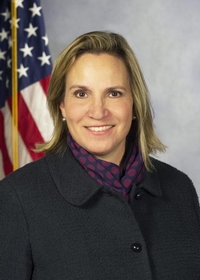
Rep. Christina Sappey
Sponsored bills
Maddy summaryHB 1130 requires food manufacturers to report "Generally Recognized as Safe" (GRAS) substances used in food to Pennsylvania's Department of Agriculture, including safety data. This affects companies adding GRAS substances to food products, with exemptions for small businesses and certain FDA-approved substances. The bill mandates a searchable public database on the state website where all submitted reports will be accessible to consumers. It creates new transparency requirements for substances deemed safe without full FDA food additive approval, aligning with federal GRAS reporting standards.
Maddy summaryHB 1266 requires Pennsylvania hospitals to publicly post detailed pricing information for standard medical services on their websites within six months of the law taking effect. Hospitals must list the full price (gross charge), negotiated prices for each insurance company (with the insurer's name), the minimum and maximum negotiated prices across all insurers, and the cash price for self-pay patients, along with service descriptions and standard billing codes. This transparency requirement applies to all hospitals and hospital systems in Pennsylvania and mandates ongoing disclosure even if federal pricing rules are repealed or no longer enforced.
Maddy summaryHB 31 proposes a constitutional amendment to replace Pennsylvania's current Legislative Reapportionment Commission - which includes legislative leaders - with an Independent Redistricting Commission. The new commission would draw state legislative and congressional district boundaries after each federal census, following specific redistricting criteria outlined in the amendment. This change aims to reduce partisan influence by removing direct legislative control over redistricting. The bill does not detail the exact criteria but requires the commission to adhere to them when creating district maps.
Maddy summaryThis Pennsylvania House Resolution designates April 14-18, 2025, as "Local Government Week" and April 16, 2025, as "Local Government Day" within the state. It formally recognizes the role of local government units - such as counties, cities, townships, boroughs, and municipal authorities - by commending officials and employees who provide essential services to residents. The resolution highlights that Pennsylvania's local governments serve over 13 million people through nearly 166,000 employees and thousands of volunteer officials. It has no binding policy effect and serves solely as a symbolic acknowledgment of local government contributions.
Maddy summaryHB 1085 amends Pennsylvania's Motor License Fund allocation rules for the Pennsylvania State Police. It sets a 2025-2026 funding cap at 68% of the 2016-2017 level ($125 million) and eliminates all future appropriations for this purpose starting in fiscal year 2026-2027. The bill directly affects the State Police budget and the Motor License Fund, which is funded by vehicle registration fees. This is a procedural budget adjustment with no new policy changes, solely modifying existing funding levels.
Maddy summaryHB 1146 allows second-class counties in Pennsylvania to generate local funding for public transportation and transportation infrastructure by imposing specific taxes, including on liquor sales, rental vehicles, real estate transfers, income, and vehicle registrations, each with maximum rates defined by existing state law. Revenue from these taxes must be deposited into a restricted county account dedicated exclusively to transportation projects. The bill also establishes administrative procedures for collecting and reporting these taxes, ensuring compliance with state tax codes and enabling counties to implement the funding mechanisms without creating new statewide programs.
Maddy summaryHB 1152 requires insurance companies to directly reimburse non-network emergency medical services (EMS) agencies for 911 emergency calls within 45 days at 350% of the Medicare ambulance rate for the same service in the same area. EMS agencies must register with the state annually to qualify for direct payments, and insurers cannot demand contracts to facilitate this reimbursement. The insurer's payment covers the full service cost (excluding the patient's copay, coinsurance, or deductible), so EMS agencies cannot bill patients for the remaining amount. This law applies only to non-network EMS providers offering 911 emergency medical services, unless preempted by federal law.
Maddy summaryThis resolution directs Pennsylvania's Legislative Budget and Finance Committee to study a potential change to school funding. It would require the committee to collect data on all school districts' property tax revenue, calculate regional tax rates, and model how pooling that revenue at the intermediate unit level (regional education groups) and distributing it based on student enrollment would affect funding. The study aims to evaluate whether this approach would make school funding more equitable, addressing a court-ordered obligation to fairly fund public education. The committee must report findings within one year, but the resolution itself does not change current funding rules.
Maddy summaryHB 1150 raises Pennsylvania's minimum wage to $15 per hour starting January 1, 2026, with annual increases thereafter. It also establishes a phased timeline for tipped employees: requiring higher base cash wages starting in 2025 (e.g., $5.00/hour after June 2025) and mandating that by July 1, 2029, employers must pay the full minimum wage without relying on tips. The bill ensures all tips received by employees remain their property and cannot be used by employers to meet minimum wage requirements. This directly affects most private-sector employers and tipped workers in Pennsylvania, particularly in hospitality and service industries.