

Maddy summaryHB 1518 amends Pennsylvania's driver licensing laws under Title 75 of the Consolidated Statutes. It focuses on updating procedures for applying for driver's licenses or learner's permits, as well as modifying the content, expiration, and renewal processes for licenses. The bill directly affects Pennsylvania drivers who apply for or renew their licenses. The provided context does not include specific provisions or mechanisms of the bill, only its title and referral to the Transportation committee.
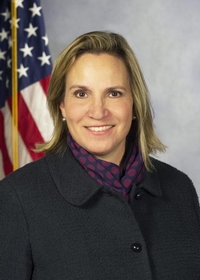
Rep. Christina Sappey
Sponsored bills
Maddy summaryHB 926 requires healthcare facilities to establish violence prevention committees to address workplace violence. These committees must develop safety plans, and facilities must report violent incidents to the Department of Labor and Industry. The Department gains authority to enforce compliance, impose fines, and issue administrative penalties for violations. This bill directly affects hospitals, clinics, and all healthcare workplaces covered under state labor regulations.
Maddy summaryHB 393 amends Pennsylvania's Second Class Township Code to increase annual tax limits for fire and ambulance services. It raises the maximum fire tax rate from 3 mills to 10 mills and ambulance tax from 0.5 mills to 5 mills, allowing townships to fund equipment, training, and emergency services. Townships can use up to half the revenue for staff salaries (with board approval) and must seek voter approval if rates exceed these new limits. This directly affects second-class townships needing to finance local fire and ambulance operations under the code.
Maddy summaryHB 504, the Community Energy Act, establishes a framework for third-party-owned community energy projects (like solar gardens) in Pennsylvania. It requires electric distribution companies to connect these facilities, provides bill credits to subscribers (homeowners, renters, and businesses) for energy generated, and ensures guaranteed savings by linking subscription payments to bill reductions. Key provisions include setting size limits (max 5,000 kW for most facilities), mandating that at least 50% of subscriptions come from small users or farms, and requiring fair wages for construction workers. The bill directly affects electric companies (with new connection duties), community energy organizations (as owners/operators), and subscribers (who gain access to shared renewable energy).
Maddy summaryHB 820 creates Pennsylvania's "Working Pennsylvanians Tax Credit," which provides a state tax credit equal to 30% of a taxpayer's federal Earned Income Tax Credit (EITC) for the same year. This credit directly affects low-to-moderate income Pennsylvania residents who qualify for the federal EITC, applying it against their state tax bill. The credit is refundable, meaning taxpayers receive a cash refund if the credit exceeds their state tax liability. The bill takes effect for taxable years beginning after December 31, 2024.
Maddy summaryHB 630 amends Pennsylvania's Equal Pay Law to strengthen protections against wage discrimination based on sex, race, or ethnicity. It adds definitions for "comparable work" (requiring similar skill, effort, responsibility, and working conditions) and clarifies that "wages" include all compensation like fringe benefits. The bill explicitly bans employers from requiring employees to refrain from discussing wages, using salary history to set pay, or asking about prior wages during hiring. It also establishes an Equal Pay Enforcement Fund to support enforcement efforts and clarifies that job titles alone cannot determine if jobs are comparable.
Maddy summaryThis bill amends Pennsylvania's Second Class Township Code to clarify bonding requirements for township contracts. It requires successful bidders to provide a performance bond or equivalent financial guarantee within 20 days of contract award, with the amount set between 10% and 100% of the contract value. If the bond isn't provided within that timeframe, the contract becomes void. The change directly affects second-class townships when awarding construction or service contracts.
Maddy summaryHB 280 amends Pennsylvania's Election Code to clarify primary voting rules for unaffiliated voters. It defines "unenrolled electors" as voters who registered without party affiliation (selecting "none," "no affiliation," or "other" with a clear independent preference). The bill allows these voters to participate in primary elections for candidate nominations by following specific procedures, while maintaining that only enrolled party members can vote in party primaries or hold party office. It also repeals provisions about voters accidentally casting ballots for the wrong party at primary elections.
Maddy summaryHB 1195 amends Pennsylvania law to clarify how vacancies in borough council seats are filled. It requires borough councils to fill vacancies within 30 days; if they fail, a special vacancy board (composed of council members excluding the mayor plus one appointed resident) must fill the seat within 15 additional days. If the board fails, the chair must petition the court to appoint a qualified resident to serve until the next municipal election. The bill also allows residents to petition the court directly with 15 signatures if more than half the council seats are vacant. This affects all Pennsylvania boroughs and their residents by streamlining the process for filling council vacancies.
Maddy summaryHR 217 is a resolution that formally recognizes May 7, 2025, as "Philadelphia Eagles Day at the Capitol" in Pennsylvania. It also honors the 2024 Philadelphia Eagles for their victory as the Super Bowl LIX Champions.