

Maddy summaryThis bill amends Pennsylvania's Public School Code to authorize the creation of school-based health centers within public and private schools. These centers must remain open during school hours and cannot refuse care based on a student's ability to pay, insurance status, or existing primary care provider. Services are determined by school boards based on student demographics and needs, with strict requirements for parental consent and data confidentiality. The legislation also mandates the establishment of a statewide advisory council to oversee program operations and requires the Department of Health to collect usage and demographic data once funding is available.
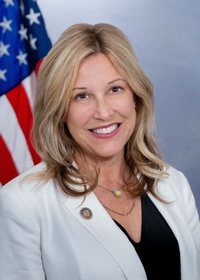
Rep. Melissa Shusterman
Sponsored bills
Maddy summaryThis bill amends Pennsylvania's personal income tax code to exclude specific student loan forgiveness amounts from taxation. It directly affects borrowers who receive loan discharge through federally qualified programs and employers providing educational assistance. The legislation defines eligible loans as those issued under federal student assistance laws and limits tax-free forgiveness to programs established by the federal Department of Education. These tax exemptions will apply to taxable years beginning after December 31, 2024.
Maddy summaryThis bill establishes a new Earned Paid Leave Act that requires employers to allow employees to accrue and use paid time off after working for 90 days. Under the program, workers earn one hour of paid leave for every 40 hours worked, with a maximum cap of 40 hours per year, and they must be paid their regular rate of pay while on leave. The legislation also creates a Small Business Grant Program and assigns specific duties to the Department of Labor and Industry for administering the law and enforcing penalties for violations.
Maddy summaryThis bill updates Pennsylvania's Sign Language Interpreter and Transliterator State Registration Act to expand its scope to include individuals serving deaf, deafblind, and hard of hearing people. It introduces new definitions for key terms like "video remote interpreting" and establishes specific standards for recognizing national certifications from organizations such as the Registry of Interpreters for the Deaf. The legislation mandates that anyone providing these services must be registered with the Office for the Deaf and Hard of Hearing, with exceptions made for religious settings, emergency situations, and supervised academic internships. Additionally, the bill requires the office to annually review and publish a list of approved educational alternative pathway programs.
Maddy summaryThis Pennsylvania House Resolution designates November 2024 as "Veterans and Military Families Month" to honor the state's large veteran population and their families. The measure serves as a symbolic gesture to acknowledge the sacrifices made by service members and to highlight the support provided by the Department of Military and Veterans Affairs. It does not create new laws or funding but directs a copy of the resolution to the relevant state department for record-keeping.
Maddy summaryThis bill proposes constitutional amendments to Pennsylvania that would disqualify individuals convicted of specific crimes from holding public office. It bars anyone sentenced for embezzlement, bribery, perjury, or abusing a family member from serving as a state legislator, governor, lieutenant governor, attorney general, judge, or justice of the peace. The legislation also requires the attorney general to be a member of the state bar and mandates that judges complete specific training or pass an exam. These changes would be presented to voters as separate ballot questions at the next general election.
Maddy summaryThis bill amends Pennsylvania's Municipalities Financial Recovery Act to update how receivers manage distressed municipalities. It specifically requires that before a receiver can sell, lease, or dispose of a municipality's assets, they must obtain approval from 75% of the governing bodies of neighboring municipalities that share service agreements or rely on the distressed entity for water or sewer services. The law mandates that this approval be granted through a formal resolution passed by a majority vote at a public meeting, with results sent within 48 hours. These changes aim to ensure that communities directly affected by asset sales have a significant voice in the decision-making process.
Maddy summaryThis bill updates the membership rules for Pennsylvania's State Veterans' Commission to ensure broader representation of different veteran groups. It mandates that the commission include representatives from sixteen specific national veterans' organizations, such as the American Legion and VFW, along with four members appointed by the Governor who must be female or Vietnam-era veterans. The legislation also clarifies the roles of state-level leaders from the American Legion, Disabled American Veterans, and Veterans of Foreign Wars as nonvoting members. These changes aim to modernize the commission's composition while maintaining its existing structure under Pennsylvania law.
Maddy summaryThis bill introduces restorative justice as a formal sentencing option in Pennsylvania courts, allowing judges to order it either as the sole punishment or alongside traditional penalties like probation or confinement. The legislation defines restorative justice as a participatory process involving victims, offenders, community members, and trained facilitators to address harm, resolve conflicts, and repair relationships through methods such as conferences or circles. By adding specific definitions and procedures to state law, the bill ensures that courts consider this approach when determining sentences, provided all participants voluntarily agree to take part.
Maddy summaryThis bill updates Pennsylvania zoning laws to allow municipalities with over 5,000 residents in growing counties to create rules for multiple-unit housing. It directly affects local governments in these specific areas by expanding their authority to regulate apartment and condominium developments. The key provision adds new eligibility criteria based on population size and recent growth, removing previous restrictions that limited these zoning options. This change aims to provide a clearer legal framework for communities seeking to increase housing density in response to population increases.