

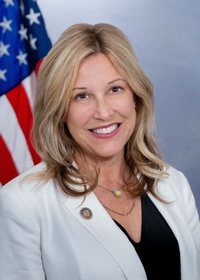
Photo of Melissa Shusterman
D Pennsylvania House · District 157 On the 2026 ballot

Rep. Melissa Shusterman

Compare
Total votes
7,487
all sessions
Attendance
100%
of floor votes
Near the chamber average
With party
99%
of cast votes
Higher than 80% of chamber peers
Bipartisan score
1%
crosses aisle rarely
Lower than 85% of chamber peers
Sponsored
1,809
bills & resolutions
Higher than 86% of chamber peers
Committees
7
assignments
1,809 bills and resolutions

Sponsored bills

Total
1,809
Primary
199
Co-sponsor
1,610
This page
1,809
matching current filters
Co-sponsor HB 295
In committee · Pennsylvania House · Co-sponsor
An Act amending the act of December 7, 1982 (P.L.784, No.225), known as the Dog Law, in licenses, tags and kennels, further providing for revocation or refusal of kennel licenses and providing for prohibition on sale of dogs bred by certain persons; and, in enforcement and penalties, providing for whistleblower protection.

Maddy summaryHB 295 amends Pennsylvania's Dog Law to strengthen licensing and sales restrictions for kennels and dog breeders. It prohibits kennel operators and dealers from selling dogs bred by individuals who received serious USDA violations (like critical animal handling violations) within the past two years. The bill also expands license revocation for kennel license holders convicted of animal cruelty offenses (including misdemeanors) and adds whistleblower protections for employees reporting violations under the law or related federal regulations. These changes directly affect dog breeders, kennel operators, and dealers who must comply with stricter licensing rules and sales bans.

In committee Jan 23, 2025 1 co-sponsor
Co-sponsor HB 296
In committee · Pennsylvania House · Co-sponsor
An Act providing for prohibition on sale of dogs and cats bred by certain persons, for duty of persons, kennels and animal testing facilities to offer dogs and cats for adoption and for whistleblower protection; and imposing penalties.

Maddy summaryHB 296, the Beagle Freedom Act, prohibits dealers and kennels from selling dogs or cats bred by individuals or facilities that have received certain USDA violations, such as critical violations or two consecutive housing access issues. It requires kennels and animal testing facilities handling research animals to offer dogs and cats for adoption through a local shelter or adoption organization if they no longer need the animal and it poses no health or safety risk, with the offer remaining available for up to 21 days before euthanasia. The bill also mandates annual reporting to the Department of Agriculture on adoptions and provides liability protection for compliant entities. This legislation directly affects research breeders, kennels, and animal testing facilities in Pennsylvania.

In committee Jan 23, 2025 1 co-sponsor
Co-sponsor HB 294
In committee · Pennsylvania House · Co-sponsor
An Act amending Title 18 (Crimes and Offenses) of the Pennsylvania Consolidated Statutes, in riot, disorderly conduct and related offenses, providing for whistleblower protection and further providing for nonapplicability of subchapter.

Maddy summaryHB 294 adds whistleblower protections for employees reporting potential violations of Pennsylvania's riot and disorderly conduct laws. It designates these employees as covered under the existing 1986 Whistleblower Law when reporting violations in good faith, and treats businesses/nonprofits/government entities as employers under that law for such reports. The bill also amends a statute to exempt animal research conducted lawfully under federal or state law at qualifying research facilities from the riot/disorderly conduct subchapter. This directly affects employees who report violations and research facilities conducting permitted animal studies. The changes take effect 60 days after enactment.

In committee Jan 23, 2025 1 co-sponsor
Co-sponsor HB 268
In committee · Pennsylvania House · Co-sponsor
An Act amending the act of June 13, 1967 (P.L.31, No.21), known as the Human Services Code, in public assistance, further providing for the medically needy and determination of eligibility.

Maddy summaryHB 268 amends Pennsylvania's Human Services Code to require that individuals determined eligible for home- and community-based waiver services must be offered those benefits within 90 days of eligibility determination. The bill directly affects Pennsylvanians applying for medically needy assistance through home-care waiver programs. Its key provision (Section 442.1(d)) establishes a strict 90-day timeline for offering waiver benefits after eligibility is confirmed, aiming to streamline access to community-based care. This is a procedural change to eligibility processing, not a new benefit or funding measure.

In committee Jan 22, 2025 1 co-sponsor
Co-sponsor HB 272
In committee · Pennsylvania House · Co-sponsor
An Act establishing the Municipal and Emergency Responder Solar Grant Program; and providing for powers and duties of the Department of Environmental Protection.

Maddy summaryHB 272 establishes a grant program to help Pennsylvania municipalities and emergency service facilities (like fire stations, police departments, and ambulance services) install solar energy systems. The Department of Environmental Protection will administer the program, awarding competitive grants to cover eligible costs such as solar equipment, installation, permits, and site assessments. Applicants must submit a site assessment and verify contractors meet licensing, safety, and legal requirements through an affidavit. The program also requires the department to provide technical assistance and educational resources about solar energy projects.

In committee Jan 22, 2025 1 co-sponsor
Co-sponsor HB 207
In committee · Pennsylvania House · Co-sponsor
An Act amending the act of March 4, 1971 (P.L.6, No.2), known as the Tax Reform Code of 1971, in personal income tax, further providing for classes of income.

Maddy summaryHB 207 amends Pennsylvania's Tax Reform Code to clarify the definition of "compensation" for personal income tax purposes, specifically adding an exception for certain military and emergency-related income. The bill explicitly excludes income earned by active-duty U.S. military members (including their spouses living outside Pennsylvania) and income from active state emergency duty under Pennsylvania's emergency management laws. This change directly affects Pennsylvania taxpayers who receive such income, ensuring it is not taxed as regular compensation. The amendment becomes effective 60 days after enactment.

In committee Jan 17, 2025 1 co-sponsor
Co-sponsor HB 212
In committee · Pennsylvania House · Co-sponsor
An Act amending the act of December 19, 1990 (P.L.1200, No.202), known as the Solicitation of Funds for Charitable Purposes Act, further providing for definitions.

Maddy summaryHB 212 amends Pennsylvania's 1990 Charitable Solicitations Act by clarifying the definition of "contribution." It explicitly excludes membership fees for bona fide benefits (like dues for actual membership rights), payments for performances/events, and government grants from being counted as contributions. This change directly affects charitable organizations, fundraisers, and regulators by reducing the scope of activities requiring registration under the law. The bill makes no new requirements but clarifies what is legally considered a "contribution" for regulatory purposes.

In committee Jan 17, 2025 1 co-sponsor
Co-sponsor HR 10
In committee · Pennsylvania House · Co-sponsor
A Resolution directing the Joint State Government Commission to conduct a study of how Home and Community-Based Services waivers can be improved to meet the needs of individuals with disabilities, including programs administered by the Office of Long-Term Living and Office of Developmental Programs.

Maddy summaryHR 10 is a resolution directing Pennsylvania's Joint State Government Commission to study how Home and Community-Based Services (HCBS) waivers can be improved to better serve individuals with disabilities. It directly affects over 2 million Pennsylvanians with disabilities who rely on HCBS waivers administered by the Office of Long-Term Living (OLTL) and Office of Developmental Programs (ODP), including those excluded from eligibility despite meeting federal disability criteria. The study will examine five key areas: whether waivers meet medical needs, compare payment rates across programs, analyze service menus, address barriers to community living, and investigate low employment rates (16% in integrated settings) for waiver participants. The goal is to identify concrete changes to improve access, affordability, and outcomes for people using these programs.

In committee Jan 16, 2025 1 co-sponsor
Co-sponsor HB 195
In committee · Pennsylvania House · Co-sponsor
An Act amending the act of June 13, 1967 (P.L.31, No.21), known as the Human Services Code, providing for Mental Health Workforce Retention Program; and making an appropriation.

Maddy summaryHB 195 establishes Pennsylvania's Mental Health Workforce Retention Program under the Human Services Code. It provides $5,000 grants to mental health workers who are Pennsylvania residents and have worked with adolescents for at least seven consecutive years, using a lottery system to select recipients. The program allocates up to $1 million annually from a $5 million appropriation (continuing from the General Fund), with grants exempt from income tax. The program expires on June 30, 2030, and is open to workers in psychology, counseling, social work, or human services.

In committee Jan 16, 2025 1 co-sponsor
Co-sponsor HB 194
In committee · Pennsylvania House · Co-sponsor
An Act amending the act of March 10, 1949 (P.L.30, No.14), known as the Public School Code of 1949, establishing the Mental Health Professional Student Loan Forgiveness Program; imposing powers and duties on the Pennsylvania Higher Education Assistance Agency; and making an appropriation.

Maddy summaryHB 194 creates Pennsylvania's Mental Health Professional Student Loan Forgiveness Program, targeting mental health workers serving children and adolescents. It allows eligible residents who complete qualifying degrees (like social work, counseling, or psychology) and work in early childhood-to-adolescence mental health roles to receive up to $22,500 in loan forgiveness after signing a 7-year employment contract. The Pennsylvania Higher Education Assistance Agency (PHEAA) administers the program, requiring applicants to prove residency, partial degree completion, faculty recommendations, and secure employment in the specified field. Participants must maintain employment for seven years or repay the forgiven amount if they leave the field early, fail to comply, or provide false information. This directly affects mental health professionals in Pennsylvania seeking relief from student debt while addressing workforce needs in youth mental health.

In committee Jan 16, 2025 1 co-sponsor
Showing 511 to 520 of 1,809 bills
Previous 1 … 51 52 53 … 181 Next