

Maddy summaryHB 821 amends Pennsylvania's Human Services Code to require the Department of Human Services to add assisted living services and supplemental health care services to the Community HealthChoices Medicaid program within 60 days. This change directly affects licensed assisted living residences, allowing them to become certified as medical assistance providers for these services. The bill mandates that the department submit necessary documentation to the federal Centers for Medicare and Medicaid Services (CMS) to implement the expansion. The policy change will enable these facilities to participate in the state's Medicaid program for covered services. The bill takes effect 60 days after enactment.
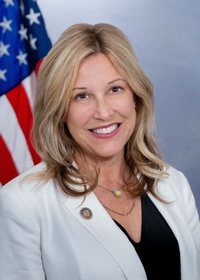
Rep. Melissa Shusterman
Sponsored bills
Maddy summaryHB 806 protects student journalists in Pennsylvania public and private schools by prohibiting school officials from reviewing or censoring school-sponsored media content before publication (prior restraint). It requires schools to adopt policies by the 2025-2026 school year, granting student editors final approval authority over content while banning censorship except for legally unprotected speech like libel, obscenity, or material disruption. The bill defines key terms (e.g., "student journalist," "student editor") and ensures student-media advisors cannot be punished for supporting protected student expression. It directly affects all Pennsylvania school entities, including districts, charter schools, and private schools with journalism programs.
Maddy summaryHB 753 amends Pennsylvania's criminal code to better protect human trafficking victims during legal proceedings. It creates an automatic affirmative defense for victims convicted of crimes like prostitution (§ 5902), theft (§ 3922), or drug possession when those crimes resulted directly from trafficking. Victims can also file motions to vacate convictions for these specific offenses by submitting written proof, evidence, and notifying prosecutors. Courts must grant such motions if victims prove by a preponderance of evidence that their conviction stemmed from being trafficked, without requiring prior prosecution of the trafficker. This directly affects individuals previously convicted of trafficking-related offenses who were victims themselves.
Maddy summaryHB 742 amends Pennsylvania law to expand DNA collection requirements beyond felony sex offenses. It defines "other specified offenses" for adults (including certain felonies, misdemeanors like assault, and offenses requiring sex offender registration) and for juveniles (such as murder, aggravated assault, or terrorism when tried as an adult). The bill mandates DNA sampling upon conviction, delinquency adjudication, or certain ARD cases for these offenses, applies to individuals transferred from other jurisdictions, and includes provisions for expungement and mandatory costs. This affects individuals convicted of specified crimes who may now have DNA collected for the state database.
Maddy summaryThis House Resolution (HR 96) designates March 8, 2025, as "International Women's Day" in Pennsylvania. It formally recognizes women's contributions across all sectors of Pennsylvania society without creating new laws or policies. The resolution encourages residents to participate in events celebrating women's achievements and leadership, including noting the record number of women serving in the state legislature. It is a symbolic gesture by the Pennsylvania House of Representatives, not a legislative change affecting specific groups or programs.
Maddy summaryHB 792 amends Pennsylvania's Public School Code to require the State Board of Education to collect data on how schools teach Holocaust, genocide, and human rights violations. Starting after the 2025-2026 school year, the State Board must annually request schools to report on whether they offer such instruction, the curriculum used, teacher training participation, and details like grade levels and instructional hours. Every five years, the State Board must issue a report to the Governor, Education Secretary, and legislative education committee chairs, including statistics on school participation and recommendations for improvement. The bill does not mandate specific curriculum content but establishes a reporting system to track existing educational practices.
Maddy summaryHB 790 requires Pennsylvania hospitals with emergency departments to provide abortion services when an individual has an emergency medical condition that necessitates an abortion to stabilize their health. This applies to all hospitals in the state with emergency departments, directly affecting those facilities and the patients seeking emergency care. The bill defines "emergency medical condition" to include life-threatening situations like ectopic pregnancy, preeclampsia, or complications from pregnancy loss, requiring hospitals to offer the service unless the patient or their legal representative refuses after being informed of risks and benefits. Hospitals must take reasonable steps to secure written consent for refusal to ensure compliance. The law takes effect 60 days after enactment.
Maddy summaryHB 778 establishes a three-year pilot program to increase pre-kindergarten (Pre-K) teacher salaries in Pennsylvania to match those of elementary school teachers with similar qualifications. It directly affects Pre-K teachers working in programs located in high-poverty areas (school districts with ≥20% poverty or census tracts at ≤80% of the statewide median poverty level). The program requires the Department of Education to calculate salary gaps using a specific formula, provide subsidies to eligible Pre-K programs to close those gaps, and collect data for a legislative report. The bill mandates strict use of funds solely for teacher salary increases and includes requirements for reporting program outcomes to the legislature.
Maddy summaryHB 780 creates a tuition assistance program for early childhood educators in Pennsylvania. It provides grants to cover tuition costs (minus other financial aid) for individuals pursuing associate degrees or certifications in early childhood education, targeting those earning under 400% of the federal poverty level, enrolled in at least six credit hours per semester, and working 25+ hours weekly in approved early childhood programs. Recipients must agree to work in Pennsylvania early childhood education for two years after completing their program. Funding comes from a new state fund, with annual reports tracking enrollment, retention, wages, and job demand. The program aims to support workforce development in early childhood education through financial assistance tied to service commitments.
Maddy summaryHB 781 creates a three-year pilot program to provide salary supplements for infant and toddler care professionals working at eligible child-care centers in Pennsylvania. The Department of Public Welfare will administer the program, establishing county-level pay parity standards that consider education and certification levels to prevent staff retention issues. Child-care centers receiving funds must use them exclusively for wage supplements and cannot reduce existing pay or replace staff costs. The program requires annual reporting to the General Assembly and expires after three fiscal years beginning in 2026-2027.