

Maddy summaryHB 642 increases penalties for oil and gas regulation violations in Pennsylvania. It raises fines for general violations from $1,000 to $2,000 per day and for willful violations from $5,000 to $10,000 per day, with potential jail time. The bill also prohibits the department from waiving these fines and specifies that the department, Attorney General, or county prosecutors can pursue penalties. This directly affects oil and gas operators who violate state regulations.
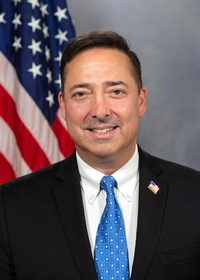
Rep. Chris Pielli
Sponsored bills
Maddy summaryHB 675 bans the sale or distribution of firefighting personal protective equipment (PPE) containing intentionally added PFAS chemicals in Pennsylvania starting January 1, 2028, directly affecting manufacturers, sellers, and distributors of such gear. The law includes an exception if the State Fire Commissioner determines PFAS use is unavoidable and issues official guidance. Violations carry civil penalties of up to $5,000 for first offenses and $10,000 for repeat offenses, with fines split equally between the Fire Company Grant Program and Emergency Medical Services Grant Program. This bill aims to reduce exposure to harmful PFAS chemicals while maintaining safety standards for firefighters.
Maddy summaryHB 674 establishes a new grant program to provide operating assistance for public transportation in Pennsylvania counties experiencing growth in either population or employment. Eligible applicants include public transit entities already receiving certain existing transportation grants (under Sections 1513 or 1516) that serve counties meeting specific growth criteria based on five-year data. Funding is split equally between counties growing in employment (using Labor Department data) and population (using Census Bureau data), with each county’s grant amount determined by its percentage growth over that period. This program operates in addition to existing transportation funding and cannot require a higher local match than current rules.
Maddy summaryHB 638 prohibits "confession of judgment" clauses in Pennsylvania contracts, which are terms allowing one party to automatically admit a debt and obtain a court judgment without a trial. This affects businesses and consumers by making such clauses void and unenforceable in new agreements. Exceptions apply to contracts signed before the law's effective date or government contracts entered under existing statutes. The bill takes effect 60 days after enactment.
Maddy summaryHB 639 amends Pennsylvania's 1974 Loan Interest and Protection Law to require lenders to provide clear, upfront disclosures to small businesses about commercial loan terms. It defines "small business" as a company with fewer than 500 employees and "provider" as lenders or nondepository institutions arranging loans via online platforms. The bill mandates that providers disclose six specific details before finalizing a loan, including total funds, total cost, payment schedule, prepayment policies, and the annualized interest rate. These disclosures must be signed by the small business's agent. The law takes effect 60 days after enactment.
Maddy summaryHB 672 requires Pennsylvania health insurers to cover prescribed early allergen introduction dietary supplements for infants under one year old, specifically those containing safe, well-cooked egg or peanut protein to help reduce food allergy risk. Insurers must provide this coverage at no additional cost to consumers, including no deductibles, copays, or coinsurance. The law applies to most health insurance policies (excluding specialized plans like dental or workers' compensation) and mandates coverage for supplements prescribed by licensed healthcare providers. It directly affects infants at risk of food allergies, particularly addressing health disparities noted in the bill (e.g., higher allergy rates among Black children). The policy changes are effective 60 days after enactment, with no cost-sharing for these specific supplements.
Maddy summaryHB 680 amends Pennsylvania's Clean Streams Law to clarify enforcement procedures for pollution cases. It specifies that cases involving sewage, industrial waste, or pollution can be filed either by the Attorney General or directly before district justices in the county where the offense occurred or the public was affected. This change simplifies the court process for environmental enforcement by streamlining jurisdiction and clarifying who represents the Commonwealth in appeals. The bill affects how pollution violations are handled in Pennsylvania courts, with no new environmental requirements.
Maddy summaryHB 654 amends Pennsylvania's State Lottery Law to expand access to the Pharmaceutical Assistance Contract for the Elderly Needs Enhancement Tier (PACENET). It raises the income eligibility thresholds for seniors: single individuals with annual incomes between $14,500 and $45,000, and married couples with combined incomes between $17,700 and $55,000, will now qualify. The bill also allows applicants to round income amounts to the nearest whole dollar when reporting. This change directly affects Pennsylvania seniors who rely on PACENET for subsidized prescription drugs by making the program available to more low-to-moderate-income elderly residents.
Maddy summaryHB 77 updates Pennsylvania's food protection laws to align with the 2022 FDA Food Code. It requires retail food facilities (like restaurants and grocery stores) to prominently display employee allergy awareness posters detailing major allergens and symptoms, and to include allergen information on menus or written materials for customers. The bill also revises definitions of "potentially hazardous food" and mandates that the Pennsylvania Department of Agriculture adopt the FDA Food Code standards, with updates published in the Pennsylvania Bulletin. The law takes effect 60 days after enactment.
Maddy summaryHB 600 requires businesses that buy and sell residential homes (without living in them) to obtain a state license. To get licensed, they must pay a $200 fee, provide insurance proof, and pass a background check for recent fraud or dishonesty convictions. Before making an offer to buy a home, these businesses must give homeowners a written disclosure explaining how to find property value estimates and access legal or real estate help. Homeowners can also add their property to a public "do-not-solicit" list to stop being contacted by these businesses. The bill directly affects home-buying businesses and homeowners.