

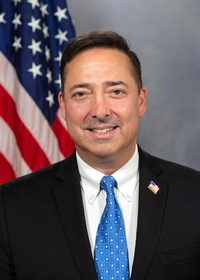
Photo of Chris Pielli
D Pennsylvania House · District 156 On the 2026 ballot

Rep. Chris Pielli

Compare
Total votes
3,688
all sessions
Attendance
100%
of floor votes
Near the chamber average
With party
99%
of cast votes
Near the chamber average
Bipartisan score
0%
crosses aisle rarely
Lower than 76% of chamber peers
Sponsored
1,149
bills & resolutions
Higher than 94% of chamber peers
Committees
6
assignments
1,149 bills and resolutions

Sponsored bills

Total
1,149
Primary
53
Co-sponsor
1,096
This page
1,149
matching current filters
Co-sponsor HB 715
In committee · Pennsylvania House · Co-sponsor
An Act amending the act of January 17, 1968 (P.L.11, No.5), known as The Minimum Wage Act of 1968, further providing for penalties.

Maddy summaryHB 715 amends Pennsylvania's Minimum Wage Act of 1968 to increase penalties for employers who pay workers below the required minimum wage. It reclassifies violations based on the number of offenses and the total unpaid wages: under $150 for a first offense is a summary offense, while over $150 for a first or second offense becomes a misdemeanor, and third or subsequent offenses are felonies. The bill also establishes that each week an employee is underpaid and each affected employee counts as a separate offense, making penalties more severe for repeated violations. Employers cannot avoid liability by having employees agree to work for less than the minimum wage.

In committee Feb 24, 2025 1 co-sponsor
Co-sponsor HB 718
In committee · Pennsylvania House · Co-sponsor
An Act amending the act of July 14, 1961 (P.L.637, No.329), known as the Wage Payment and Collection Law, further providing for definitions; providing for duty of department to report and for investigations; further providing for civil remedies and penalties, for liquidated damages and for criminal penalties; providing for employer liability; and establishing the Wage Enforcement Fund.

Maddy summaryHB 718 amends Pennsylvania's Wage Payment and Collection Law to strengthen wage enforcement, directly affecting employers (including state/local governments, corporations, and contractors) and workers owed unpaid wages. It requires the Department of Labor to collect quarterly data on wage violations, fines, unpaid wages, and complaint resolution, then submit semiannual reports to lawmakers and post them publicly. The bill mandates quarterly investigations of "high-violation industries" (those with 25+ violations in two years) and updates penalties to $2,000 per violation or triple unpaid wages, whichever is greater, plus attorney fees. Employers failing to pay within 10 days of notice face these penalties, with each week of underpayment counted as a separate violation.

In committee Feb 24, 2025 1 co-sponsor
Co-sponsor HB 717
In committee · Pennsylvania House · Co-sponsor
An Act amending Title 62 (Procurement) of the Pennsylvania Consolidated Statutes, in source selection and contract formation, further providing for debarment or suspension.

Maddy summaryHB 717 amends Pennsylvania's procurement law to add wage law violations as a specific reason for barring state contractors from future government contracts. It directly affects state contractors who fail to pay wages owed to workers under the 1961 Wage Payment and Collection Law. The bill adds a new subsection (531(b)(6.1)) to the debarment rules, requiring state agencies to suspend or debar contractors found in violation of wage payment laws. This change creates a direct link between wage compliance and eligibility for state contracts. The bill takes effect 60 days after enactment.

In committee Feb 24, 2025 1 co-sponsor
Co-sponsor HB 716
In committee · Pennsylvania House · Co-sponsor
An Act amending the act of July 14, 1961 (P.L.637, No.329), known as the Wage Payment and Collection Law, further providing for notification; providing for duty of employer; and imposing criminal and civil penalties.

Maddy summaryHB 716 amends Pennsylvania's Wage Payment and Collection Law to require employers to provide employees with specific pay details (including rate, time of payment, and fringe benefits) at hiring and to post a summary of the law in a visible workplace location. Employers who fail to meet these notification or posting requirements face a $500 fine per violation. The bill also extends the time limit for employees to file legal claims for unpaid wages: if an employer didn't provide required notice or post the summary, the deadline becomes the later of three years after wages were due or the day the requirements were satisfied. This affects all employers in Pennsylvania subject to the Wage Payment and Collection Law.

In committee Feb 24, 2025 1 co-sponsor
Co-sponsor HB 700
In committee · Pennsylvania House · Co-sponsor
An Act amending the act of April 9, 1929 (P.L.343, No.176), known as The Fiscal Code, in general budget implementation, further providing for Department of Human Services.

Maddy summaryHB 700 creates a new, non-lapsing "Home and Community-Based Services for Individuals with Intellectual Disabilities Augmentation Account" within Pennsylvania's General Fund. It directs funds from the sale of former state centers for intellectual disabilities, annual transfers from the General Fund (based on prior-year funding levels), and operational cost savings from closed centers into this account. The money must be used by the Department of Human Services to provide home and community-based supports, housing assistance, and emergency waiting list services for individuals with intellectual disabilities. This bill directly affects people with intellectual disabilities receiving these services and the Department of Human Services managing the funds.

In committee Feb 24, 2025 1 co-sponsor
Co-sponsor HB 719
In committee · Pennsylvania House · Co-sponsor
An Act prohibiting discriminatory practices against applicants and enrollees under certain insurance policies based on claims or prescriptions involving prophylaxis HIV medication.

Maddy summaryHB 719 prohibits Pennsylvania insurance companies from denying coverage, limiting benefits, or charging higher rates to applicants or policyholders solely because they use FDA-approved HIV prevention medications (PrEP for pre-exposure or PEP for post-exposure prophylaxis). The bill directly affects individuals seeking or maintaining insurance coverage who are prescribed these medications for HIV prevention. It bans specific "adverse actions" like coverage denial, reduced benefits, or discriminatory pricing based solely on PrEP or PEP use. The law takes effect 60 days after enactment and enforces violations through existing insurance fraud and unfair practice laws.

In committee Feb 24, 2025 1 co-sponsor
Co-sponsor HB 705
In committee · Pennsylvania House · Co-sponsor
An Act amending Title 66 (Public Utilities) of the Pennsylvania Consolidated Statutes, in restructuring of electric utility industry, providing for development of grid infrastructure.

Maddy summaryHB 705 requires Pennsylvania's Public Utility Commission to issue grid security guidelines within 180 days, mandating electric distribution companies to develop and file detailed infrastructure plans within one year. These plans must address grid security against cyber/physical threats, electrify public infrastructure (like transit and emergency services), deploy modern technologies (energy storage, EV chargers), and ensure equitable coverage in underserved areas. Companies must evaluate impacts on grid reliability, economic development, customer rates, and low-income households before submitting plans for commission approval. The bill directly affects all electric distribution companies operating in Pennsylvania, requiring them to coordinate with state agencies and community representatives to modernize the grid for growing demand.

In committee Feb 24, 2025 1 co-sponsor
Co-sponsor HB 698
In committee · Pennsylvania House · Co-sponsor
An Act providing for bisphenol A-free container products.

Maddy summaryHB 698 would require all food and beverage containers sold in Pennsylvania to contain no more than 0.1 parts per billion of bisphenol A (BPA), directly affecting manufacturers, sellers, and distributors of such containers. The bill prohibits containers with BPA above this level and mandates that manufacturers replace BPA with the least toxic alternative, while banning substitutions with known carcinogens or reproductive toxicants identified by the EPA. Violations would be enforced under Pennsylvania’s existing Unfair Trade Practices and Consumer Protection Law, and the law would take effect 60 days after enactment. This focuses on setting a measurable safety standard for consumer products without advocating for specific outcomes.

In committee Feb 21, 2025 1 co-sponsor
Co-sponsor HB 688
In committee · Pennsylvania House · Co-sponsor
An Act amending the act of March 10, 1949 (P.L.30, No.14), known as the Public School Code of 1949, in charter schools, providing for cyber charter school moratorium.

Maddy summaryHB 688 imposes a 13-year freeze on new cyber charter school approvals in Pennsylvania, effective July 1, 2025, through June 30, 2038. The bill prohibits the Pennsylvania Department of Education from reviewing or approving any new applications for cyber charter schools during this period, regardless of when the application was submitted. This directly affects organizations or entities seeking to establish new cyber charter schools in the state. The policy change specifically targets new school applications while leaving existing cyber charter schools unaffected.

In committee Feb 21, 2025 1 co-sponsor
Co-sponsor HB 612
In committee · Pennsylvania House · Co-sponsor
An Act amending the act of October 9, 2008 (P.L.1408, No.113), known as the Scrap Material Theft Prevention Act, further providing for identification requirements for sale of scrap materials to scrap processors and recycling facility operators and for penalties; and imposing penalties.

Maddy summaryHB 612 amends Pennsylvania's Scrap Material Theft Prevention Act to require scrap processors and recycling facilities to collect specific identification details from sellers during scrap material transactions exceeding $100 or involving catalytic converters. Key provisions include collecting driver's license copies, vehicle license plate numbers, seller signatures, and for catalytic converters, vehicle details (year/make/model/VIN), photographs of the converter, and the seller. The bill also mandates a 48-hour payment hold on catalytic converter transactions until law enforcement or a judge authorizes release, with facilities required to keep converters intact during this period. Violations carry fines starting at $5,000 for catalytic converter non-compliance and up to $2,500 for other failures, with repeat offenses classified as misdemeanors.

In committee Feb 20, 2025 1 co-sponsor
Showing 651 to 660 of 1,149 bills
Previous 1 … 65 66 67 … 115 Next