

Maddy summaryHB 60 amends Pennsylvania's Pharmacy Act to clarify rules for transferring prescriptions between pharmacies. It specifies that prescriptions can only be transferred if the drug is not excluded by federal law, specifically referencing 21 CFR 1306.08 (which governs electronic prescriptions). This change directly affects pharmacies that transfer prescriptions, ensuring state procedures align with federal electronic prescription requirements. The bill updates existing permit rules for pharmacies but does not alter who qualifies for a pharmacy permit.
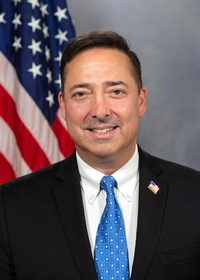
Rep. Chris Pielli
Sponsored bills
Maddy summaryHB 1038 creates a new 25% tax credit for Pennsylvania property owners who install green roofs - roofs with vegetation, waterproof membranes, and drainage systems. It directly affects businesses and individuals who construct qualifying green roofs covering at least 50% of a building’s rooftop or 75% of certified eligible space, requiring structural engineering certification and local permits. Applicants must file detailed plans with the Department of Revenue, maintain the roof for five years, and claim credits against annual taxes (capped at $100,000 per applicant yearly), with $10 million in credits available statewide each fiscal year. The credit is non-refundable, non-transferable, and requires repayment if maintenance requirements are not met.
Maddy summaryThis bill amends Pennsylvania's 1929 Administrative Code to clarify the maximum size of the Pennsylvania State Police (4,310 total officers and enlisted members) and specifies that personnel assigned to the Pennsylvania Turnpike Commission, Delaware River Bridge Commission, and gaming enforcement do not count toward this limit. It also repeals an outdated reference in the Fiscal Code (Section 1733-E(3)) to align with this clarification. The change directly affects the State Police's staffing structure and reporting requirements. The bill makes a technical correction to existing law without creating new policies or changing operational responsibilities.
Maddy summaryThis bill establishes a three-year pilot program (starting 2026-2027) within Pennsylvania public schools to teach students about the political, economic, and social contributions of LGBTQ+ individuals. School districts, charter schools, and nonpublic schools may apply to participate by submitting proposals to the Department of Education by May 15, 2026. The Department must develop guidelines by March 15, 2026 in consultation with LGBTQ+ organizations and prioritize curricula from groups with at least 50% LGBTQ+ leadership. Participating schools must submit annual reports on implementation, and the Department will contract an independent evaluation to assess the program's effectiveness, with results published online.
Maddy summaryThis resolution designates March 2025 as "Women's History Month" in Pennsylvania. It is a ceremonial measure with no binding policy changes, funding, or new programs. The resolution invites all Pennsylvanians to reflect on women's contributions to the state's and nation's economic, cultural, and social development. It does not affect specific groups or create legal obligations, as it is purely symbolic recognition.
Maddy summaryThis is a ceremonial resolution (not a bill with policy changes) passed by the Pennsylvania House of Representatives. It formally recognizes the observance of Ramadan (March 1-30, 2025) and Eid al-Fitr, a significant religious period for Muslims involving fasting, reflection, and community celebration. The resolution has no legal effect or impact on laws, policies, or individuals - it simply acknowledges the Muslim community’s religious observance. As a symbolic gesture, it does not impose requirements or alter rights.
Maddy summaryHB 1052 requires fire-resistant material applicators in Pennsylvania to obtain a license from the newly established Fireproofing Applicator Licensing Board. The bill directly affects workers applying fire-resistant materials (like sprayed cement or fiber) to building surfaces, mandating they complete accredited training and meet experience requirements. Key provisions include the board setting professional standards, approving training programs, issuing licenses, enforcing penalties for unlicensed work, and maintaining a public online roster of licensed applicators. The law aims to standardize safety practices and oversight in this specialized construction field.
Maddy summaryHB 118 amends Pennsylvania's Child Labor Act to increase penalties for employers violating child labor laws. It raises the fine for first-time violations from $500 to $1,000 per violation and increases penalties for repeat offenses to $3,000 per violation or up to 10 days in jail. The bill directly affects employers who hire minors in prohibited work situations. These changes are concrete policy adjustments to enforcement, not new work restrictions. The amendment takes effect 30 days after enactment.
Maddy summaryHB 535 bans Pennsylvania health insurers from setting annual or lifetime dollar limits on core health benefits for enrollees, whether services are provided by in-network or out-of-network providers. It applies to all individual and group health insurance policies (excluding specific types like Medicare supplements or dental/vision-only plans) and prohibits limits on benefits that were already covered without such caps in 2025 policies. The Insurance Department can enforce this through fines up to $5,000 per violation (or $10,000 for willful violations), with annual caps of $500,000 for insurers. The law does not require coverage of specific benefits but eliminates existing dollar limit practices for covered services.
Maddy summaryHB 618, the Health Insurance Access Protection Act, prohibits health insurers from denying coverage or charging higher premiums based on a person's health condition, including preexisting conditions. This law applies to both individual and group health insurance policies, protecting enrollees and their dependents from discrimination in enrollment or pricing. The Insurance Department and Commissioner are tasked with enforcing these rules, and the bill includes penalties for insurers that violate the prohibitions.