

Maddy summaryHB 1758 removes existing rules that prevented employers from disciplining or terminating volunteer firefighters, ambulance staff, or rescue squad members who missed work for emergency calls. It replaces these provisions with a new tax credit program for employers who hire volunteer emergency responders (including firefighters, ambulance personnel, and rescue squad members). The tax credit, available to both private businesses and government entities, helps offset costs associated with employing these volunteers. This bill directly affects volunteer emergency responders and their employers across Pennsylvania by shifting from disciplinary protections to a financial incentive.
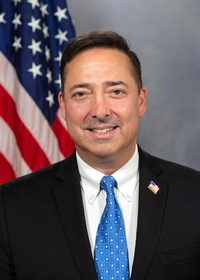
Rep. Chris Pielli
Sponsored bills
Maddy summaryHB 1757 creates a voluntary Pennsylvania firefighter cancer registry managed by the Department of Health. It requires collecting anonymized data from firefighters, including fire incident types, work history, health information, and demographics, to link with existing cancer registry data. The registry aims to identify cancer trends and regional disparities among firefighters, with annual reports to the Governor and legislature containing findings and recommendations. All data remains confidential and cannot be used in court or for disciplinary actions. The registry will also make de-identified data available for public research without fees.
Maddy summaryHB 1299 amends Pennsylvania's Unfair Trade Practices and Consumer Protection Law to regulate automatic renewal and continuous service offers. It requires businesses to clearly disclose renewal terms, pricing after trials, and cancellation options in a way consumers can retain, and to allow online cancellation. The law applies to most subscription-based goods/services but excludes health clubs, federally regulated utilities, natural gas/electricity contracts, and insurance entities. Violations would be treated as unfair trade practices under existing enforcement mechanisms.
Maddy summaryHB 938 amends the Public School Code of 1949 to update governance rules for the Board of Governors overseeing the State System of Higher Education. It directly affects the board members, public universities, and the administrative structure of the higher education system. The bill modifies provisions related to the board's composition, responsibilities, or operational procedures under the existing code, though specific changes are not detailed in the provided context. The bill passed the legislature on July 14, 2025, and was referred to the Education committee for further action.
Maddy summaryHB 1527 updates the existing Rare Disease Advisory Council established in 2017, clarifying its structure and responsibilities. The bill directly affects patients with rare diseases and requires coordination among the Department of Health, Insurance Department, Department of Human Services, and Department of Education. Key provisions mandate the council to advise state agencies on rare disease research, treatment access, insurance coverage, and resource allocation. It also specifies how departments must collaborate on policies impacting rare disease patients, ensuring a unified state approach.
Maddy summaryHB 1599 requires Pennsylvania electric distribution companies to join regional electricity grid operators (regional transmission organizations, or RTOs). It mandates that these companies submit annual reports by February 1st detailing all votes they cast or had affiliates cast at RTO meetings during the previous year. The reports must include a 20-100 word explanation of how each vote serves the public interest. The bill takes effect 60 days after enactment, aiming to increase transparency in utility decision-making within regional grid management.
Maddy summaryHB 1575 creates a new tax credit program to revitalize vacant industrial properties in Pennsylvania. It directly affects building owners of pre-1973 factories or mills that have been at least 75% vacant for 24 months and are designated by their municipality for rehabilitation. The bill establishes a credit equal to 20% of qualified renovation costs (like structural repairs or equipment upgrades) that meet specific value thresholds, applied against certain business taxes. To qualify, properties must be rehabilitated for mixed commercial/residential use, and the program is administered by the Department of Community and Economic Development.
Maddy summaryThis resolution designates the week of September 15-19, 2025, as "Clean Energy Week" in Pennsylvania. It is a ceremonial designation with no new policies, funding, or direct impact on residents or businesses. The resolution highlights Pennsylvania’s existing clean energy sector - including solar, wind, and geothermal resources - and notes the state’s growth in clean energy jobs and production. It does not alter laws or create new obligations; it solely aims to recognize ongoing efforts in the clean energy field.
Maddy summaryHB 1705 amends Pennsylvania's 1951 Landlord and Tenant Act to require landlords to disclose flood risk information to tenants. It directly affects landlords and tenants by mandating that flood risk data be made available on a public website, rather than solely through lease documents. The key provision creates a new requirement for landlords to provide access to this flood risk information via an online platform, improving transparency about property flood hazards. This change updates how flood risk disclosures are delivered under the existing law.
Maddy summaryHB 1234 amends Pennsylvania's Human Services Code to require public assistance programs to cover the cost of blood pressure monitors for eligible recipients. This change directly affects individuals enrolled in state public assistance programs who need blood pressure monitoring for health management. The bill adds blood pressure monitors to the list of covered medical equipment under the public assistance program, ensuring these devices are provided without cost to recipients. It does not change eligibility requirements but expands existing coverage to include this specific monitoring tool. The bill passed final passage on July 1, 2025, and was referred to the Health & Human Services committee.