

Maddy summaryThis Pennsylvania House resolution (HR 402) urges the U.S. Congress to require meaningful accountability and civil rights reforms before approving new funding for the Department of Homeland Security (DHS) and Immigration and Customs Enforcement (ICE). It directly addresses federal agencies by demanding reforms like enforceable use-of-force standards, independent reviews of serious incidents, and public release of body-camera footage after deaths or injuries during enforcement. The resolution cites the January 2026 deaths of two U.S. citizens during an ICE operation in Minneapolis as a catalyst for requiring transparency and oversight before additional federal appropriations are granted. It does not create new law but calls on Congress to condition future funding on specific, concrete reforms to protect civil rights and public safety.
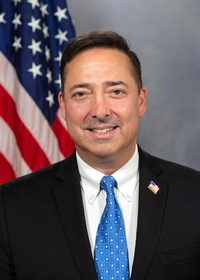
Rep. Chris Pielli
Sponsored bills
Maddy summaryThis Pennsylvania House resolution (HR 397) urges the U.S. Congress to pass H.R. 2540, the SSI Savings Penalty Elimination Act. The resolution supports increasing Supplemental Security Income (SSI) resource limits from $2,000 (individual) and $3,000 (couple) to $10,000 and $20,000, respectively - adjusting for inflation since 1989. It directly affects SSI recipients (primarily seniors, people with disabilities, and low-income individuals) who currently lose benefits or face penalties for holding savings or assets above current limits. The resolution notes that current rules cause over 70,000 annual benefit reductions and 40,000 terminations, limiting financial security and housing options.
Maddy summaryHB 2148 requires Pennsylvania school entities (including school districts, charter schools, and cyber charters) to adopt policies ensuring all students, parents, guardians, and school personnel can access school property regardless of immigration status. Specifically, schools must develop and publicly adopt inclusive policies within 90 days of the bill’s effective date, requiring school boards to approve these policies via public resolution with 45 days’ notice. Policies must be published in all languages spoken by students at home and reviewed quarterly to maintain accessibility. The bill explicitly prohibits immigration or law enforcement officials (including ICE, Customs, and local agencies acting under federal immigration authority) from restricting access to school zones without proper legal process. This directly affects all Pennsylvania public and private schools serving students, mandating concrete procedural changes to protect school access.
Maddy summaryHB 2129 repeals an existing provision about the expiration of unconventional gas well fees and establishes a new severance tax on natural gas extracted from unconventional gas wells. The tax applies to producers (companies or individuals extracting natural gas) starting July 1 of the year after the bill's effective date, calculated using base and additional tax rates. It creates a new tax administration framework in Chapter 43 of Pennsylvania's oil and gas statutes, including penalties for non-compliance. The bill explicitly states this new tax does not affect the existing collection and distribution of the unconventional gas well fee.
Maddy summaryHB 1628 extends Pennsylvania's medical assistance program to cover pregnancy-related care and postpartum support for up to 12 additional months after childbirth or pregnancy loss (such as miscarriage). It directly affects pregnant and postpartum women who are currently receiving medical assistance, have income below 215% of the federal poverty level, and are not otherwise eligible for ongoing assistance. The bill requires the state to seek federal approval for this extension via a waiver under the Social Security Act, and if federal approval is denied, it mandates a report to the legislature within 180 days detailing how to revise the application for future approval. This change aims to improve access to healthcare during a critical period following pregnancy.
Maddy summaryHB 1322 requires certain state-appointed fiduciaries (like estate administrators or executors) to complete mandatory training on handling decedents' estates and fiduciary duties. The bill amends Pennsylvania's Title 20 statutes to establish this training requirement, directly affecting individuals managing estates under state supervision. This policy change aims to improve oversight and consistency in estate administration by ensuring fiduciaries meet specific competency standards.
Maddy summaryHB 2111 amends Pennsylvania's abortion laws to restrict public facilities and funds. It prohibits publicly owned hospitals, clinics, or government entities from leasing property, entering contracts, or using public funds to support abortion services - except for cases where abortion is necessary to save a mother's life, or to terminate pregnancies resulting from rape or incest that have been reported to law enforcement (with specific documentation requirements). The bill also bans public funds from being used for legal services related to abortion access or restrictions, and requires strict verification of rape/incest reports before funding can be approved for those exceptions. These changes directly affect public health facilities, government agencies, and providers receiving public funding.
Maddy summaryHB 2110 repeals existing restrictions on using public funds for abortions under Pennsylvania's Human Services Code. It removes Section 453, which previously limited state/local government funding for abortions except in cases of life endangerment, rape, or incest (with reporting requirements). The bill also abrogates a related regulation (55 Pa. Code § 1163.62(a)). This change directly affects public assistance programs and healthcare providers receiving state funds, eliminating the prior legal barriers to funding abortion services. The policy shift removes specific restrictions but does not establish new funding rules for public assistance programs.
Maddy summaryHB 505 proposes restructuring how electricity companies operate in Pennsylvania by amending the state's public utilities code. It requires electric utilities to implement new energy efficiency and conservation programs for customers, directly affecting both utility companies and residential/commercial electricity users. Key provisions include mandating specific energy-saving measures and updating how utility programs are funded and administered. The bill aims to modernize the electric industry framework while expanding access to efficiency resources for consumers.
Maddy summaryHB 150 proposes changes to Pennsylvania's sentencing laws by removing outdated rules about transferring inmates requiring medical care and creating a new process for judges to modify prison terms when an individual's illness prevents them from serving their full sentence. The bill directly affects people incarcerated in Pennsylvania who develop serious medical conditions during their sentence. Key provisions include ending the current transfer system for medical cases and establishing a clear procedure for courts to adjust sentences based on documented health issues. This would allow judges to shorten sentences for health-related reasons without requiring a separate legal process. The bill is currently under review in the Appropriations committee.